
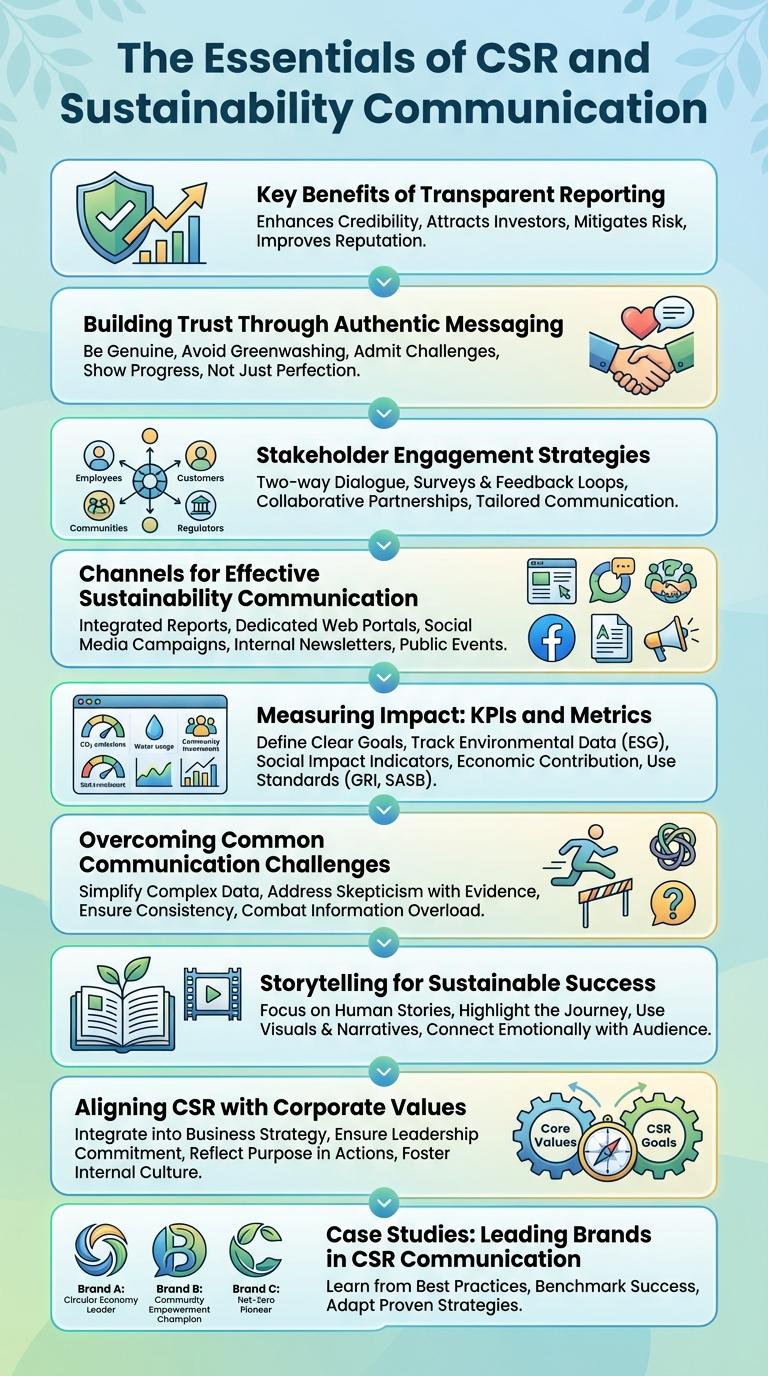
Effective CSR and sustainability communication enhances a company's reputation while fostering trust among stakeholders. Clear and visually engaging infographics simplify complex data, making environmental and social initiatives more accessible. This approach drives deeper audience engagement and promotes transparency in corporate responsibility efforts.
The Essentials of CSR and Sustainability Communication
Corporate Social Responsibility (CSR) and sustainability communication play a vital role in enhancing a company's reputation and building stakeholder trust. Effective communication highlights a company's commitment to ethical practices, environmental stewardship, and social impact. Clear, transparent messaging ensures that audiences understand the company's sustainability goals, progress, and contributions to global challenges.
Key Benefits of Transparent Reporting
Transparent reporting in CSR and sustainability enhances corporate credibility and builds trust with stakeholders. Clear communication of environmental and social initiatives fosters stronger investor confidence and customer loyalty.
Open disclosure of sustainability efforts helps identify risks and opportunities, driving continuous improvement in business practices. Transparent reporting supports regulatory compliance and positions companies as industry leaders in responsible governance.
Building Trust Through Authentic Messaging
Corporate Social Responsibility (CSR) and sustainability communication play a crucial role in shaping public perception and building trust with stakeholders. Authentic messaging ensures transparency and demonstrates a company's genuine commitment to ethical practices.
Clear and honest communication about CSR initiatives helps businesses connect emotionally with their audience, fostering long-term loyalty and credibility. Using real data, concrete examples, and consistent updates reinforces accountability and transparency. Trust grows when companies share both achievements and challenges openly in their sustainability efforts.
Stakeholder Engagement Strategies
How can companies enhance stakeholder engagement in CSR and sustainability communication?
Effective stakeholder engagement strategies involve transparent dialogue and active participation to build trust and collaboration. Utilizing tailored communication channels ensures diverse stakeholder needs and preferences are addressed, fostering stronger relationships and sustained commitment to sustainability goals.
Channels for Effective Sustainability Communication
Effective sustainability communication is essential for promoting corporate social responsibility (CSR) initiatives and engaging stakeholders. Utilizing diverse channels enhances transparency and fosters a stronger connection with audiences.
- Social Media Platforms - Leverage platforms like LinkedIn, Twitter, and Instagram to share real-time updates and engage a broad audience on sustainability efforts.
- Corporate Websites - Maintain dedicated sustainability sections that provide detailed reports, goals, and progress to ensure transparency and credibility.
- Email Newsletters - Send regular updates to stakeholders highlighting achievements, upcoming initiatives, and opportunities for involvement.
- Annual Sustainability Reports - Publish comprehensive documents that detail CSR performance, metrics, and impact assessments to build trust with investors and customers.
- Internal Communication Channels - Use intranets, webinars, and staff meetings to educate and involve employees in sustainability goals and practices.
Measuring Impact: KPIs and Metrics
Effective CSR and sustainability communication relies on clear KPIs and metrics to measure impact. Key indicators include carbon footprint reduction, community engagement levels, and resource efficiency improvements. Tracking these metrics ensures transparency and drives continuous improvement in sustainability initiatives.
Overcoming Common Communication Challenges
Effective communication in Corporate Social Responsibility (CSR) and sustainability is essential for building trust and driving positive change. Overcoming common challenges enhances stakeholder engagement and promotes transparent reporting.
- Complex Messaging - Simplify technical jargon to make sustainability efforts accessible and understandable to diverse audiences.
- Stakeholder Alignment - Tailor communication strategies to address the unique concerns and interests of different stakeholder groups.
- Transparency Issues - Provide consistent, accurate data to build credibility and demonstrate genuine commitment to sustainability goals.
Clear, honest communication strengthens the impact of CSR initiatives and fosters long-term sustainability success.
Storytelling for Sustainable Success
Storytelling is a powerful tool in CSR and sustainability communication, engaging audiences by connecting corporate values with real-world impact. Effective narratives highlight authentic efforts, fostering trust and inspiring stakeholders to support sustainable initiatives.
Using data-driven stories enhances credibility, illustrating measurable progress in environmental and social goals. Clear and consistent messaging helps organizations demonstrate commitment, driving long-term sustainable success through meaningful engagement.
Aligning CSR with Corporate Values
| Aspect | Description |
|---|---|
| Definition | Aligning Corporate Social Responsibility (CSR) involves integrating social and environmental initiatives with core corporate values to ensure authentic and consistent messaging. |
| Importance | Consistent alignment builds stakeholder trust, enhances brand reputation, and strengthens employee engagement by demonstrating genuine commitment. |
| Key Strategies | Embed CSR goals in mission statements, develop value-based sustainability programs, and communicate outcomes transparently with measurable impact metrics. |
| Communication Channels | Utilize corporate websites, social media platforms, annual sustainability reports, and internal communication tools to promote aligned CSR efforts. |
| Benefits | Improved stakeholder loyalty, competitive advantage, increased investor confidence, and measurable contributions to sustainable development goals (SDGs). |