
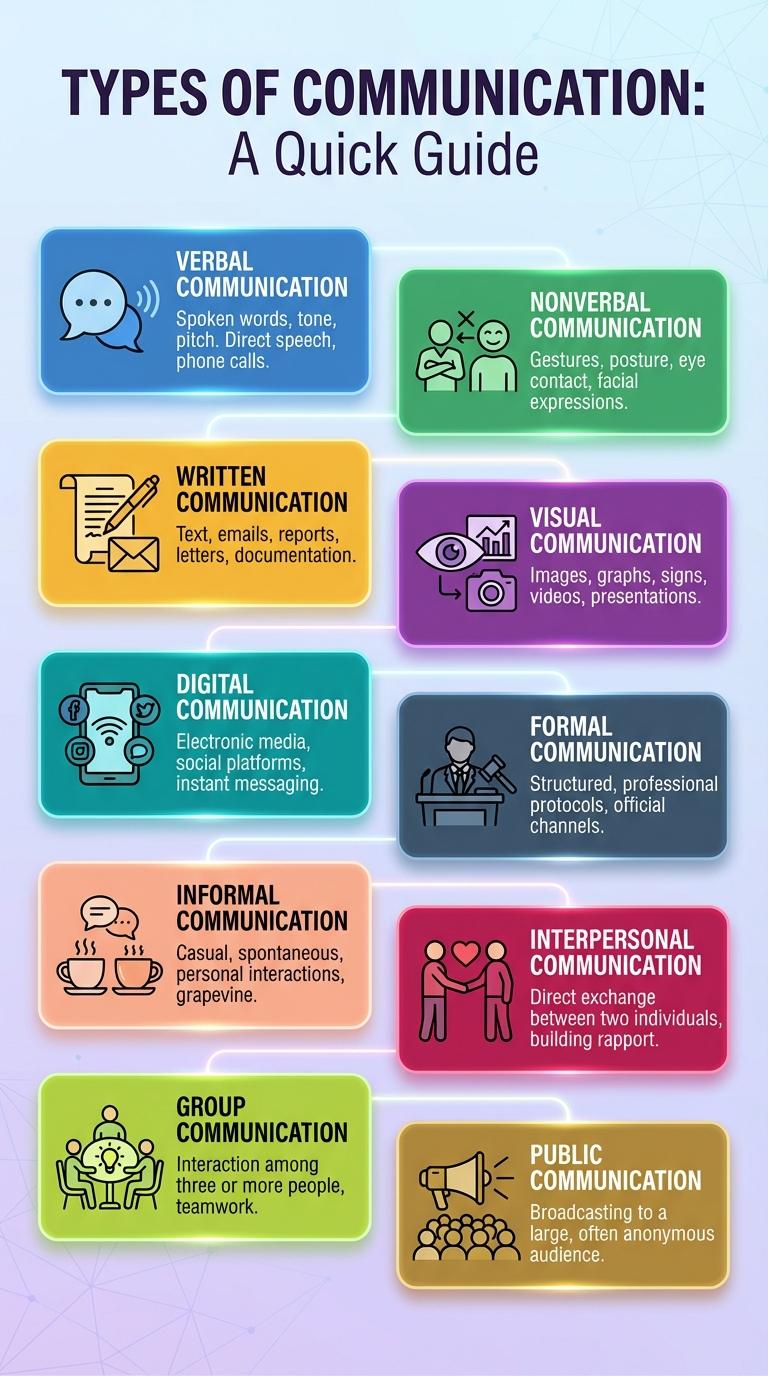
Understanding various types of communication enhances personal and professional interactions. Visual elements in an infographic simplify complex information, making it easier to grasp key communication methods. This tool highlights verbal, nonverbal, written, and digital communication, showcasing their unique roles and benefits.
Verbal Communication
Verbal communication is the use of words to convey messages clearly and effectively. It plays a crucial role in personal, educational, and professional interactions.
- Oral Communication - Involves spoken words to exchange information face-to-face or through telecommunication.
- Written Communication - Uses written symbols, such as letters, emails, or reports, to transmit messages across time and space.
- Formal Language - Structured and professional speech used in official settings to ensure clarity and respect.
Nonverbal Communication
Nonverbal communication involves the transmission of messages without using words. It includes body language, facial expressions, gestures, posture, and eye contact.
This type of communication conveys emotions and intentions more effectively than verbal language in many situations. Understanding nonverbal cues is essential for improving interpersonal interactions and building trust.
Written Communication
Written communication is the process of conveying messages through text. It includes emails, reports, memos, and social media posts.
Effective written communication ensures clarity and permanence of information. It allows for detailed documentation and can be easily referenced later. This form of communication is essential in both professional and personal contexts.
Visual Communication
Visual communication conveys messages through imagery, symbols, and design elements to enhance understanding. It plays a crucial role in engaging audiences and simplifying complex information.
- Images - Photos, illustrations, and icons capture attention and evoke emotions effectively.
- Graphs and Charts - Data visualizations present statistical information clearly and concisely.
- Videos - Motion pictures combine audio and visuals to create compelling storytelling.
Effective visual communication improves retention and clarity across various media platforms.
Digital Communication
Digital communication encompasses various technologies that enable information exchange through electronic devices and the internet. Common types include email, social media platforms, instant messaging, and video conferencing. These methods enhance connectivity by facilitating real-time interactions and global reach.
Formal Communication
Formal communication follows a structured and official flow within an organization, often documented and recorded. It includes channels such as emails, reports, meetings, and official memos, ensuring clarity and accountability. This type of communication maintains professionalism and supports organizational hierarchy.
Informal Communication
| Type of Communication | Details |
|---|---|
| Informal Communication | Spontaneous, unofficial exchange of information between individuals. |
| Characteristics | Casual tone, non-structured format, driven by social interactions. |
| Channels | Face-to-face chats, social media, phone calls, instant messaging. |
| Examples | Water cooler talks, group texts, informal meetings, personal emails. |
| Benefits | Builds relationships, facilitates quick information flow, enhances creativity. |
Interpersonal Communication
Interpersonal communication is the exchange of information between individuals through verbal and non-verbal methods. It plays a critical role in building relationships and understanding emotions effectively.
- Verbal Communication - Using spoken words to share thoughts and feelings directly with another person.
- Non-Verbal Communication - Conveying messages through body language, facial expressions, and gestures.
- Active Listening - Fully concentrating, understanding, and responding thoughtfully during conversations.
Group Communication
Group communication involves the exchange of information among three or more individuals working together to achieve common goals. This type of communication fosters collaboration, idea sharing, and problem-solving within teams.
Effective group communication relies on clear messaging, active listening, and mutual respect among members. Tools such as meetings, video conferencing, and group chats enhance interaction and ensure everyone stays informed and engaged.