
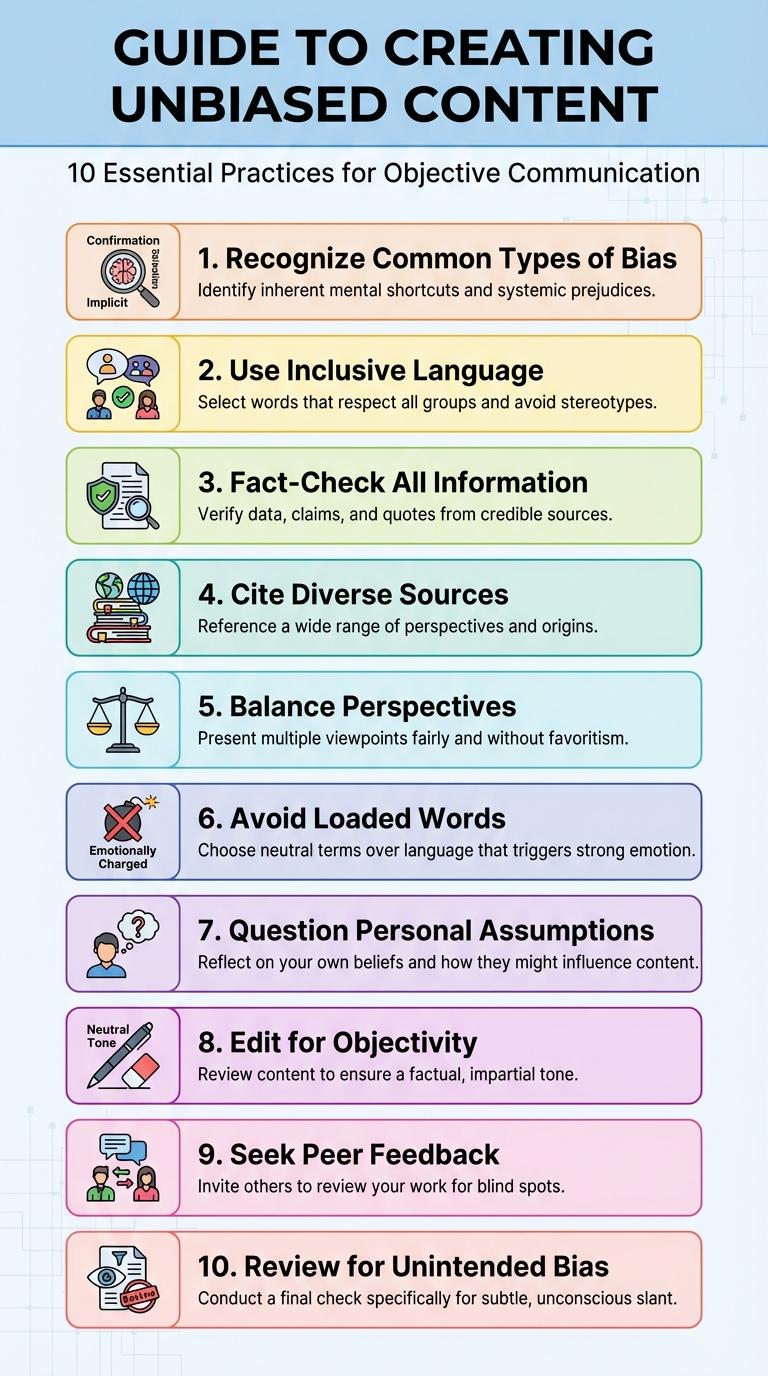
Avoiding biased writing is crucial for clear and fair communication. Understanding common pitfalls and recognizing unintentional bias helps create more objective and inclusive content. This infographic highlights key strategies to identify and eliminate bias in writing effectively.
Recognize Common Types of Bias
How can you recognize common types of bias in writing?
Bias can appear as stereotypes, selective evidence, or emotional language. Identifying these signs helps create fair and balanced content.
| Type of Bias | Description |
|---|---|
| Stereotyping | Generalizing without considering individual differences. |
| Selective Evidence | Using only information supporting a specific viewpoint. |
| Emotional Language | Words that provoke feelings to influence opinion. |
| Confirmation Bias | Favoring information that confirms existing beliefs. |
| Omission | Leaving out important facts that might change interpretation. |
Use Inclusive Language
Inclusive language promotes respect and understanding by avoiding terms that marginalize or exclude groups of people. Using neutral words and phrases helps create content that is fair and accessible to a wider audience.
Replace gender-specific terms with gender-neutral alternatives, such as "they" instead of "he" or "she." Avoid stereotypes and labels that reinforce biases to ensure your writing is welcoming and unbiased.
Fact-Check All Information
Fact-checking all information ensures accuracy and credibility in your writing. Verify data through reputable sources to prevent the spread of misinformation. Incorporate multiple perspectives to present a balanced and unbiased narrative.
Cite Diverse Sources
Citing diverse sources enhances the credibility and depth of your writing. It reflects a broad perspective, reducing the risk of bias in your content.
Include voices from different backgrounds, disciplines, and viewpoints. This practice ensures a balanced representation of ideas and strengthens your argument.
Balance Perspectives
Balanced perspectives play a crucial role in avoiding biased writing by presenting multiple viewpoints fairly. Offering diverse opinions helps readers form informed judgments without undue influence.
- Include varied sources - Use information from different backgrounds and perspectives to ensure a comprehensive view.
- Represent opposing views equally - Present arguments from all sides without favoring one to maintain neutrality.
- Verify evidence objectively - Assess facts and data impartially to avoid skewing information.
Maintaining balanced perspectives strengthens the credibility and fairness of written content.
Avoid Loaded Words
Loaded words carry strong emotional connotations that can skew readers' perceptions and lead to biased writing. Choosing neutral language helps maintain objectivity and ensures the message is fair and balanced. Avoiding emotionally charged terms promotes clarity and credibility in your communication.
Question Personal Assumptions
| Tip | Description |
|---|---|
| Identify Assumptions | Recognize personal beliefs that might influence your writing to prevent biased perspectives. |
| Ask Critical Questions | Challenge your viewpoints by asking why you hold certain opinions and if they are supported by facts. |
| Seek Diverse Sources | Incorporate information from a variety of perspectives to balance personal bias in content. |
| Reflect on Language Use | Avoid emotionally charged or subjective terms that reinforce personal assumptions. |
| Review and Revise | Reread your work to identify biased statements and revise with neutral, evidence-based language. |
Edit for Objectivity
Editing for objectivity is essential to eliminate bias and ensure clear, fair communication. Focusing on neutral language improves the credibility and reliability of your writing.
- Use Fact-Based Statements - Support claims with verifiable data rather than opinions to maintain impartiality.
- Avoid Subjective Language - Remove emotionally charged words that can imply judgment or favoritism.
- Check for Balanced Perspectives - Present multiple viewpoints fairly without favoring one side.
Seek Peer Feedback
Seeking peer feedback is essential for identifying unconscious bias in your writing. Fellow readers can offer diverse perspectives that help uncover biased language or assumptions.
Request feedback from individuals with varying backgrounds and viewpoints to ensure balanced content. Encourage honest critiques focused on inclusivity and fairness. Regularly revising your work based on this input reduces bias and strengthens argument credibility.