
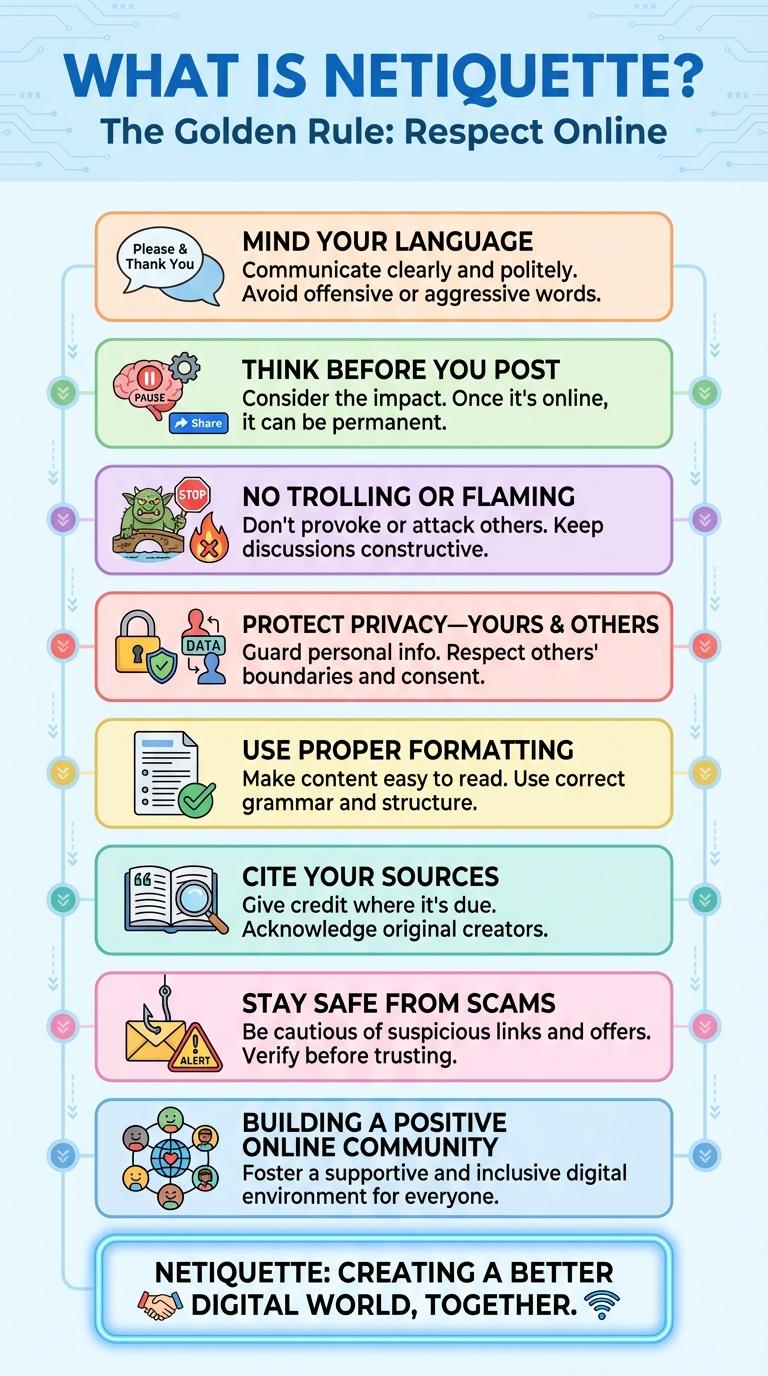
Understanding netiquette rules is essential for respectful and effective online communication. Following these guidelines helps prevent misunderstandings and fosters a positive digital environment. Clear online etiquette promotes professionalism and enhances interactions across social media, emails, and forums.
What is Netiquette?
Netiquette refers to the set of rules and guidelines for respectful and effective communication on the internet. It ensures positive interactions and prevents misunderstandings in digital environments.
- Respect Others - Treat people with kindness and avoid offensive language in online conversations.
- Be Clear and Concise - Use clear language to convey messages accurately and avoid confusion.
- Protect Privacy - Do not share personal information or sensitive data without consent.
Following netiquette fosters a safe and welcoming online community for all users.
The Golden Rule: Respect Online
Respect online mirrors respect in real life, forming the core of netiquette. Following The Golden Rule means treating others as you wish to be treated in digital interactions.
Politeness and kindness foster positive communication and reduce conflicts. Upholding respect online creates a safe and welcoming environment for all users.
Mind Your Language
Mind your language by using clear, respectful, and positive words in all online communications. Avoid slang, profanity, and harsh expressions to maintain a professional and courteous tone.
Choose words that promote understanding and kindness, preventing misunderstandings and conflicts. Proper netiquette ensures digital interactions remain respectful and inclusive for everyone.
Think Before You Post
Online communication demands mindful interaction to maintain respect and clarity. Practicing good netiquette helps create positive digital environments.
- Pause and Reflect - Take a moment to consider the impact of your message before posting.
- Check Tone - Ensure your words convey the intended emotion to avoid misunderstandings.
- Respect Privacy - Avoid sharing personal or sensitive information about others without permission.
No Trolling or Flaming
Netiquette requires users to avoid trolling, which is the act of deliberately provoking or upsetting others online. Flaming involves sending hostile or insulting messages that escalate conflicts. Maintaining respect and kindness ensures positive and constructive digital communication.
Protect Privacy-Yours & Others
Protecting privacy online is essential for maintaining trust and security in digital communications. Always avoid sharing personal information about yourself or others without explicit consent. Respect boundaries by not forwarding private messages or sensitive content without permission.
Use Proper Formatting
| Netiquette Rule | Description |
|---|---|
| Use Clear Headings | Organize content with clear, descriptive headings to help readers navigate easily. |
| Employ Paragraph Breaks | Break text into short paragraphs to improve readability and prevent overwhelming the reader. |
| Apply Consistent Font Styles | Use standard fonts and sizes to maintain uniformity and professionalism. |
| Utilize Bullet Points | Highlight key points using bullet lists to enhance clarity and focus. |
| Avoid Excessive Capitalization | Refrain from using all caps as it may be interpreted as shouting and disrupts reading flow. |
Cite Your Sources
Citing your sources online is essential to maintain credibility and respect intellectual property. Proper attribution helps avoid plagiarism and supports trustworthy communication.
- Give Credit - Always acknowledge the original author or creator when sharing information.
- Use Reliable Sources - Reference accurate and reputable materials to strengthen your message.
- Link Correctly - Provide direct URLs or specific citations to enable others to verify your sources easily.
Stay Safe from Scams
Netiquette rules help create a safer online environment by promoting respectful and cautious behavior. Staying safe from scams is a crucial part of online etiquette.
Always verify the source before clicking links or sharing personal information. Be wary of unsolicited messages asking for sensitive data or financial details. Use strong, unique passwords and enable two-factor authentication to protect your accounts.