
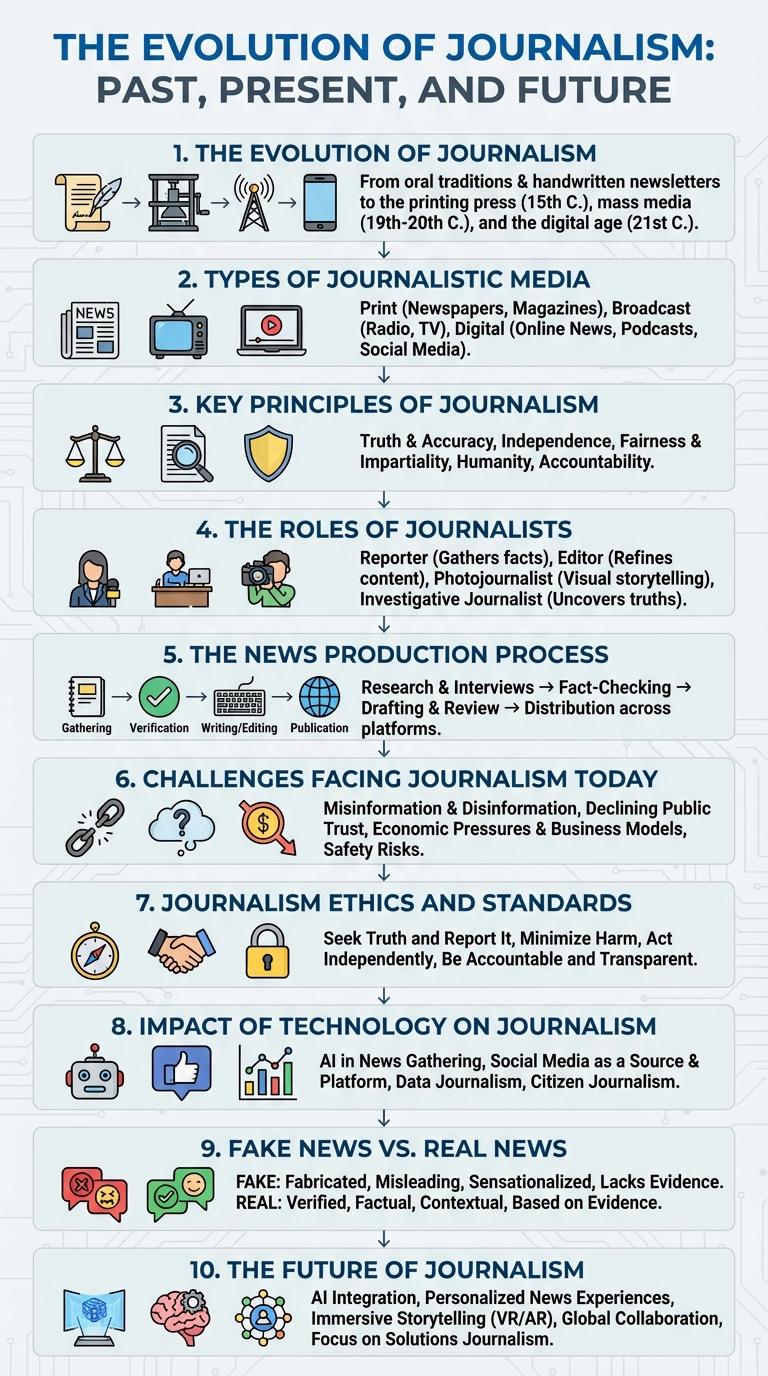
Journalism plays a crucial role in informing the public and shaping societal perspectives through accurate reporting and storytelling. Infographics enhance journalism by visualizing complex data and trends, making information more accessible and engaging. This dynamic combination strengthens the impact and clarity of news delivery across diverse platforms.
The Evolution of Journalism
Journalism has evolved from traditional print newspapers to digital and multimedia platforms, transforming how news is gathered, reported, and consumed. The rise of the internet and social media has accelerated the speed of information dissemination and expanded global access to diverse perspectives. Modern journalism blends investigative reporting, real-time updates, and interactive storytelling to engage a broader audience effectively.
Types of Journalistic Media
What are the main types of journalistic media? Journalism encompasses diverse platforms to deliver news. Each type serves unique audience preferences and content formats.
| Print Media | Newspapers and magazines offering in-depth reporting and analysis. |
| Broadcast Media | Television and radio delivering real-time news and visual content. |
| Online Media | Digital news websites and social media platforms for instant updates. |
| Photojournalism | Visual storytelling through powerful images that capture moments. |
| Investigative Journalism | In-depth research revealing hidden facts and complex issues. |
Key Principles of Journalism
Journalism plays a critical role in providing accurate and timely information to the public. Understanding its key principles ensures responsible reporting and trustworthiness.
- Accuracy - Reporting facts correctly is essential to maintain credibility and avoid misinformation.
- Impartiality - Journalists must present information fairly without personal bias or influence.
- Accountability - Media professionals are responsible for their work and must correct errors transparently.
The Roles of Journalists
Journalism plays a crucial role in informing the public and shaping society. Journalists act as vital connectors between events and audiences worldwide.
- Information Disseminator - Journalists gather and share accurate, timely news to keep the public informed.
- Watchdog - They monitor those in power, exposing corruption and holding authorities accountable.
- Storyteller - Journalists craft compelling narratives that contextualize events and humanize issues.
These roles ensure a transparent, informed, and engaged society through the power of truthful reporting.
The News Production Process
The news production process involves several key stages: gathering information, verifying facts, and delivering the story to the audience. Reporters collect data through interviews, research, and observation, ensuring accuracy and relevance. Editors then review the content, making necessary adjustments before publication on various media platforms.
Challenges Facing Journalism Today
Journalism today faces numerous challenges that impact its ability to deliver accurate and timely information. Issues such as misinformation, declining trust, and financial instability threaten the core of journalistic integrity.
The rise of digital media has transformed news consumption, leading to a fragmented audience and increased competition. Journalists must navigate ethical dilemmas while adapting to rapid technological changes and evolving audience expectations.
Journalism Ethics and Standards
Journalism ethics and standards form the foundation for credible and responsible reporting. These principles guide journalists in maintaining truthfulness, fairness, and accountability in their work.
Core ethics include accuracy, impartiality, and respect for privacy, ensuring public trust and informed decision-making. Upholding these standards prevents misinformation and promotes transparency in the media industry.
Impact of Technology on Journalism
Technology has revolutionized the field of journalism by enhancing how news is gathered, produced, and consumed. Digital tools and platforms have expanded the reach and immediacy of news reporting across the globe.
- Instant News Delivery - Real-time updates via social media and mobile apps allow audiences to access breaking news instantly.
- Data Journalism - Advanced data analysis and visualization tools enable journalists to create more in-depth, evidence-based stories.
- Citizen Journalism - Smartphones and digital platforms empower individuals to report news events, increasing diversity in news sources.
Fake News vs. Real News
| Fake News | Real News |
|---|---|
| Intentionally misleading or false information | Fact-checked and verified information |
| Often uses sensational headlines to attract clicks | Provides balanced and accurate headlines |
| Lacks credible sources or cites anonymous/unverified ones | Cites reliable and transparent sources |
| Designed to manipulate opinions or generate ad revenue | Focused on informing the public and maintaining journalistic integrity |
| Frequently shared on social media without verification | Published by established news organizations with editorial standards |