
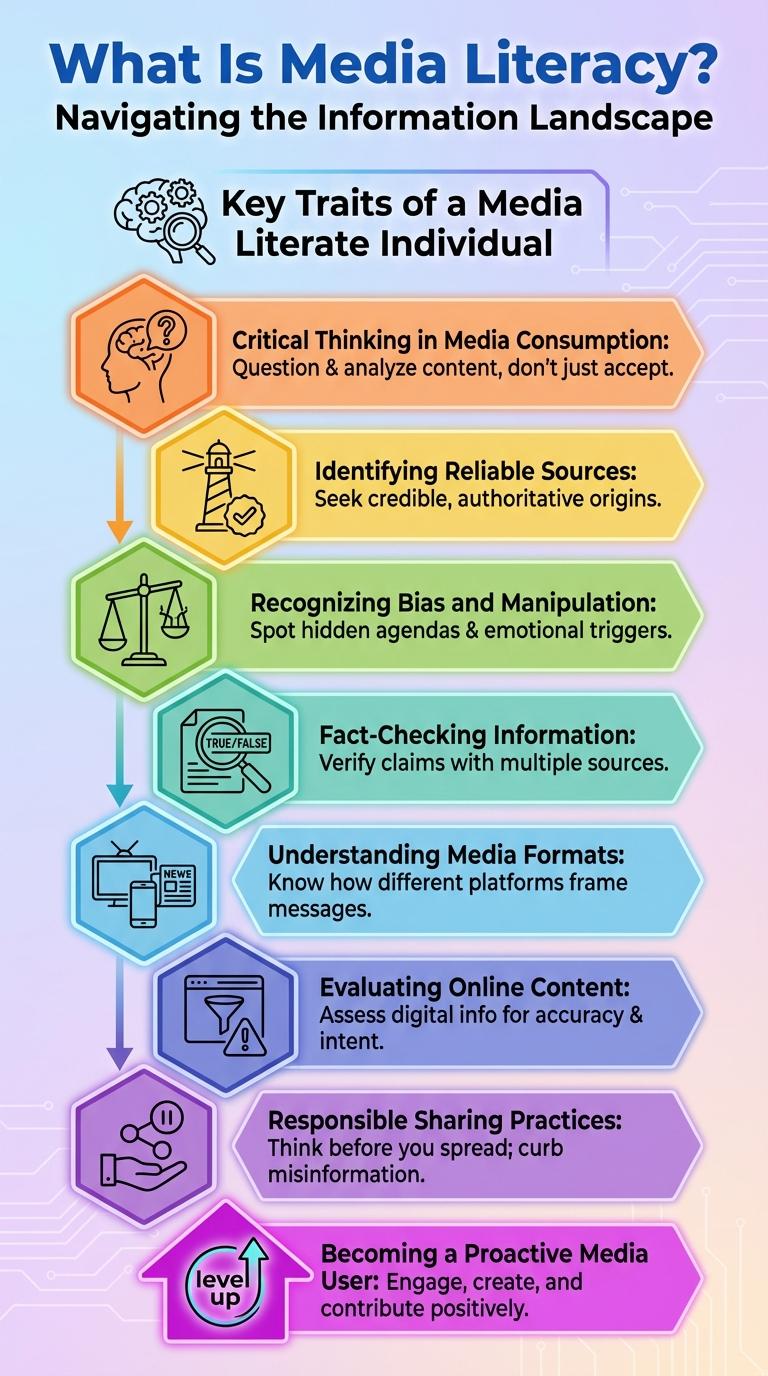
Understanding media literacy empowers individuals to critically evaluate information sources, identify biases, and discern credible content from misinformation. A media literate person navigates digital platforms effectively, making informed decisions and engaging responsibly with diverse media formats. Mastering these skills fosters informed citizenship and promotes a smarter, more discerning media consumption culture.
What Is Media Literacy?
What is media literacy? Media literacy is the ability to access, analyze, evaluate, and create media in various forms. It enables individuals to critically understand and communicate messages across digital, print, and broadcast media.
Key Traits of a Media Literate Individual
| Key Traits | Description |
|---|---|
| Critical Thinking | Analyzes and evaluates media messages for accuracy and bias |
| Understanding Media Influence | Recognizes how media shapes perceptions and opinions |
| Source Evaluation | Identifies credible sources and distinguishes fact from opinion |
| Digital Literacy | Effectively navigates digital platforms and uses technology responsibly |
| Ethical Awareness | Respects intellectual property and understands ethical media use |
Critical Thinking in Media Consumption
Media literacy empowers individuals to analyze and evaluate media messages critically. Developing critical thinking skills in media consumption helps discern bias, misinformation, and credibility in various content forms.
Critical thinking in media consumption involves questioning sources, understanding context, and recognizing persuasive techniques used in media.
- Evaluate Sources - Assess the credibility and reliability of the media source before accepting information as true.
- Identify Bias - Detect the presence of bias or agenda in media messages to understand possible influence on content.
- Analyze Messages - Examine how media messages are constructed and the techniques used to shape perceptions or emotions.
Identifying Reliable Sources
Being a media literate individual means critically evaluating information to distinguish trustworthy sources from unreliable ones. Identifying reliable sources protects against misinformation and enhances understanding.
- Check the Author's Credentials - Verify the author's expertise and background to ensure they are qualified to discuss the topic.
- Evaluate the Source's Reputation - Use well-known and respected publications or organizations with a history of accuracy and fairness.
- Cross-Reference Information - Confirm facts by comparing multiple credible sources to identify consistency and reliability.
Recognizing Bias and Manipulation
Being a media literate individual means identifying bias and manipulation in various information sources. Recognizing biased language, selective omission, and emotional appeals helps discern the true intent behind a message. Developing critical thinking skills enables consumers to evaluate accuracy, reliability, and perspective without falling prey to propaganda or misinformation.
Fact-Checking Information
Fact-checking is a crucial skill for media literate individuals to verify the accuracy of information before sharing it. Reliable sources and cross-referencing facts help prevent the spread of misinformation.
Use trusted fact-checking websites like Snopes, FactCheck.org, or PolitiFact to validate unusual claims. Always examine the evidence, author credentials, and publication date for context and authenticity.
Understanding Media Formats
Being media literate means recognizing the different formats through which information is presented. Understanding media formats helps individuals critically analyze the content and context of messages.
Media comes in various formats such as print, digital, audio, video, and social media. Each format requires specific skills to interpret and evaluate the information accurately. Mastery of these formats empowers individuals to discern credible sources and avoid misinformation.
Evaluating Online Content
Being a media literate individual involves critically assessing the reliability and accuracy of online content. Evaluating online information helps in distinguishing credible sources from misinformation.
- Check the Source - Verify the credibility and expertise of the website or author presenting the content.
- Analyze the Evidence - Look for supporting facts, data, and references to confirm the validity of claims.
- Identify Bias - Recognize potential biases or agendas that may influence the presentation of information.
Developing strong evaluation skills empowers individuals to navigate the digital landscape with confidence and informed judgment.
Responsible Sharing Practices
Being a media literate individual involves understanding the impact of the content shared on various platforms. Responsible sharing practices help combat misinformation and promote credible sources.
Verify information before sharing by checking multiple reliable sources and fact-checking sites. Avoid sharing sensational or biased content to maintain trust and foster informed communities.