
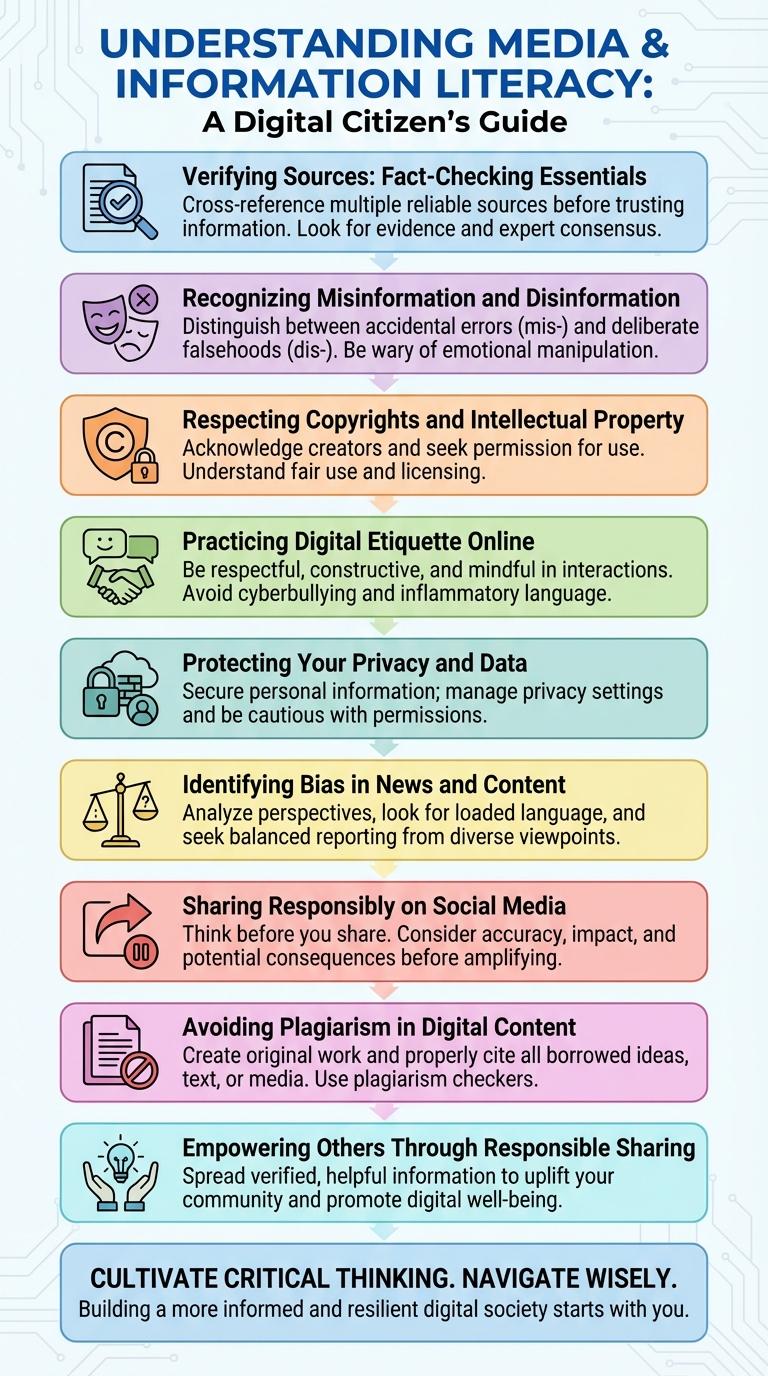
Responsible use of media and information requires critical thinking to verify sources and discern factual content from misinformation. Practicing digital literacy helps individuals make informed decisions and promotes a healthier online environment. Emphasizing respectful communication prevents the spread of harmful content and fosters constructive dialogue.
Understanding Media and Information Literacy
Media and Information Literacy (MIL) empowers individuals to access, analyze, evaluate, and create media content responsibly. It is crucial for navigating today's complex information landscape.
Understanding MIL helps users discern credible sources from misinformation and promotes ethical sharing. Developing critical thinking skills strengthens responsible consumption and participation in media.
Verifying Sources: Fact-Checking Essentials
Verifying sources is crucial for ensuring the accuracy and reliability of information consumed and shared. Fact-checking helps prevent the spread of misinformation and promotes informed decision-making.
- Assess Source Credibility - Confirm the author's expertise and the publication's reputation to ensure trustworthy information.
- Cross-Verify Facts - Compare information across multiple reputable sources to identify inconsistencies or errors.
- Check Publication Dates - Verify the timeliness of information to avoid relying on outdated or irrelevant data.
Recognizing Misinformation and Disinformation
Recognizing misinformation and disinformation is essential for responsible media use. Both spread false information but differ in intent, with misinformation being unintentional and disinformation deliberate.
Check the credibility of sources by verifying author expertise and publication reputation. Cross-reference facts with multiple reliable outlets to identify inconsistencies. Be cautious of sensational headlines designed to provoke emotional reactions swiftly.
Respecting Copyrights and Intellectual Property
Respecting copyrights and intellectual property is essential for ethical media and information usage. It protects creators' rights and promotes creativity and innovation.
- Understand Copyright Laws - Familiarize yourself with copyright regulations to avoid unauthorized use of protected content.
- Always Attribute Sources - Giving proper credit maintains respect for original creators and enhances credibility.
- Use Licensed or Public Domain Content - Choose materials with clear permission or those that are free to use without infringement.
Adhering to these principles supports a fair and lawful digital environment.
Practicing Digital Etiquette Online
Practicing digital etiquette involves respecting others' privacy and opinions while interacting online. Users should verify information before sharing to prevent the spread of misinformation. Engaging respectfully promotes positive communication and a safer digital environment for all.
Protecting Your Privacy and Data
How can you protect your privacy and data when using media and information platforms? Use strong, unique passwords for each account to prevent unauthorized access. Regularly update privacy settings to control who can see your information.
Why is it important to be cautious about sharing personal information online? Sharing too much personal data increases the risk of identity theft and cyberattacks. Limit the amount of sensitive information you post on social media and other public forums.
What role do secure connections play in protecting your data? Using websites with HTTPS ensures data is encrypted during transmission. Avoid using public Wi-Fi for sensitive activities without a virtual private network (VPN).
How does verifying sources help protect your data? Trusted sources reduce the chance of downloading malware or falling for phishing scams. Always check website URLs and avoid clicking on suspicious links or attachments.
What measures can help you monitor and control your digital footprint? Regularly review account activity and remove apps or services you no longer use. Enable two-factor authentication to add an extra layer of security to your accounts.
Identifying Bias in News and Content
Understanding how to identify bias in news and content is crucial for consuming media responsibly. Recognizing bias helps to form well-rounded opinions and avoid misinformation.
- Check the Source - Verify the credibility and reputation of the news outlet or content creator to assess potential bias.
- Analyze Language - Look for emotionally charged or subjective words that may indicate partiality in reporting.
- Cross-Verify Information - Compare multiple sources to identify discrepancies and gain a balanced perspective.
Sharing Responsibly on Social Media
| Tip | Description |
|---|---|
| Verify Sources | Confirm the credibility of the information origin before sharing content online. |
| Check Facts | Cross-check facts with trusted news outlets or fact-checking websites to avoid spreading misinformation. |
| Respect Privacy | Avoid sharing personal information or images without consent from the involved parties. |
| Think Before You Share | Consider the impact of your post on others and potential consequences before publishing. |
| Report False Information | Use platform tools to report misleading or harmful content to maintain a truthful online environment. |
Avoiding Plagiarism in Digital Content
Responsible use of media and information requires understanding the importance of originality in digital content. Avoiding plagiarism means always crediting sources and creating unique work. Using proper citations and tools to check for copied content ensures ethical and trustworthy information sharing.