
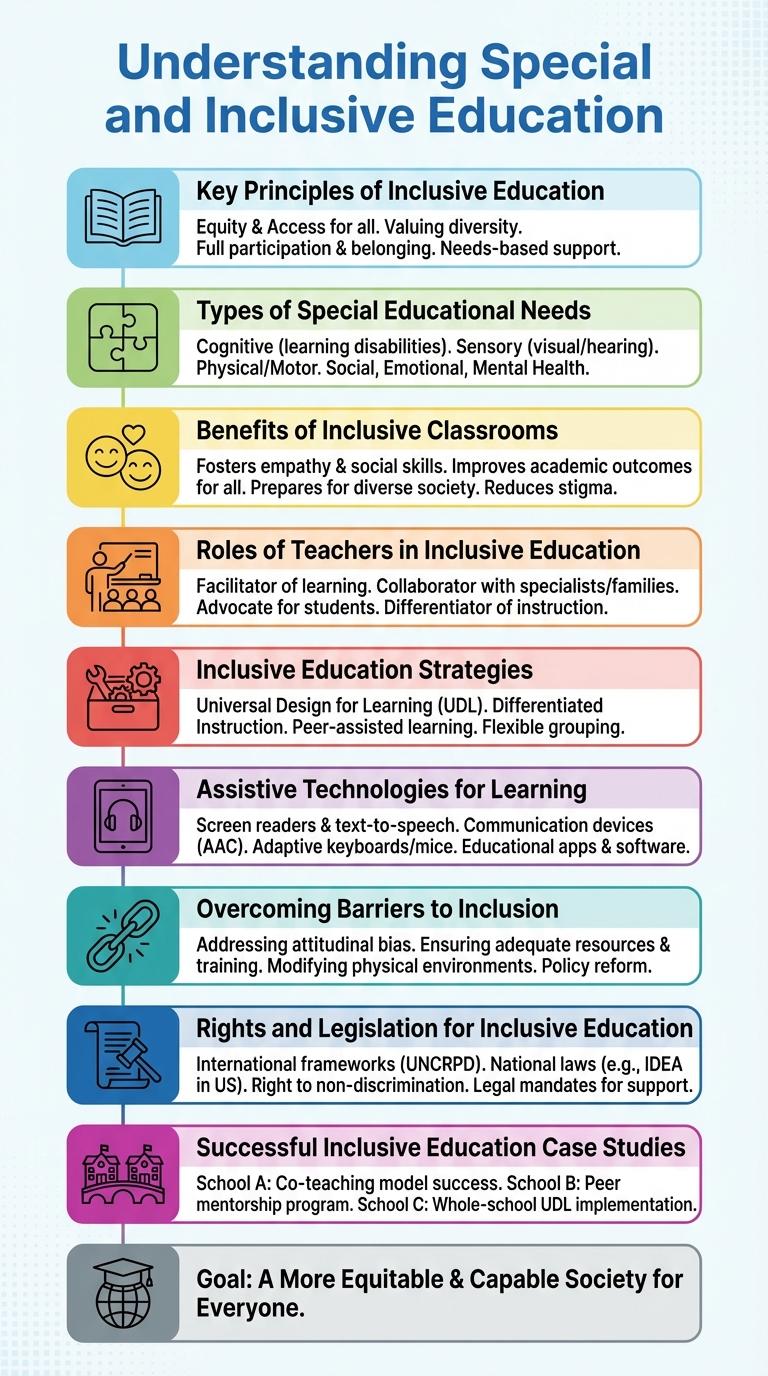
Special and inclusive education promotes equal opportunities for students with diverse learning needs, fostering an environment where every individual can thrive academically and socially. Infographics visually present key concepts, benefits, and strategies that support inclusion, making complex information accessible and engaging for educators, parents, and policymakers. Emphasizing collaboration and tailored support, these visual tools highlight the importance of accommodating all learners in mainstream educational settings.
Understanding Special and Inclusive Education
Special and inclusive education aim to provide tailored learning experiences that accommodate diverse student needs. These educational approaches ensure that all students, regardless of their abilities, have access to quality education.
Special education focuses on individualized support for students with disabilities or unique learning challenges. Inclusive education integrates all students into mainstream classrooms, promoting social interaction and equal opportunities. Both approaches emphasize collaboration among educators, families, and specialists to foster an adaptive learning environment.
Key Principles of Inclusive Education
What are the key principles of inclusive education? Inclusive education emphasizes equal access to learning opportunities for all students, regardless of their abilities or backgrounds. It fosters a supportive environment where diversity is respected and valued.
How does inclusive education promote student engagement? It encourages active participation by adapting teaching methods to meet diverse needs. Collaboration among students, teachers, and families plays a crucial role in enhancing learning experiences.
Why is individualized support important in inclusive education? Tailored support addresses each student's unique strengths and challenges, facilitating personal growth. This approach helps remove barriers to learning and maximizes student potential.
What role does accessibility play in inclusive education? Ensuring accessible learning materials and environments allows all students to fully participate. This includes physical, digital, and instructional accessibility to accommodate diverse learners.
How does inclusive education benefit the wider community? It cultivates empathy, social skills, and mutual respect among students. Building inclusive communities promotes equity and prepares students for diverse workplaces and societies.
Types of Special Educational Needs
Special educational needs (SEN) encompass a range of learning difficulties and disabilities that require tailored instructional methods. Common types include physical disabilities, cognitive impairments, sensory impairments, communication challenges, and emotional or behavioral disorders. Inclusive education strategies aim to accommodate these diverse needs to ensure equal learning opportunities for all students.
Benefits of Inclusive Classrooms
Inclusive classrooms create an environment where all students, regardless of their abilities, learn together. This approach promotes diversity, empathy, and mutual respect among students with and without special needs.
- Enhanced Social Skills - Students develop stronger communication and interpersonal skills by interacting with diverse peers.
- Improved Academic Outcomes - Inclusive settings often lead to better academic performance for students with special needs due to tailored support.
- Increased Empathy and Acceptance - Exposure to different abilities fosters understanding and reduces stigma within the student community.
Roles of Teachers in Inclusive Education
Teachers play a critical role in fostering an inclusive classroom environment where all students feel valued and supported. Their responsibilities extend beyond instruction to include collaboration, adaptation, and advocacy for diverse learning needs.
Effective inclusive education relies on teachers' ability to implement strategies that accommodate every student's unique abilities.
- Facilitators of Learning - Teachers adapt curriculum and teaching methods to meet the diverse needs of all students.
- Collaborators - They work closely with special educators, families, and support staff to create holistic learning plans.
- Advocates - Teachers promote awareness and respect for diversity within the school community.
Inclusive Education Strategies
Inclusive education fosters learning environments where all students, regardless of ability, participate fully. It emphasizes equal access and tailored support to meet diverse needs.
- Universal Design for Learning (UDL) - UDL creates flexible curricula that accommodate varied learning styles and abilities.
- Collaborative Teaching - General and special educators work together to deliver instruction and support students effectively.
- Assistive Technology - Tools like speech-to-text and audiobooks enhance accessibility for students with disabilities.
- Peer Support Programs - Structured peer interactions promote social inclusion and academic support.
- Individualized Education Plans (IEPs) - Customized goals and strategies ensure personalized learning pathways for each student.
Implementing these strategies enhances engagement, reduces barriers, and promotes equity in the classroom.
Assistive Technologies for Learning
Special and inclusive education aims to provide equitable learning opportunities for all students, including those with disabilities. Assistive technologies play a crucial role in supporting diverse learning needs and enhancing educational access.
Assistive technologies include tools such as screen readers, speech-to-text software, and adaptive keyboards, designed to facilitate communication and learning. These technologies help students overcome barriers and promote independence in the classroom.
Overcoming Barriers to Inclusion
Special and inclusive education aims to create learning environments where all students, regardless of abilities, can thrive. Overcoming barriers to inclusion involves addressing physical, social, and instructional challenges that hinder student participation. Implementing adaptive technologies, teacher training, and supportive policies enhances accessibility and promotes equal opportunities for every learner.
Rights and Legislation for Inclusive Education
| Rights | Legislation |
|---|---|
| Equal Access to Education | Individuals with Disabilities Education Act (IDEA) |
| Free Appropriate Public Education (FAPE) | Section 504 of the Rehabilitation Act |
| Non-Discrimination in Schools | Americans with Disabilities Act (ADA) |
| Individualized Education Programs (IEP) | IDEA Mandate for Customized Learning Plans |
| Inclusive Curriculum and Environment | UN Convention on the Rights of Persons with Disabilities |