
The MTB MLE is a cutting-edge mountain bike designed for peak performance and durability on rugged trails. Its advanced frame geometry and high-quality suspension system enhance control and comfort in challenging terrains. Riders benefit from precision engineering that delivers both speed and stability, making the MTB MLE a top choice for outdoor enthusiasts.
What is MTB-MLE?
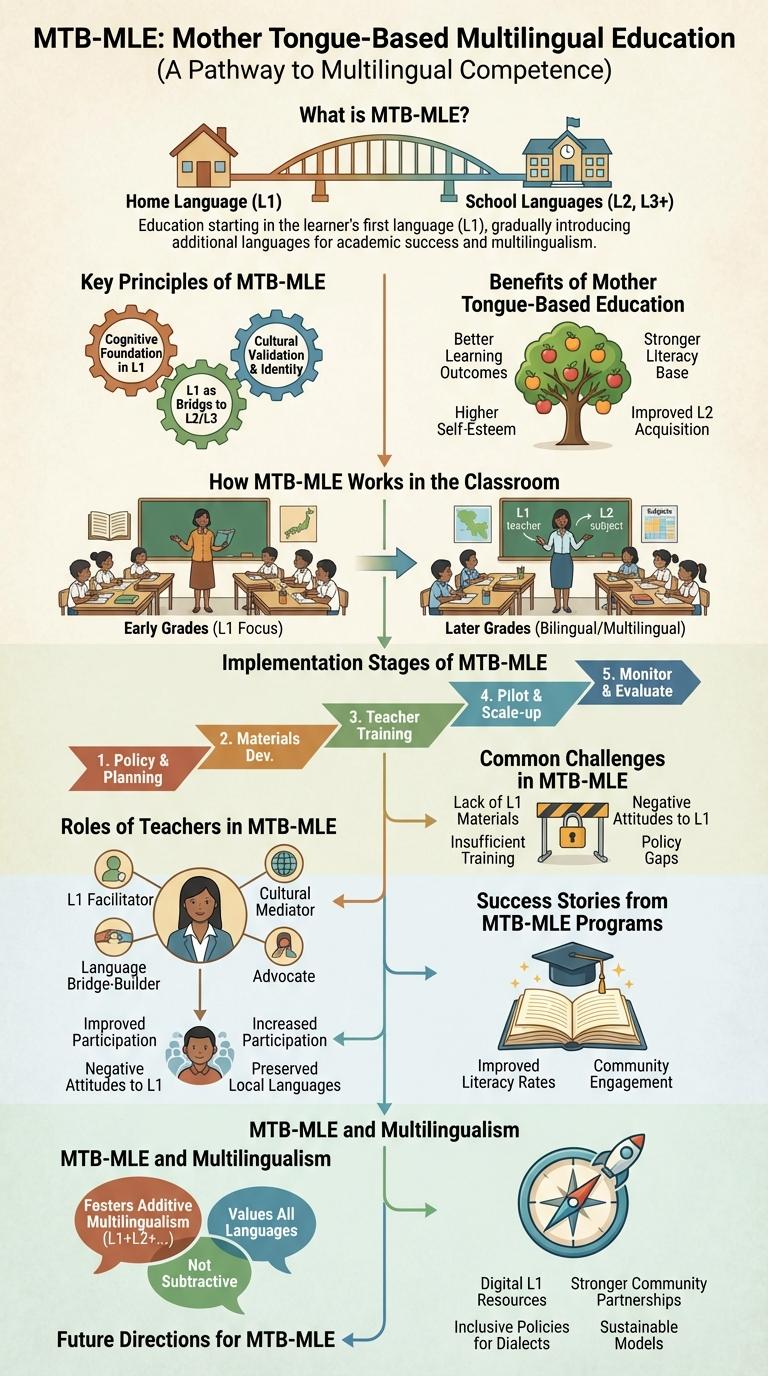
MTB-MLE stands for Mother Tongue-Based Multilingual Education, a teaching approach that uses students' first language as the medium of instruction. It aims to improve comprehension and learning outcomes by starting education in the learner's native language.
This method supports cognitive development and literacy by grounding new concepts in familiar language contexts. MTB-MLE gradually introduces second languages, ensuring students build strong foundational skills. Research shows this approach enhances student engagement and overall academic performance.
Key Principles of MTB-MLE
| Key Principles | Description |
|---|---|
| Mother Tongue-Based Instruction | Uses learners' first language as primary medium of instruction for better comprehension and learning outcomes. |
| Gradual Transition | Introduces second languages progressively, building on a strong foundation in the mother tongue. |
| Inclusive Education | Ensures learners from diverse linguistic backgrounds receive equitable access to quality education. |
| Cultural Relevance | Incorporates local culture and context in teaching materials to enhance learner engagement and identity. |
| Teacher Training and Support | Equips educators with skills and resources needed to effectively implement MTB-MLE strategies. |
Benefits of Mother Tongue-Based Education
Mother Tongue-Based Education (MTB MLE) enhances students' comprehension by using their first language as the foundation for learning. This approach fosters better communication skills and builds a strong educational base.
Students demonstrate higher academic achievement and increased confidence when taught in their mother tongue. MTB MLE also promotes cultural preservation and respect for linguistic diversity within communities.
How MTB-MLE Works in the Classroom
MTB-MLE (Mother Tongue-Based Multilingual Education) enhances learning by using the student's first language as the medium of instruction. This approach improves comprehension and supports cognitive development in early education.
- Use of Mother Tongue - Teachers conduct lessons primarily in the student's native language to ensure clear understanding of concepts.
- Gradual Introduction of Additional Languages - Second languages like Filipino or English are introduced progressively, building on the foundation of the mother tongue.
- Interactive Learning Materials - Classroom resources include visual aids, storytelling, and games that reinforce language skills in both the mother tongue and new languages.
Implementation Stages of MTB-MLE
Mother Tongue-Based Multilingual Education (MTB-MLE) promotes effective learning by using learners' first languages during early education. Implementation stages ensure smooth adoption, cultural relevance, and progressive language development.
- Preparation Stage - Curriculum materials and teaching resources are developed in the learners' mother tongues.
- Orientation Stage - Teachers and stakeholders receive training and information about MTB-MLE objectives and strategies.
- Implementation Stage - Classroom instruction is conducted primarily in the mother tongue with gradual introduction of additional languages.
- Monitoring and Evaluation Stage - Progress is assessed through student performance and program effectiveness reviews.
- Sustainability Stage - Policies and support systems are established to maintain and enhance MTB-MLE practices long-term.
Roles of Teachers in MTB-MLE
Mother Tongue-Based Multilingual Education (MTB-MLE) enhances student learning by utilizing their first language as the medium of instruction. Teachers play a vital role in ensuring the effective implementation of MTB-MLE in classrooms.
- Facilitators of Understanding - Teachers use the mother tongue to simplify complex concepts and improve student comprehension.
- Cultural Mediators - They integrate local culture and traditions into lessons to make learning relevant and engaging.
- Language Advocates - Teachers promote the value of the mother tongue alongside national and global languages for balanced multilingual development.
Effective teachers in MTB-MLE create a supportive environment that fosters both language and cognitive development.
Common Challenges in MTB-MLE
What are the common challenges in implementing MTB-MLE programs?
Many schools face a shortage of trained teachers proficient in both the mother tongue and the curriculum. Limited instructional materials in various mother tongues further hinder effective learning.
How does language diversity affect MTB-MLE effectiveness?
High linguistic diversity within regions complicates selecting a single mother tongue for instruction. It leads to difficulties in creating standardized teaching resources and assessments.
Why is community involvement crucial in MTB-MLE programs?
Lack of community support can reduce student motivation and attendance. Engaging parents and local stakeholders ensures culturally relevant and sustained program success.
What role does policy consistency play in MTB-MLE challenges?
Inconsistent implementation policies cause confusion among educators and administrators. Stable and clear guidelines are necessary to maintain program continuity and quality.
How does assessment impact MTB-MLE learning outcomes?
Assessments often lack alignment with the mother tongue of instruction, leading to inaccurate measurement of student learning. Developing language-appropriate evaluation tools is essential for valid assessment.
Success Stories from MTB-MLE Programs
MTB-MLE programs have significantly boosted literacy rates among indigenous students by teaching in native languages alongside the national language. Success stories reveal improved academic performance and increased student engagement in remote communities. Many schools report higher retention rates and stronger cultural identity as direct outcomes of MTB-MLE implementation.
MTB-MLE and Multilingualism
MTB-MLE (Mother Tongue-Based Multilingual Education) enhances learning by using students' first languages as the foundation for instruction. This approach supports multilingualism, allowing learners to build strong literacy skills in their native language while gradually acquiring additional languages. Research shows MTB-MLE improves comprehension, cognitive development, and academic performance in multilingual contexts.