
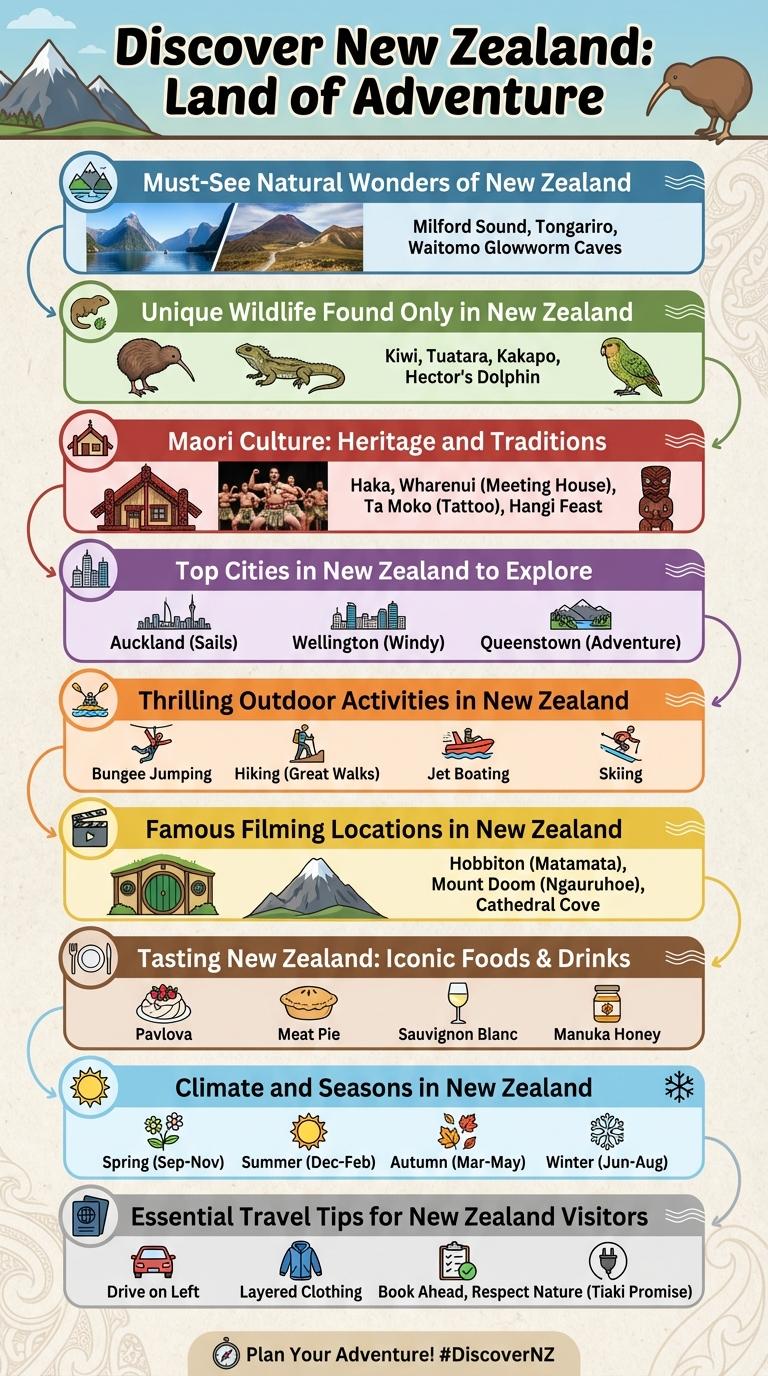
This infographic showcases the vibrant culture, stunning landscapes, and unique wildlife of New Zealand. Explore key facts about its geography, population, and iconic landmarks in a visually engaging format. Discover what makes New Zealand a top destination for travelers and adventure enthusiasts alike.
Discover New Zealand: Land of Adventure
Discover New Zealand, a land renowned for its stunning landscapes and thrilling outdoor activities. From snow-capped mountains to pristine beaches, this island nation offers endless adventure opportunities.
Explore famous locations like Queenstown, known as the adventure capital, with activities such as bungee jumping and skydiving. Hiking the Milford Track or kayaking in Abel Tasman National Park reveals New Zealand's unmatched natural beauty.
Must-See Natural Wonders of New Zealand
New Zealand boasts some of the world's most stunning natural wonders, attracting millions of visitors annually. Key highlights include the awe-inspiring Milford Sound fjord, the geothermal wonders of Rotorua, and the majestic Franz Josef Glacier. These sites showcase New Zealand's unique landscapes, rich biodiversity, and vibrant geothermal activity.
Unique Wildlife Found Only in New Zealand
New Zealand is renowned for its unique wildlife, featuring species found nowhere else on Earth. The country's isolation has allowed extraordinary creatures to evolve, resulting in a remarkable array of endemic animals.
The kiwi, a flightless bird and national symbol, is one of New Zealand's most iconic species. Other notable endemic wildlife includes the tuatara, a reptile often described as a living dinosaur, and the kakapo, the world's heaviest parrot.
Maori Culture: Heritage and Traditions
What are the key elements of Maori culture in New Zealand? The Maori culture is rich in heritage, including traditional art forms like carving and weaving. Its customs and rituals emphasize the importance of family, land, and spiritual beliefs.
How do Maori traditions influence modern New Zealand society? Maori values are integrated into the national identity, with language and ceremonies actively preserved. Public events and education often include Maori cultural practices, highlighting respect and unity.
What is the significance of the haka in Maori culture? The haka is a traditional war dance performed to demonstrate strength and unity. It is widely recognized in New Zealand, especially through sports teams like the All Blacks rugby team.
How does the Maori community protect its heritage and traditions? Tribal groups, known as iwi, play a crucial role in cultural preservation and land stewardship. The Waitangi Treaty helps protect Maori rights and promotes ongoing cultural revival.
In what ways can visitors experience Maori culture in New Zealand? Visitors can engage in guided tours, traditional feasts called hangi, and watch performances of Maori songs and dances. Museums and cultural centers provide educational resources about Maori history and customs.
Top Cities in New Zealand to Explore
New Zealand is renowned for its stunning landscapes and vibrant cities. Explore these top cities to experience culture, adventure, and natural beauty.
- Auckland - The largest city, known for its iconic Sky Tower and bustling waterfront.
- Wellington - The capital, famous for its arts scene and scenic harbor views.
- Christchurch - Known as the Garden City, offering beautiful parks and innovative architecture.
- Queenstown - Adventure capital offering bungee jumping, skiing, and lakefront activities.
- Hamilton - A growing city with lush botanical gardens and rich Maori culture.
Visiting these cities provides a comprehensive experience of New Zealand's diverse attractions.
Thrilling Outdoor Activities in New Zealand
New Zealand offers an array of thrilling outdoor activities, from bungee jumping in Queenstown to skydiving over Lake Taupo. Hiking enthusiasts can explore the famous Milford Track or trek the Tongariro Alpine Crossing, renowned for its stunning volcanic landscapes. Water sports like white-water rafting in Rotorua and surfing at Raglan attract adventure seekers year-round.
Famous Filming Locations in New Zealand
New Zealand is a renowned destination for iconic film locations, attracting movie enthusiasts from around the world. Its diverse landscapes have served as the backdrop for numerous famous films, making it a cinematic treasure trove.
- Hobbiton, Matamata - The lush pastures of Matamata bring the Shire to life in the "Lord of the Rings" and "The Hobbit" trilogies.
- Fiordland National Park - Majestic fjords and rugged mountains provided the dramatic scenery seen in "The Lord of the Rings" trilogy.
- Wellington's Weta Workshop - This creative hub is where groundbreaking special effects and props for films like "Avatar" and "District 9" were designed.
Tasting New Zealand: Iconic Foods & Drinks
New Zealand offers a rich culinary experience with unique flavors rooted in its natural bounty and Maori heritage. Iconic foods and drinks reflect the country's vibrant culture and pristine environment.
- Hangi - Traditional Maori method of cooking food in an earth oven, creating smoky, tender meats and vegetables.
- Pavlova - A famous New Zealand dessert featuring a crisp meringue shell with a soft inside, topped with fresh fruit and whipped cream.
- Green-lipped Mussels - Native to New Zealand, these large, flavorful mussels are often enjoyed steamed or in seafood dishes.
- Manuka Honey - A unique, antibacterial honey produced from the Manuka tree, prized worldwide for its health benefits.
- Marlborough Sauvignon Blanc - A world-renowned white wine from New Zealand's Marlborough region known for its vibrant, fruity notes.
Climate and Seasons in New Zealand
New Zealand experiences a temperate maritime climate with distinct seasons. Its geographical location in the Southern Hemisphere results in opposite seasons compared to the Northern Hemisphere.
Summer in New Zealand occurs from December to February, characterized by warm temperatures and longer daylight hours. Winter spans June to August, bringing cooler temperatures and snowfall in alpine regions. Spring and autumn offer mild weather with blooming flowers and vibrant foliage, making outdoor activities popular throughout the year.