
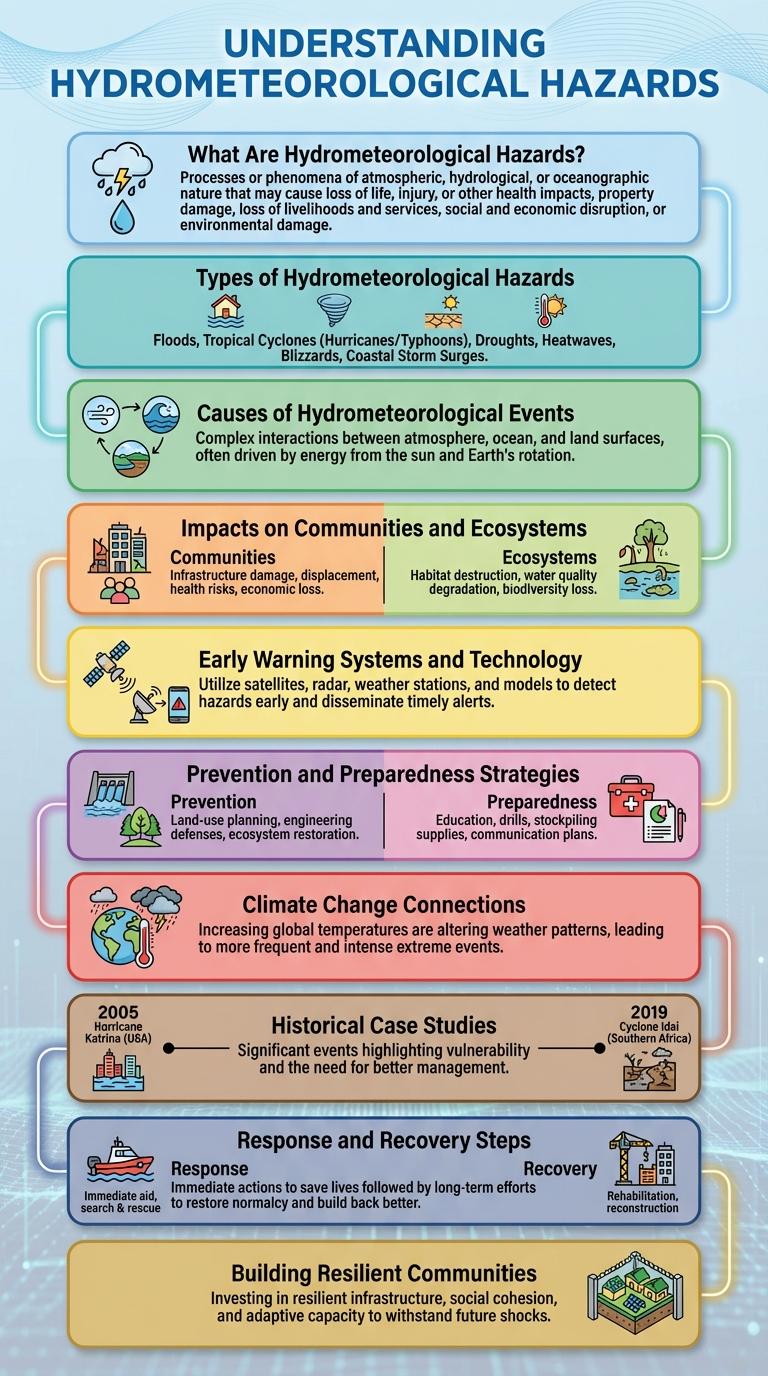
Hydrometeorological hazards encompass extreme weather events such as floods, hurricanes, and droughts that significantly impact communities and ecosystems. Understanding the causes, frequency, and consequences of these events is essential for effective risk management and disaster preparedness. This infographic visually presents key data and insights to enhance awareness and promote proactive responses to hydrometeorological threats.
What Are Hydrometeorological Hazards?
What are hydrometeorological hazards?
Hydrometeorological hazards refer to natural events caused by atmospheric and water phenomena, including storms, floods, and droughts. These hazards impact ecosystems, human health, and infrastructure, often leading to significant economic and social consequences.
Types of Hydrometeorological Hazards
Hydrometeorological hazards are natural events caused by atmospheric, hydrological, or meteorological processes. Common types include floods, storms, droughts, and landslides.
Floods occur due to excessive rainfall or river overflow, posing significant risks to communities. Storms, such as hurricanes and typhoons, generate strong winds and heavy rain, leading to widespread damage.
Causes of Hydrometeorological Events
Hydrometeorological hazards arise from atmospheric and hydrological processes that impact the environment severely. Understanding the causes of these events is critical for disaster preparedness and mitigation.
- Heavy Rainfall - Intense precipitation can lead to flooding and landslides by overwhelming drainage systems and saturating soils.
- Tropical Cyclones - Powerful storms with strong winds and heavy rains cause widespread flooding, storm surges, and wind damage.
- Rapid Snowmelt - Sudden increases in temperature cause snow to melt quickly, resulting in river flooding and soil erosion.
Human activities such as deforestation and urbanization can exacerbate the severity and frequency of hydrometeorological hazards.
Impacts on Communities and Ecosystems
Hydrometeorological hazards such as floods, hurricanes, and droughts severely affect communities by damaging infrastructure, displacing populations, and disrupting livelihoods. Ecosystems suffer from altered water cycles, habitat destruction, and loss of biodiversity, which can impair ecological balance and reduce resilience. Understanding these impacts is essential for developing adaptive strategies that protect both human populations and natural environments.
Early Warning Systems and Technology
Hydrometeorological hazards, such as floods, storms, and droughts, pose significant risks to communities worldwide. Early Warning Systems (EWS) leverage advanced technology like satellite imagery, radar, and sensor networks to provide timely alerts. These systems enhance preparedness, reduce casualties, and minimize economic losses by enabling proactive response and evacuation.
Prevention and Preparedness Strategies
Hydrometeorological hazards such as floods, storms, and droughts pose significant risks to communities and ecosystems. Effective prevention and preparedness strategies reduce damage and enhance resilience against these natural events.
- Early Warning Systems - Utilize technology to provide timely alerts ensuring communities can respond promptly.
- Infrastructure Improvement - Construct flood barriers, drainage systems, and resilient buildings to minimize impact.
- Community Education - Promote awareness programs to inform the public on risk factors and emergency procedures.
- Land Use Planning - Implement zoning laws that prevent development in high-risk areas prone to hydrometeorological hazards.
- Emergency Response Planning - Develop coordinated action plans involving government, agencies, and residents for efficient disaster management.
Climate Change Connections
Hydrometeorological hazards include floods, hurricanes, droughts, and storms caused by atmospheric and hydrological phenomena. Climate change intensifies these events by increasing temperature and altering precipitation patterns.
Rising global temperatures lead to more frequent and severe flooding due to heavier rainfall and melting glaciers. Changes in ocean currents and atmospheric moisture contribute to extreme storms and prolonged droughts, amplifying risks to communities and ecosystems.
Historical Case Studies
Hydrometeorological hazards include floods, hurricanes, and droughts, impacting millions worldwide. Understanding historical case studies helps in predicting and mitigating future disasters.
The 2005 Hurricane Katrina caused catastrophic flooding in New Orleans, leading to over 1,800 deaths and extensive economic damage. In 1931, the China floods resulted in an estimated death toll between 1 to 4 million people, marking one of the deadliest natural disasters. The 2010 Pakistan floods affected 20 million people, destroying homes and infrastructure across vast regions.
Response and Recovery Steps
Hydrometeorological hazards, such as floods and storms, require immediate response to minimize damage and protect lives. Effective recovery steps promote resilience and restore normalcy in affected communities.
- Emergency Evacuation - Safely relocating people from high-risk zones reduces casualties and ensures timely medical assistance.
- Damage Assessment - Conducting rapid evaluations of affected areas helps prioritize resources and repair strategies.
- Community Support Programs - Providing psychological and financial aid accelerates recovery and strengthens social cohesion.