
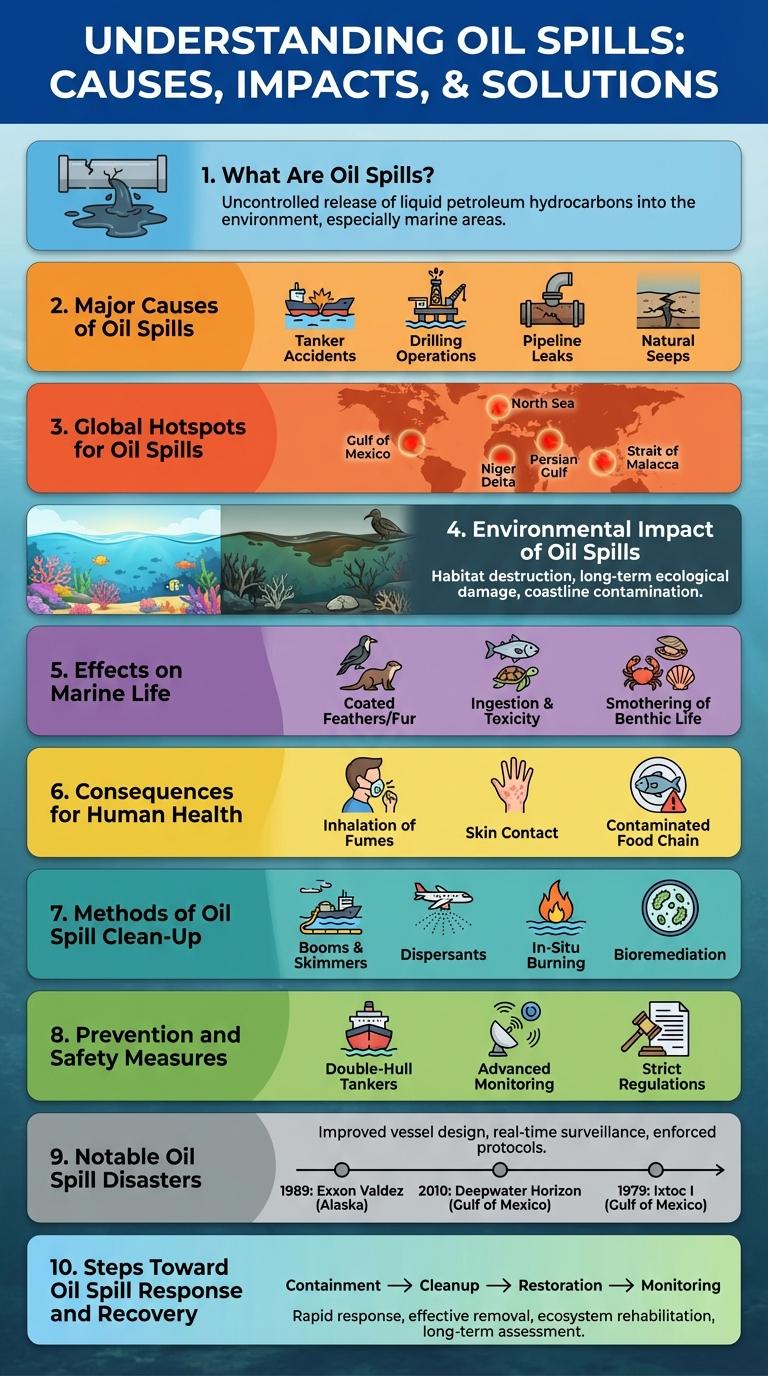
Oil spills cause severe environmental damage by contaminating marine ecosystems and harming wildlife. The infographic illustrates the causes, impacts, and cleanup methods of oil spills to raise awareness and promote prevention. Understanding these factors is crucial for protecting oceans and coastal communities from long-term ecological harm.
What Are Oil Spills?
Oil spills occur when liquid petroleum hydrocarbons are released into the environment, especially marine areas. These spills result from accidents involving oil tankers, pipelines, or drilling rigs.
The released oil forms a slick on water surfaces, harming marine life and coastal ecosystems. Cleanup efforts are complex and costly, often taking years to restore affected habitats.
Major Causes of Oil Spills
Oil spills occur primarily due to pipeline leaks, tanker accidents, and drilling rig failures. Shipping accidents result in large volumes of oil being released into oceans and coastal waters. Equipment malfunctions and human errors also contribute significantly to the frequency of oil spill incidents.
Global Hotspots for Oil Spills
Where are the global hotspots for oil spills? Major oil spill hotspots include the Gulf of Mexico, the North Sea, the Persian Gulf, the South China Sea, and the Niger Delta. These regions face high risks due to dense shipping traffic, extensive oil extraction, and frequent pipeline leaks.
| Region | Key Risk Factors |
|---|---|
| Gulf of Mexico | Offshore drilling accidents, hurricanes impact |
| North Sea | Heavy oil platform activity, shipping lanes |
| Persian Gulf | Dense tanker traffic, geopolitical tensions |
| South China Sea | Fishing operations, oil exploration, maritime disputes |
| Niger Delta | Pipelines sabotage, oil extraction impacts |
Environmental Impact of Oil Spills
Oil spills release millions of gallons of crude oil into oceans and coastal waters each year, severely damaging marine ecosystems. Toxic components in oil destroy habitats and threaten the survival of numerous aquatic species.
Oil spills reduce oxygen levels in water, suffocating fish and other marine life. The contamination of shorelines harms birds and mammals by coating their bodies, impairing insulation and buoyancy. Recovery from oil spills can take decades, with long-term consequences for biodiversity and fisheries.
Effects on Marine Life
Oil spills cause severe damage to marine ecosystems, disrupting the health and survival of numerous aquatic species. The toxic components of oil affect the physiology, behavior, and reproductive capabilities of marine life.
- Physical Coating - Oil coats the bodies of birds and mammals, impairing insulation and buoyancy, leading to hypothermia or drowning.
- Toxic Ingestion - Marine animals ingest oil-contaminated water or prey, causing internal damage, poisoning, and impaired growth.
- Habitat Destruction - Oil spills damage coral reefs and seafloor habitats, reducing biodiversity and disrupting breeding grounds.
Consequences for Human Health
Oil spills pose severe risks to human health, primarily through contaminated air and water. Exposure to toxic chemicals from oil can lead to acute and chronic health problems.
- Respiratory Issues - Inhalation of volatile organic compounds (VOCs) released by oil spills can cause coughing, shortness of breath, and lung irritation.
- Skin Irritation - Direct contact with oil-contaminated water or debris can result in rashes, dermatitis, and burns.
- Long-term Health Effects - Prolonged exposure to spilled oil toxins may increase risks of cancer, neurological disorders, and reproductive problems.
Methods of Oil Spill Clean-Up
| Method | Description |
|---|---|
| Skimming | Mechanical removal of oil from the water surface using skimmers and booms. |
| Dispersants | Chemicals sprayed to break oil into smaller droplets to enhance natural biodegradation. |
| Bioremediation | Use of microorganisms or nutrients to accelerate the natural breakdown of oil. |
| Controlled Burning | Igniting oil slicks to reduce the volume of spilled oil on the water surface. |
| Manual Cleanup | Physical removal of oil-contaminated materials from shorelines using tools and absorbents. |
Prevention and Safety Measures
Oil spills pose significant threats to marine ecosystems and coastal communities. Effective prevention and safety measures are crucial to minimizing environmental damage and economic losses.
Regular maintenance of oil tankers, pipelines, and drilling equipment helps prevent leaks and ruptures. Strict adherence to safety protocols and continuous monitoring can detect early signs of potential spills.
Notable Oil Spill Disasters
Oil spills have caused significant environmental damage worldwide, with several notable disasters marking history. The Deepwater Horizon spill in 2010 released nearly 4.9 million barrels of oil into the Gulf of Mexico, becoming the largest marine oil spill in history. Other major incidents include the Exxon Valdez spill in 1989 and the Ixtoc I spill in 1979, both resulting in devastating effects on wildlife and coastal ecosystems.