
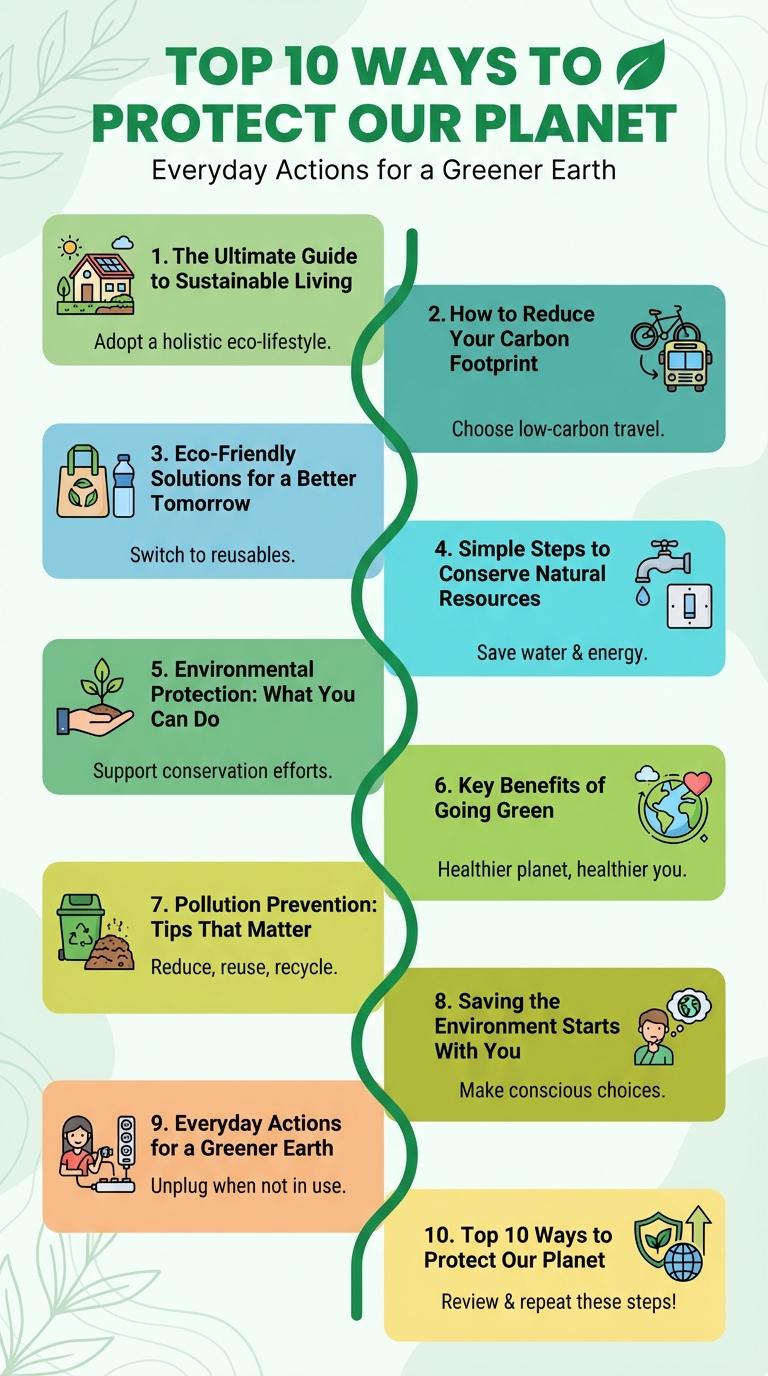
Environmental protection is essential for preserving biodiversity and maintaining ecosystem balance. Infographics offer a clear and engaging way to visualize key data and actionable steps individuals can take. By illustrating the impact of pollution, deforestation, and climate change, these visuals raise awareness and encourage sustainable behaviors.
Top 10 Ways to Protect Our Planet
Protecting the environment is crucial for sustaining life on Earth. Small actions by individuals can lead to significant positive impacts globally.
Reducing plastic use helps decrease pollution in oceans and landfills. Conserving water preserves ecosystems and saves energy. Planting trees improves air quality and combats climate change.
Everyday Actions for a Greener Earth
Protecting the environment starts with small, everyday actions that collectively make a big difference. Simple habits can reduce waste, save energy, and conserve natural resources for future generations.
- Reduce Plastic Use - Limiting single-use plastics lowers pollution and protects marine life.
- Conserve Water - Turning off taps and fixing leaks saves vital water resources.
- Use Energy Efficiently - Switching to LED bulbs and unplugging devices cuts energy consumption and carbon emissions.
Incorporating these habits into daily life supports a healthier planet and sustainable future.
The Ultimate Guide to Sustainable Living
Discover practical steps to reduce your ecological footprint and promote a healthier planet. Learn about energy-efficient habits, waste reduction techniques, and sustainable consumption. Embrace eco-friendly choices that support long-term environmental protection and resource conservation.
How to Reduce Your Carbon Footprint
What are effective ways to reduce your carbon footprint? Reducing energy consumption by using energy-efficient appliances and switching to renewable energy sources decreases greenhouse gas emissions. Choosing sustainable transportation methods like biking, walking, or electric vehicles further minimizes your impact on the environment.
How can diet influence your carbon footprint? Consuming plant-based meals rather than meat reduces methane emissions and conserves water resources. Supporting local and organic foods also lowers the carbon emissions caused by transportation and chemical fertilizers.
Why is waste reduction important for carbon footprint management? Minimizing waste through recycling, composting, and reusing materials cuts down on landfill contributions and reduces methane production. Adopting a zero-waste lifestyle helps conserve natural resources and decreases overall environmental impact.
What role do water conservation habits play in carbon reduction? Using water-efficient fixtures and reducing water waste saves energy used for water treatment and distribution. Collecting rainwater and practicing mindful water use lessen the energy demand on municipal systems.
How does supporting green initiatives contribute to lowering carbon emissions? Investing in eco-friendly products and companies promotes sustainable practices across industries. Participating in community clean-up efforts and environmental education fosters awareness and collective action towards carbon footprint reduction.
Eco-Friendly Solutions for a Better Tomorrow
Environmental protection is essential for sustaining the planet's health and resources. Eco-friendly solutions offer practical ways to reduce pollution and conserve biodiversity for future generations.
- Renewable Energy - Solar, wind, and hydropower decrease reliance on fossil fuels and lower carbon emissions.
- Waste Reduction - Recycling and composting minimize landfill use and conserve natural resources.
- Water Conservation - Efficient water use and rainwater harvesting protect aquatic ecosystems and reduce scarcity.
- Sustainable Agriculture - Organic farming and crop rotation improve soil health and reduce chemical runoff.
- Green Transportation - Electric vehicles and public transit reduce air pollution and greenhouse gas emissions.
Simple Steps to Conserve Natural Resources
Conserving natural resources is essential for maintaining a healthy environment and ensuring sustainable living for future generations. Small, consistent actions can significantly reduce our ecological footprint.
Simple steps such as reducing water and energy consumption, recycling materials, and choosing sustainable products help preserve natural resources. Practicing mindful consumption supports biodiversity and decreases pollution.
Environmental Protection: What You Can Do
Protecting the environment is essential for a sustainable future and the health of our planet. Small actions by individuals can collectively make a significant impact on reducing pollution and conserving resources.
- Reduce Waste - Minimize single-use plastics and recycle materials to decrease landfill contributions.
- Conserve Water - Use water-efficient fixtures and fix leaks to lower water consumption.
- Use Renewable Energy - Switch to solar or wind power to reduce carbon emissions and reliance on fossil fuels.
Key Benefits of Going Green
| Key Benefit | Description |
|---|---|
| Reduced Carbon Footprint | Lower greenhouse gas emissions through energy efficiency and renewable resources. |
| Conservation of Natural Resources | Preserves water, forests, and minerals by minimizing waste and promoting sustainable use. |
| Improved Air and Water Quality | Decreases pollution that harms ecosystems and human health. |
| Energy Savings | Reduces costs and dependence on fossil fuels by using efficient technologies. |
| Enhanced Biodiversity | Protects habitats and promotes ecosystem balance for wildlife survival. |
Pollution Prevention: Tips That Matter
Pollution prevention plays a crucial role in safeguarding our environment and health. Simple actions such as reducing plastic use, properly disposing of hazardous waste, and conserving energy significantly lower pollution levels. Embracing these tips contributes to cleaner air, water, and soil for future generations.