
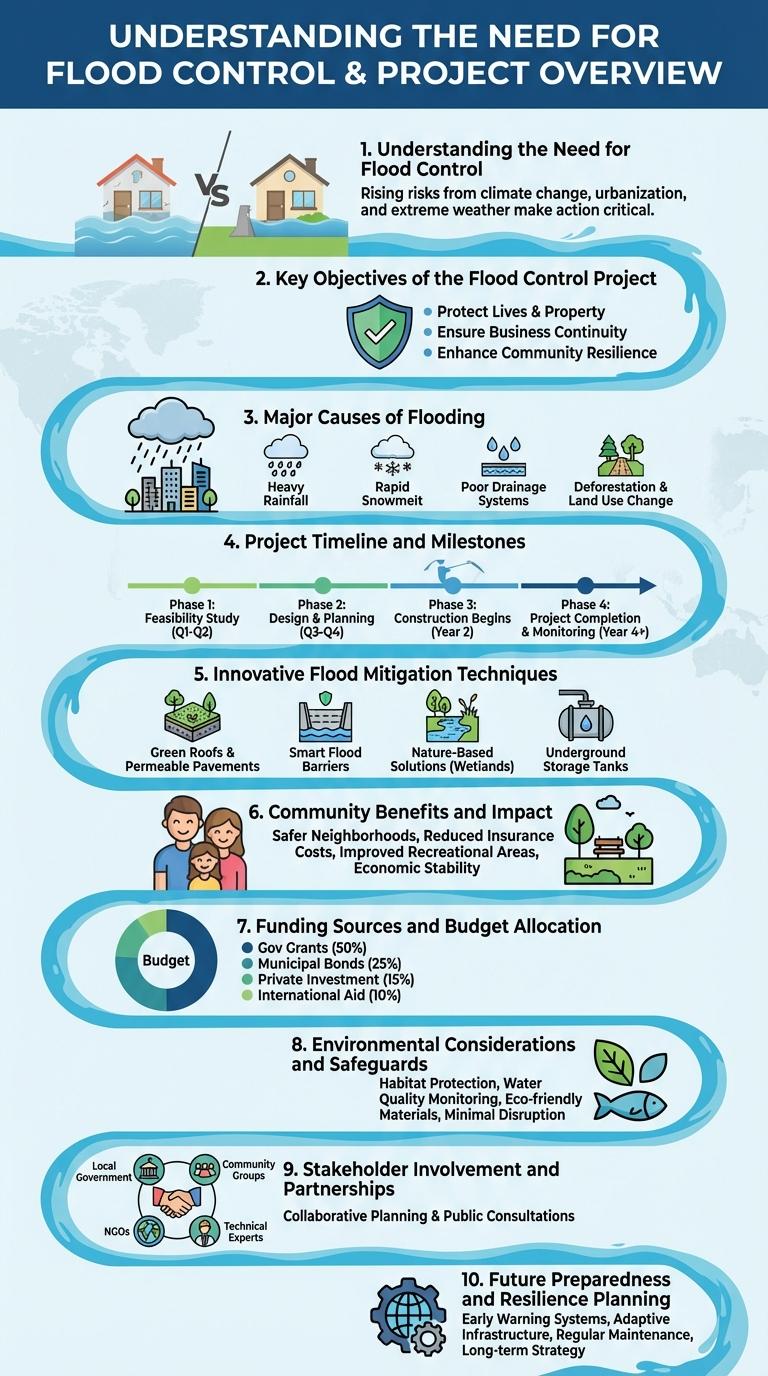
A flood control project infographic visually explains key strategies and infrastructure designed to manage water flow and reduce flooding risks effectively. It highlights essential components such as levees, reservoirs, and drainage systems that protect communities and ecosystems. Clear illustrations enhance understanding of how these measures work together to mitigate flood damage and promote safety.
Understanding the Need for Flood Control
Flood control projects are essential for protecting communities from the devastating impact of rising water levels during heavy rains or storms. These initiatives help manage water flow and reduce the risk of property damage and loss of life.
- Increased Rainfall - Climate change has led to more intense and frequent rainfall, raising the likelihood of floods.
- Urban Development - Expansion of cities increases impermeable surfaces, reducing natural water absorption and heightening flood risk.
- Protecting Lives and Property - Effective flood control measures minimize disruptions and safeguard critical infrastructure.
Understanding the need for flood control is vital for building resilient communities and ensuring sustainable development.
Key Objectives of the Flood Control Project
The key objectives of the flood control project focus on minimizing flood risk to protect communities and infrastructure. The project aims to enhance water management systems by improving drainage capacity and constructing levees or barriers. It also prioritizes the preservation of natural floodplains to reduce environmental impact and support sustainable flood mitigation.
Major Causes of Flooding
Flood control projects aim to reduce the impact of flooding by managing water flow and preventing overflow into populated areas. Understanding the major causes of flooding is essential for designing effective control measures.
Heavy rainfall overwhelming drainage systems is a primary cause of flooding in urban and rural areas. River overflow due to snowmelt or prolonged rain can also lead to significant flood events.
Project Timeline and Milestones
| Project Phase | Completion Date |
|---|---|
| Initial Planning and Site Analysis | March 2022 |
| Design and Engineering Development | August 2022 |
| Permitting and Regulatory Approval | December 2022 |
| Construction and Infrastructure Installation | May 2023 |
| Final Testing, Evaluation, and Project Completion | November 2023 |
Innovative Flood Mitigation Techniques
What innovative techniques are transforming flood control projects worldwide?
Advanced flood mitigation methods such as green infrastructure, smart sensors, and real-time data analytics are significantly improving resilience. These technologies enhance early warning systems and reduce flood damage in vulnerable areas effectively.
Community Benefits and Impact
Flood control projects significantly reduce the risk of property damage and enhance public safety. These initiatives promote sustainable urban development while improving overall community resilience.
- Reduced Flood Damage - Effective flood barriers and drainage systems minimize water intrusion during heavy rains, protecting homes and businesses.
- Improved Public Health - Controlled flooding lowers the incidence of waterborne diseases and mold-related health issues.
- Economic Stability - Preventing flood-related disruptions supports local economies by safeguarding infrastructure and reducing recovery costs.
Funding Sources and Budget Allocation
Flood control projects require substantial financial investment to protect communities from water damage and ensure infrastructure resilience. Effective funding and budget allocation are critical for the successful implementation and maintenance of these projects.
Primary funding sources for flood control initiatives include federal grants, state funds, local government budgets, and private sector contributions. Budget allocation prioritizes construction of levees, floodwalls, and drainage systems, as well as emergency preparedness and public awareness programs. Transparent financial management ensures funds are used efficiently to minimize flood risks and support long-term sustainability.
Environmental Considerations and Safeguards
Flood control projects incorporate essential environmental considerations to ensure ecosystem protection and sustainability. Safeguards minimize adverse impacts on wildlife habitats and maintain natural water flow.
- Wetland Preservation - Projects protect and restore wetlands to maintain biodiversity and natural flood absorption capabilities.
- Water Quality Management - Measures are implemented to prevent pollutants from entering water bodies during and after construction.
- Habitat Connectivity - Structures are designed to allow safe migration and movement of aquatic and terrestrial species.
Stakeholder Involvement and Partnerships
Flood control projects require active involvement from diverse stakeholders, including local governments, community members, environmental organizations, and engineering experts. Collaborative partnerships enhance resource sharing, improve decision-making, and ensure sustainable flood management strategies are implemented effectively. Successful stakeholder engagement fosters transparency, builds trust, and maximizes the project's long-term resilience against flooding risks.