
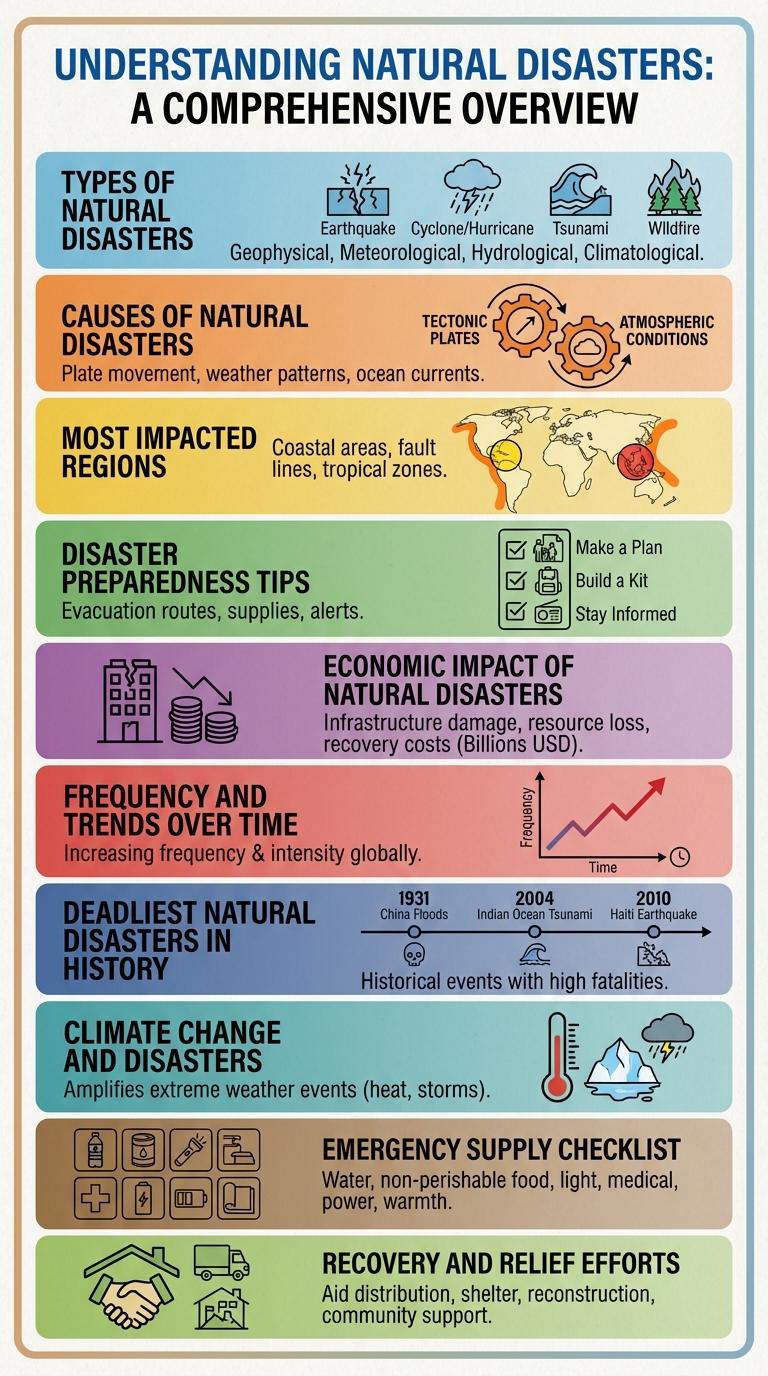
Natural disasters often strike with little warning, causing significant damage to communities and the environment. Understanding the causes, effects, and safety measures associated with events like earthquakes, hurricanes, floods, and wildfires can save lives and reduce property loss. This infographic presents key facts and tips to help individuals prepare for and respond effectively to these unpredictable natural phenomena.
Types of Natural Disasters
Natural disasters are catastrophic events caused by natural forces that impact the environment and human life. Understanding the types of natural disasters helps in preparedness and mitigation efforts.
Common types of natural disasters include earthquakes, hurricanes, floods, wildfires, and tornadoes. Each type varies in cause, impact, and geographical occurrence.
Causes of Natural Disasters
What triggers natural disasters around the world? Natural disasters result from a combination of geological, meteorological, and environmental factors. Understanding these causes helps mitigate risks and improve preparedness for events like earthquakes, hurricanes, and floods.
| Cause | Description |
|---|---|
| Plate Tectonics | Movement of Earth's plates causes earthquakes and volcanic eruptions. |
| Extreme Weather | Hurricanes, tornadoes, and storms form due to variations in atmospheric pressure and temperature. |
| Climate Change | Rising global temperatures increase the frequency and intensity of droughts and floods. |
| Human Activity | Deforestation and urbanization can exacerbate natural hazards and trigger landslides. |
| Volcanic Activity | Magma movement beneath the Earth's surface leads to eruptions and ash clouds. |
Most Impacted Regions
Natural disasters affect various regions worldwide, with certain areas experiencing more frequent and severe events. Understanding the most impacted regions helps in disaster preparedness and risk mitigation.
- Asia - Home to the highest number of natural disasters, including typhoons, earthquakes, and floods, affecting millions annually.
- North America - Frequently experiences hurricanes, tornadoes, and wildfires, causing significant economic and human losses.
- Pacific Islands - Highly vulnerable to cyclones, tsunamis, and rising sea levels due to geographic and climatic conditions.
Targeted disaster management strategies in these regions are crucial for reducing the impact on communities and infrastructure.
Disaster Preparedness Tips
Natural disasters can strike without warning, causing significant damage and loss. Preparing in advance helps minimize risks and ensures safety for you and your family. Key preparedness tips include creating an emergency kit, developing a communication plan, and staying informed through reliable sources.
Economic Impact of Natural Disasters
Natural disasters cause significant economic losses worldwide, with damages amounting to billions of dollars annually. The destruction of infrastructure, homes, and businesses disrupts local economies and strains government resources. Recovery efforts often require extensive investment, impacting national budgets and long-term economic growth.
Frequency and Trends Over Time
| Natural Disaster | Frequency Trend (Last 50 Years) |
|---|---|
| Floods | Significant increase due to climate change and urbanization |
| Hurricanes | Rising intensity, slight increase in frequency |
| Earthquakes | Relatively stable frequency, but higher damage events reported |
| Wildfires | Marked increase in both frequency and affected areas |
| Droughts | More frequent and prolonged in vulnerable regions |
Deadliest Natural Disasters in History
Natural disasters have caused significant loss of life throughout history, with some events resulting in millions of fatalities. Understanding the deadliest natural disasters provides insight into the immense impact of nature's power on human populations.
The 1931 China floods are considered the deadliest natural disaster, claiming an estimated 1 to 4 million lives due to massive flooding and subsequent famine. Other catastrophic events include the 1556 Shaanxi earthquake and the 1970 Bhola cyclone, each resulting in hundreds of thousands of deaths.
Climate Change and Disasters
Climate change intensifies the frequency and severity of natural disasters worldwide. Rising global temperatures contribute to extreme weather events, threatening ecosystems and communities.
- Increased Hurricanes - Warmer ocean temperatures fuel more powerful and longer-lasting hurricanes.
- Rising Flood Risks - Melting ice caps and higher sea levels lead to greater flooding in coastal regions.
- Drought and Wildfires - Higher temperatures and prolonged dry periods increase drought severity and wildfire occurrences.
Emergency Supply Checklist
Preparing an emergency supply kit is crucial for surviving natural disasters. Essential items ensure safety, health, and communication during crises.
- Water and Non-Perishable Food - Store at least one gallon of water per person per day and non-perishable food for three days.
- First Aid Kit - Include bandages, antiseptics, medications, and allergy supplies to treat injuries promptly.
- Communication Tools - Keep a battery-powered radio, extra batteries, and a fully charged phone with portable chargers.
- Personal Hygiene Items - Pack soap, hand sanitizer, feminine products, and masks to maintain hygiene and prevent illness.
- Important Documents and Cash - Secure identification, insurance papers, and emergency cash in waterproof containers.