
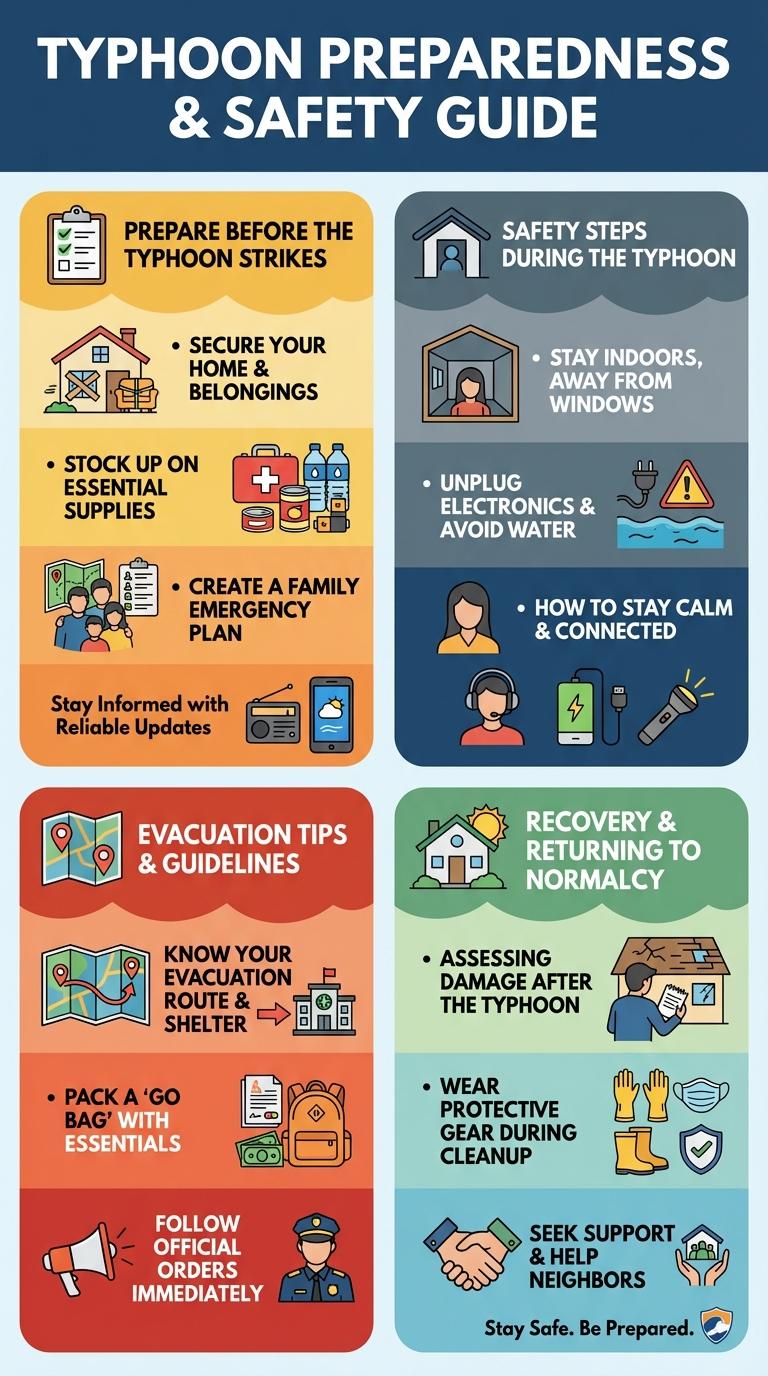
Preparing for a typhoon involves clear steps to ensure safety and minimize damage. Before the storm, secure your home and gather essential supplies to stay prepared. During the typhoon, stay indoors and monitor weather updates closely, while after the storm, carefully assess any damage and follow local emergency instructions for recovery.
Prepare Before the Typhoon Strikes
Preparing thoroughly before a typhoon strikes is vital to ensure safety and minimize damage. Taking proactive steps can protect lives, property, and reduce emergency response time.
- Secure Your Home - Reinforce windows, doors, and roofs to prevent damage from strong winds and flying debris.
- Stock Emergency Supplies - Gather essentials such as water, non-perishable food, medications, flashlights, and batteries for at least three days.
- Create an Evacuation Plan - Identify safe routes and shelters, and establish communication plans with family members.
Early preparation empowers you to face the typhoon with confidence and resilience.
Secure Your Home and Belongings
Before a typhoon, reinforce windows and doors with plywood or shutters to secure your home against strong winds. During the storm, stay indoors away from windows and keep important belongings in sturdy, elevated containers to prevent water damage. After the typhoon, inspect your property for damages and safely retrieve belongings, prioritizing items that may have shifted or been exposed to floodwaters.
Stock Up on Essential Supplies
Prepare for a typhoon by stocking up on essential supplies such as water, non-perishable food, batteries, and first aid kits. These items ensure safety and comfort when access to stores or services is limited.
During the typhoon, conserve your supplies by rationing food and water carefully to last through potential power outages. Keep batteries charged and use flashlights instead of candles to reduce fire risks.
After the typhoon, assess your remaining supplies and restock what was used or damaged. Proper preparation and replenishment can help maintain readiness for future emergencies.
Create a Family Emergency Plan
Preparing for a typhoon involves careful planning and clear communication within the family. Creating a Family Emergency Plan ensures safety and quick response before, during, and after the storm.
- Before the Typhoon - Designate emergency meeting points and assign roles to each family member to ensure everyone knows their responsibilities.
- During the Typhoon - Maintain communication through battery-powered devices and keep all family members informed about the storm's progress.
- After the Typhoon - Conduct a headcount, check for injuries, and follow the emergency plan to access aid or evacuate if needed.
Stay Informed with Reliable Updates
Stay informed with reliable updates before, during, and after a typhoon to ensure safety. Access official weather reports from trusted sources such as the National Weather Service or local government agencies.
Before the typhoon, monitor forecasts closely to prepare emergency supplies and secure your home. During the typhoon, keep tuned to real-time updates via radio, TV, or mobile alerts to track the storm's path and intensity. After the typhoon passes, continue following official guidance for safety information and emergency assistance.
Safety Steps During the Typhoon
Typhoons pose significant risks, requiring clear safety measures before, during, and after the event. Following proper safety steps helps minimize injuries and damage.
- Secure Your Home - Reinforce windows and doors with plywood or storm shutters to prevent breakage from strong winds.
- Stay Indoors and Away from Windows - Remain inside a sturdy building and avoid windows to protect yourself from flying debris.
- Monitor Official Updates - Continuously listen to weather advisories and emergency announcements via radio or mobile alerts for real-time instructions.
Evacuation Tips and Guidelines
What essential steps should be taken before a typhoon evacuation? Prepare an emergency kit with water, food, and medical supplies. Identify the nearest evacuation center and plan multiple routes to reach it safely.
How can one stay safe during a typhoon evacuation? Follow official evacuation orders promptly to avoid risks from rising floodwaters and strong winds. Stay informed via radio or mobile alerts for real-time updates and instructions.
What actions are important after evacuating from a typhoon? Return home only when authorities declare it safe to do so. Inspect your surroundings for hazards like downed power lines and contaminated water before re-entering.
How to Stay Calm and Connected
| Before Typhoon | How to Stay Calm and Connected |
|---|---|
| Prepare emergency kits with essentials. | Keep phone chargers and power banks ready to maintain communication. |
| Secure windows and doors to minimize damage. | Download local emergency apps and offline maps to stay informed even without internet. |
| Identify safe shelter areas in your home. | Create a family emergency contact list and share it with all members. |
| During Typhoon | How to Stay Calm and Connected |
| Stay indoors away from windows and glass doors. | Use battery-powered radios or smartphones to monitor updates frequently. |
| Avoid unnecessary travel and outdoor activities. | Keep in touch with family using text messages or social media for brief updates. |
| Remain in designated safe zones. | Practice deep breathing or meditation to reduce stress and anxiety. |
| After Typhoon | How to Stay Calm and Connected |
| Check your surroundings for hazards like fallen power lines. | Report your status and needs to emergency contacts or authorities promptly. |
| Help neighbors and community members if safe to do so. | Share accurate information via social media or community groups to prevent rumors. |
| Follow official guidance on returning to normal activities. | Maintain regular communication and support networks to aid emotional recovery. |
Assessing Damage After the Typhoon
Assessing damage after a typhoon is crucial to ensure safety and plan recovery effectively. Prioritize checking structural damage to your home and immediate surroundings before moving inside.
Document all damages with clear photos and notes for insurance claims and aid requests. Avoid downed power lines and flooded areas to prevent further injury during the assessment.