
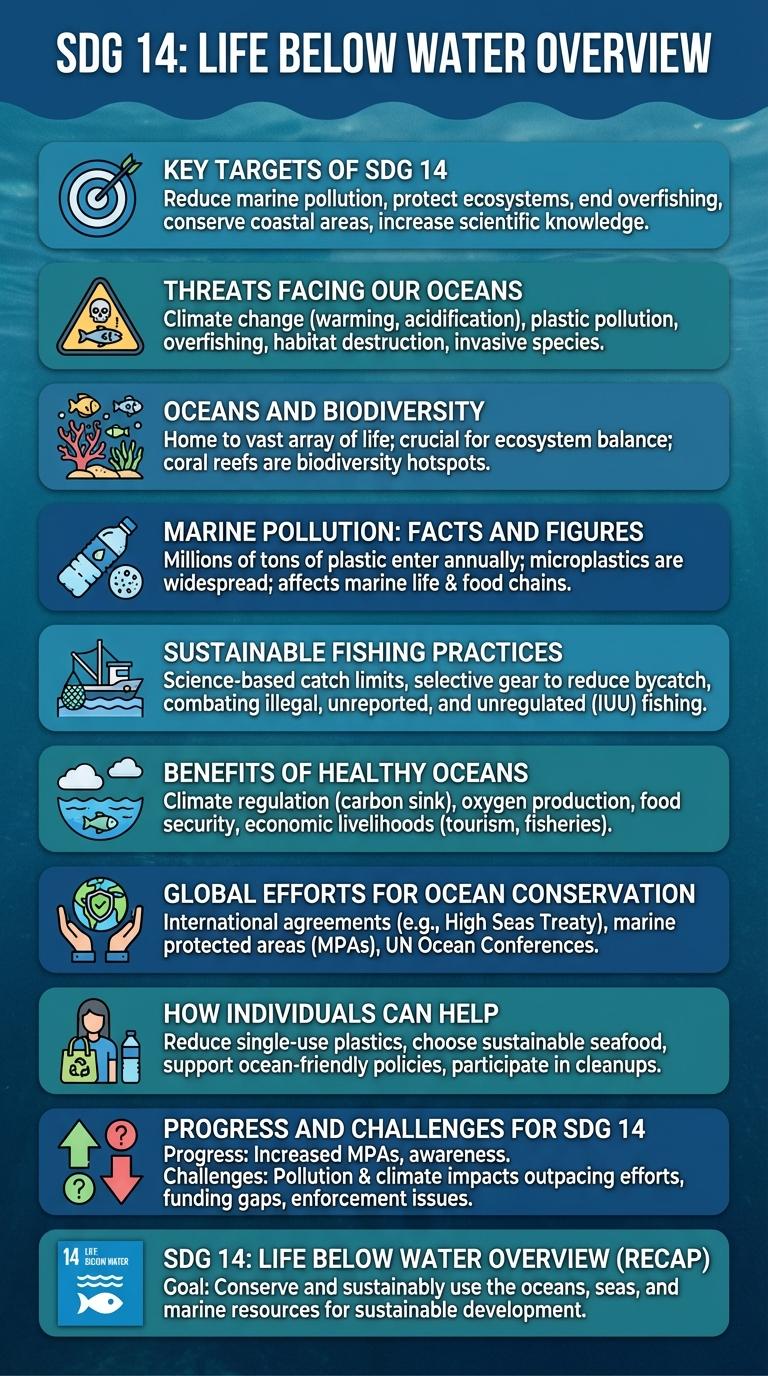
SDG 14 focuses on conserving and sustainably using the oceans, seas, and marine resources to promote healthy marine ecosystems. Protecting biodiversity and combating marine pollution are essential to maintaining the oceans' vital role in global climate regulation and food security. This infographic highlights key targets and progress indicators for achieving sustainable development goals related to marine environments.
SDG 14: Life Below Water Overview
SDG 14, Life Below Water, aims to conserve and sustainably use the oceans, seas, and marine resources. Healthy marine ecosystems support biodiversity, food security, and livelihoods globally.
Marine pollution, overfishing, and climate change threaten ocean health and economic benefits. International cooperation is essential for protecting marine environments and ensuring sustainable ocean use.
Key Targets of SDG 14
Sustainable Development Goal 14 aims to conserve and sustainably use the oceans, seas, and marine resources. Healthy marine ecosystems are vital for biodiversity, food security, and climate regulation.
Key targets include reducing marine pollution and protecting marine habitats. Emphasis is placed on ending overfishing and increasing scientific knowledge for ocean management.
Threats Facing Our Oceans
Oceans face multiple threats that undermine marine biodiversity and ecosystem services essential for human survival. Addressing these dangers is crucial to achieving Sustainable Development Goal 14 (Life Below Water).
- Overfishing - Excessive and unregulated fishing depletes fish populations and disrupts marine food chains.
- Pollution - Marine pollution from plastics, chemicals, and oil spills damages habitats and harms aquatic life.
- Climate Change - Rising ocean temperatures and acidification cause coral bleaching and threaten marine species.
- Habitat Destruction - Coastal development and bottom trawling destroy critical habitats like coral reefs and seagrass beds.
- Invasive Species - Non-native species introduced by ships or aquaculture outcompete native marine organisms.
Oceans and Biodiversity
| Aspect | Key Data and Insights |
|---|---|
| SDG 14 Objective | Conserve and sustainably use the oceans, seas, and marine resources for sustainable development. |
| Ocean Biodiversity | Marine ecosystems host over 230,000 known species; biodiversity is vital for ecosystem stability and human livelihoods. |
| Threats to Oceans | Over 33% of global fish stocks are overexploited; marine pollution includes 8 million tons of plastic waste yearly; ocean acidification rising due to CO2 emissions. |
| Protected Marine Areas | Only 7.74% of global oceans are currently designated as Marine Protected Areas (MPAs), with targets aiming for 30% by 2030. |
| Importance of Action | Healthy oceans regulate climate, support biodiversity, sustain fisheries, and support economic activities globally. |
Marine Pollution: Facts and Figures
Marine pollution severely impacts ocean ecosystems, with over 80% of marine debris originating from land-based sources. Plastic waste constitutes approximately 70% of all marine litter, harming marine life and entering the food chain. Efforts to reduce pollution include international agreements, improved waste management, and public awareness campaigns to protect ocean health.
Sustainable Fishing Practices
What are sustainable fishing practices and why are they important for SDG 14? Sustainable fishing practices ensure the long-term health of marine ecosystems and help maintain fish populations for future generations. These methods reduce overfishing, minimize habitat damage, and support biodiversity.
| Sustainable Fishing Practice | Key Benefit |
|---|---|
| Quota Systems | Limit catch to prevent overfishing |
| Selective Gear | Reduces bycatch of non-target species |
| Seasonal Closures | Protect breeding and spawning periods |
| Community Management | Empowers local stewardship and compliance |
| Marine Protected Areas | Allows ecosystems to recover and thrive |
How do sustainable fishing practices contribute to marine biodiversity? They prevent overexploitation of fish species and protect critical habitats from destructive techniques like bottom trawling. This balance supports the resilience and productivity of oceans aligned with Sustainable Development Goal 14.
Benefits of Healthy Oceans
Healthy oceans support biodiversity by providing habitat for over 230,000 known marine species. They contribute to global food security by supplying 17% of the animal protein consumed worldwide. Oceans also play a crucial role in climate regulation by absorbing approximately 30% of human-produced carbon dioxide.
Global Efforts for Ocean Conservation
SDG 14 aims to conserve and sustainably use the oceans, seas, and marine resources worldwide. Global efforts focus on protecting marine biodiversity and combating ocean pollution to ensure healthy ecosystems.
- Marine Protected Areas (MPAs) - Over 7.5% of the world's oceans are designated as MPAs to safeguard habitats and species.
- International Agreements - Treaties like the United Nations Convention on the Law of the Sea (UNCLOS) regulate ocean use and resource management.
- Pollution Reduction Initiatives - Global campaigns target plastic waste and chemical pollutants to reduce ocean contamination and protect marine life.
How Individuals Can Help
SDG 14 aims to conserve and sustainably use the oceans, seas, and marine resources. Every individual can contribute to protecting marine ecosystems through conscious actions.
- Reduce Plastic Use - Minimizing single-use plastics helps prevent ocean pollution and protects marine life.
- Support Sustainable Seafood - Choosing sustainably sourced seafood encourages responsible fishing practices.
- Participate in Cleanups - Joining local beach or river cleanups removes harmful debris from aquatic environments.
Individual efforts collectively create healthier oceans and support global marine conservation goals.