
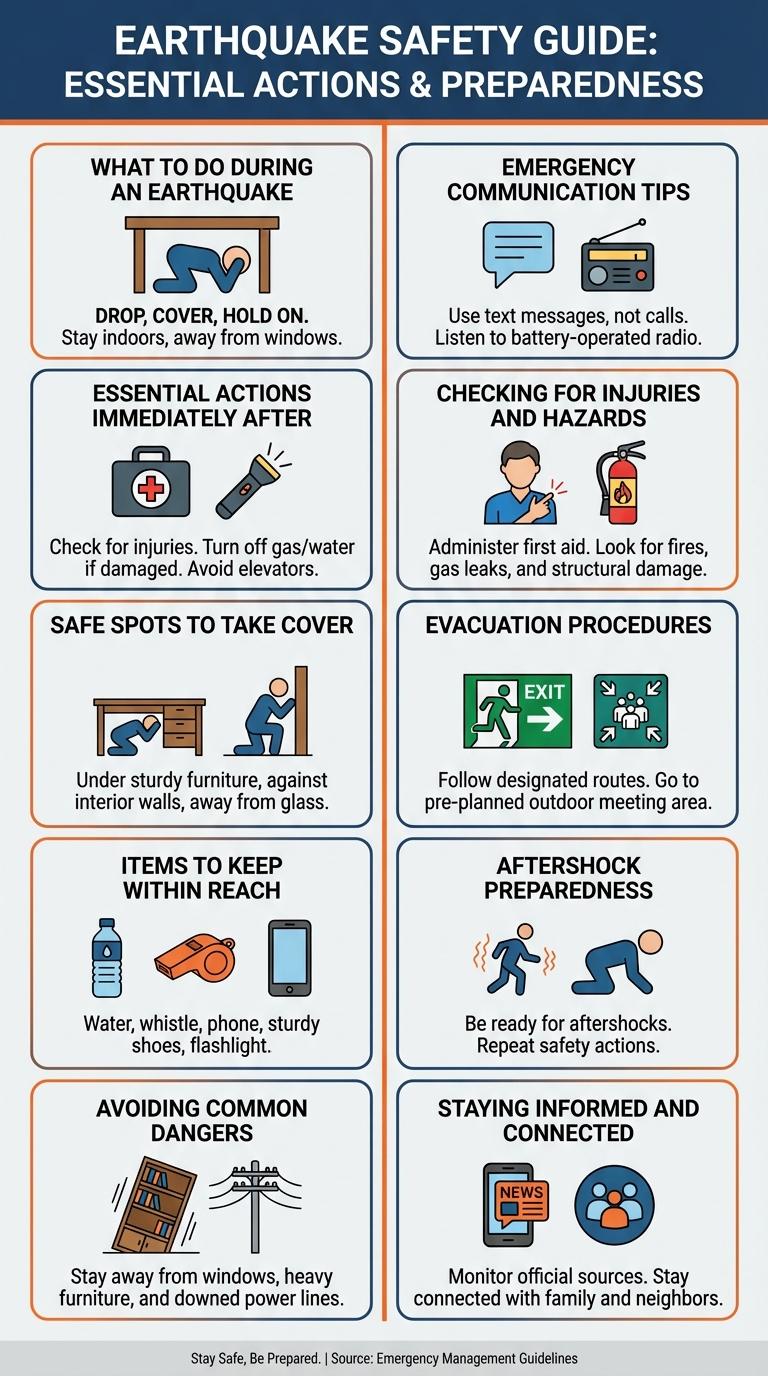
Earthquake safety requires understanding critical actions to take during and after the event to minimize harm and ensure well-being. During an earthquake, seeking shelter under sturdy furniture and staying away from windows reduces injury risk. After the shaking stops, checking for injuries, avoiding damaged structures, and preparing for aftershocks are essential steps for recovery and safety.
What to Do During an Earthquake
Earthquakes demand immediate and calm reactions to ensure safety. Knowing what actions to take during the shaking can prevent injuries and save lives.
- Drop, Cover, and Hold On - Drop to your hands and knees, cover your head and neck with your arms, and hold on to sturdy furniture until shaking stops.
- Stay Indoors - Remain inside, away from windows and exterior walls, to avoid falling glass and debris.
- Avoid Elevators - Do not use elevators during an earthquake due to potential power failures and mechanical damage.
Essential Actions Immediately After
Experiencing an earthquake can cause widespread damage and pose severe safety risks. Immediately after the shaking stops, check yourself and others for injuries, and provide first aid if necessary. Move to a safe location away from damaged buildings and follow emergency instructions.
Inspect your surroundings for hazards such as gas leaks, fires, and electrical damage. Avoid using open flames and turn off utilities if you suspect leaks or damage. Stay informed through a battery-powered radio or mobile device for official updates and instructions.
Prepare for aftershocks by staying alert and ready to take cover. Communicate your status to family and emergency services if possible. Keep emergency supplies accessible, including water, food, and medical kits, as conditions may remain unstable for hours or days.
Safe Spots to Take Cover
During an earthquake, find safe spots such as under sturdy furniture, against interior walls away from windows, and in doorways. Avoid areas near glass, heavy objects, or exterior walls that can shatter or collapse. After the shaking stops, stay in safe spots until it is confirmed safe to move, watching for falling debris and aftershocks.
Items to Keep Within Reach
Preparing essential items within reach during and after an earthquake can improve safety and survival. Knowing what to keep close helps ensure quick access in emergencies.
- Water Supply - Store enough drinking water for at least 72 hours to stay hydrated after an earthquake.
- First Aid Kit - Keep a well-stocked first aid kit nearby for treating injuries immediately.
- Emergency Flashlight - Have a reliable flashlight within reach to navigate safely in power outages.
Prioritizing these items maximizes safety and readiness during and after an earthquake event.
Avoiding Common Dangers
What are the most common dangers during an earthquake? Falling objects and structural collapses pose serious risks. Staying away from windows and heavy furniture reduces injury chances.
How can you avoid electrical hazards after an earthquake? Turn off the main power supply immediately. Stay clear of downed power lines and report them to authorities.
Why is it important to check for gas leaks following an earthquake? Gas leaks can cause fires or explosions. Use a flashlight, not open flames or switches, to inspect your home safely.
What should you do to prevent injuries from aftershocks? Drop, cover, and hold on in a safe spot until shaking stops. Avoid doorways and seek sturdy furniture for protection.
How can emergency preparedness reduce risks post-earthquake? Keeping a first-aid kit and emergency supplies ready supports quick response. Having a communication plan ensures help reaches you promptly.
Emergency Communication Tips
Emergency communication is vital during and after an earthquake to ensure safety and coordination. Use text messages or social media to avoid overloaded phone lines and keep messages concise and clear.
Establish a pre-agreed family meeting point and have important contact numbers written down. After an earthquake, check in with loved ones as soon as possible to confirm everyone's safety and share your location.
Checking for Injuries and Hazards
| During the Earthquake | After the Earthquake |
|---|---|
|
|
Evacuation Procedures
Earthquake evacuation procedures are crucial for minimizing injuries and fatalities during seismic events. Knowing how to quickly and safely exit buildings can save lives.
During an earthquake, drop to the ground, take cover under sturdy furniture, and hold on until shaking stops. After the shaking, evacuate buildings calmly using designated escape routes, avoiding elevators and hazardous areas. Assemble at predetermined safe zones and wait for emergency personnel instructions to ensure everyone is accounted for.
Aftershock Preparedness
Aftershocks can occur minutes, days, or even weeks after the main earthquake, posing significant risks. Being prepared for aftershocks is crucial to minimize injuries and damage.
- Secure heavy objects - Ensure furniture and appliances are fastened to prevent tipping during aftershocks.
- Create a safety plan - Identify safe spots in each room, such as under sturdy tables or against interior walls.
- Keep emergency supplies accessible - Maintain a ready kit with water, food, and first aid materials for immediate use aftershocks.