
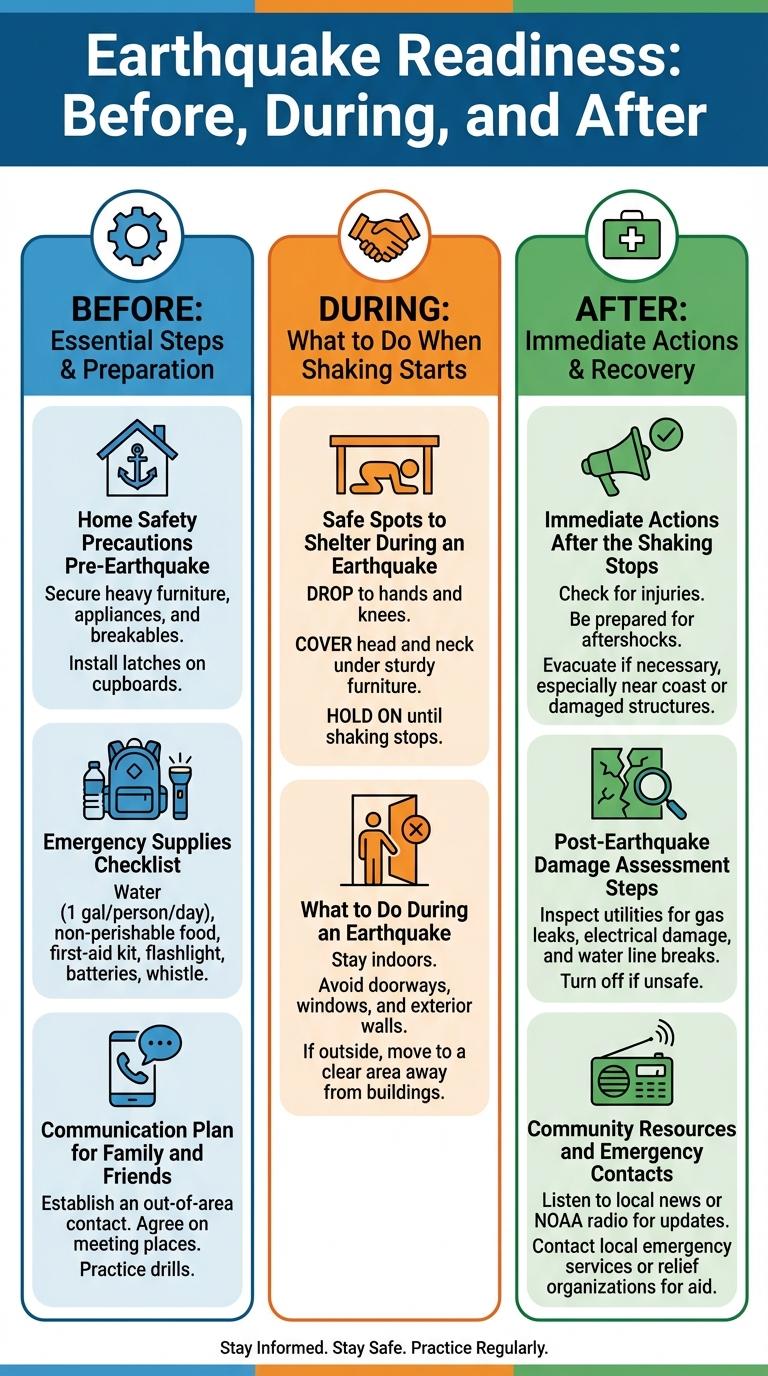
Preparing for an earthquake involves understanding key safety measures to protect yourself and others before, during, and after the event. Securing heavy furniture, practicing "Drop, Cover, and Hold On," and having an emergency kit ready can significantly reduce injury risks. Post-earthquake actions include checking for injuries, avoiding damaged structures, and staying informed through official updates to ensure ongoing safety.
Earthquake Readiness: Before, During, and After
Earthquake readiness involves preparing your home and family before a quake strikes to minimize injury and damage. Secure heavy furniture, store emergency supplies, and create a family communication plan.
During an earthquake, drop to the ground, take cover under sturdy furniture, and hold on until shaking stops. Stay away from windows, exterior walls, and objects that could fall.
After an earthquake, check yourself and others for injuries and provide first aid if needed. Inspect your environment for hazards such as gas leaks or electrical damage and follow emergency instructions from authorities.
Essential Steps Before an Earthquake Strikes
| Step | Action |
|---|---|
| Prepare Emergency Kit | Include water, non-perishable food, flashlight, batteries, first aid supplies, and essential medications. |
| Secure Home | Anchor heavy furniture, install safety latches on cabinets, and fix loose items to walls. |
| Develop a Family Plan | Establish communication methods and designate safe meeting places. |
| Identify Safe Zones | Know safe spots inside and outside your home such as under sturdy tables or against interior walls away from windows. |
| Stay Informed | Subscribe to local alerts and learn earthquake warning systems in your area. |
What to Do During an Earthquake
Knowing how to respond during an earthquake can save lives and reduce injuries. Follow these essential steps to stay safe if shaking begins.
- Drop, Cover, and Hold On - Drop to your hands and knees, cover your head and neck under sturdy furniture, and hold on until the shaking stops.
- Stay Indoors - Remain inside and away from windows, glass, and exterior walls to avoid flying debris and structural hazards.
- Stay Calm and Alert - Keep calm to think clearly and listen for emergency instructions on a battery-powered radio or mobile device.
Immediate Actions After the Shaking Stops
What should you do immediately after the earthquake shaking stops? Check yourself and others for injuries and provide first aid if necessary. Stay alert for aftershocks and avoid using elevators.
How can you safely exit a building after an earthquake? Use stairs instead of elevators and watch for falling debris while evacuating. Move to an open area away from buildings, trees, and power lines.
What steps help ensure safety around damaged infrastructure? Inspect your surroundings for gas leaks, broken glass, and structural damage. Turn off the gas supply if you detect a leak to prevent fires or explosions.
How should you communicate after the shaking stops? Use text messages or social media to keep phone lines open for emergency calls. Inform family members of your status and location if possible.
Why is it important to listen to official updates post-earthquake? Tune in to a battery-powered radio for emergency information and instructions. Follow evacuation orders and safety guidelines promptly.
Home Safety Precautions Pre-Earthquake
Securing heavy furniture and appliances to walls reduces the risk of injury and property damage during an earthquake. Store breakable items in low, closed cabinets and install latches on cupboards to prevent contents from spilling. Keep an emergency kit with water, food, flashlight, and first aid supplies ready and accessible in your home.
Safe Spots to Shelter During an Earthquake
Knowing safe spots to shelter during an earthquake can significantly reduce injury and save lives. Proper preparation, awareness, and quick action are key to staying protected.
- Under sturdy furniture - Take cover beneath a solid table or desk to shield yourself from falling debris.
- Against interior walls - Position yourself away from windows and exterior walls to avoid shattered glass and falling objects.
- In doorways (if structurally sound) - Use door frames only if they are strong and wide enough to provide protection during shaking.
Identifying and practicing safe shelter spots before an earthquake ensures you respond calmly and effectively during the event.
Emergency Supplies Checklist
Prepare an emergency supplies kit with essentials including water, non-perishable food, flashlight, batteries, a first aid kit, and important documents. During an earthquake, protect yourself by taking cover under sturdy furniture, staying away from windows, and holding on until the shaking stops. After the earthquake, check for injuries, avoid damaged buildings, and use your emergency supplies to stay safe until help arrives.
Communication Plan for Family and Friends
Creating a communication plan is essential for ensuring family and friends stay connected during an earthquake. Knowing how to reach each other reduces panic and confusion in emergency situations.
Before an earthquake, establish primary and secondary contacts and choose a safe meeting point. During the earthquake, send quick texts or calls to confirm safety without overloading networks. After the earthquake, use social media or emergency radio if phone lines are down to report your status and get updates.
Post-Earthquake Damage Assessment Steps
Understanding what to do before, during, and after an earthquake is essential for safety and minimizing damage. Post-earthquake damage assessment is critical for identifying hazards and planning recovery efforts.
- Ensure Personal Safety - Check yourself and others for injuries before inspecting property damage to avoid additional hazards.
- Inspect Structural Integrity - Examine walls, foundations, and roofs for cracks, shifts, or signs of collapse to determine building safety.
- Document Damage - Take photos and detailed notes of all damage for insurance claims and repair planning.
- Report Hazards - Notify local authorities about gas leaks, electrical issues, or unstable structures to prevent further accidents.
- Plan Repairs and Recovery - Prioritize urgent repairs and organize resources to restore normalcy efficiently.