
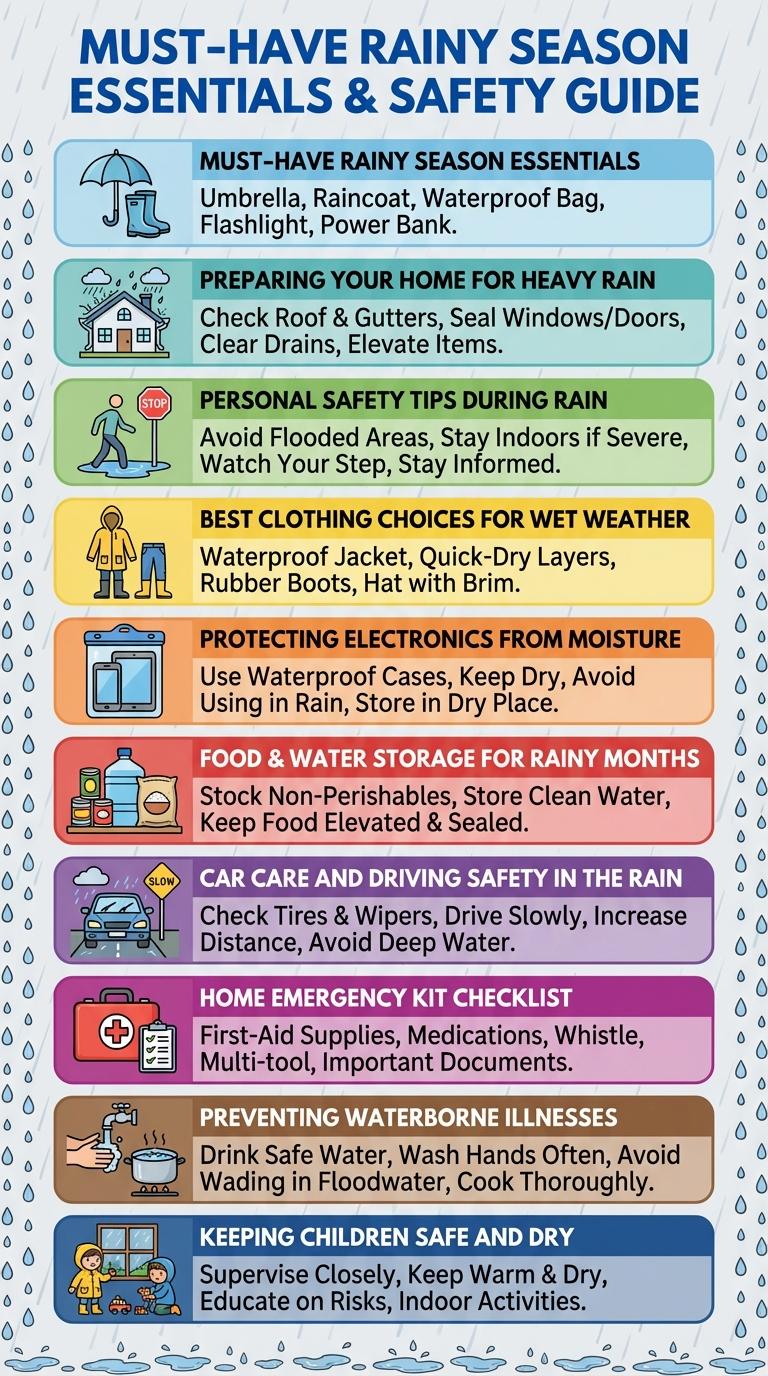
Preparing for the rainy season ensures safety and comfort by addressing common challenges such as flooding and dampness. Key actions include waterproofing homes, organizing drainage systems, and stocking up on essentials like umbrellas and raincoats. Staying informed about weather forecasts and maintaining emergency supplies can significantly reduce seasonal risks.
Must-Have Rainy Season Essentials
Preparing for the rainy season involves gathering essential items that protect you from wet and cold conditions. Having the right gear ensures safety, comfort, and health during heavy rains.
Check out these must-have rainy season essentials to stay dry and prepared.
- Waterproof Raincoat - A high-quality waterproof raincoat keeps you dry and comfortable during persistent downpours.
- Non-Slip Waterproof Footwear - Shoes with good grip reduce the risk of slips and falls on wet surfaces.
- Waterproof Bags or Covers - Protect your electronic devices and important belongings from water damage with waterproof bags or covers.
Preparing Your Home for Heavy Rain
Preparing your home for heavy rain involves thorough inspection and maintenance of roofs, gutters, and drainage systems to prevent water damage. Secure windows and doors by sealing any gaps and installing waterproof barriers to keep moisture out. Keep emergency supplies such as sandbags and waterproof tarps ready to protect vulnerable areas during intense downpours.
Personal Safety Tips During Rain
Rainy season poses unique challenges that require careful preparation to ensure personal safety. Understanding key safety measures can significantly reduce risks associated with heavy rainfall and slippery conditions.
- Wear appropriate waterproof clothing - Use raincoats, waterproof boots, and umbrellas to stay dry and prevent cold-related illnesses.
- Avoid walking through flooded areas - Floodwaters can hide hazards like open drains or sharp objects, increasing the risk of injury.
- Use non-slip footwear - Shoes with good grip prevent falls on wet and slippery surfaces, minimizing accidents.
Following these safety tips helps ensure personal well-being during the rainy season and reduces exposure to waterborne hazards.
Best Clothing Choices for Wet Weather
Choosing the right clothing during the rainy season is crucial for staying dry and comfortable. Waterproof jackets, breathable raincoats, and quick-drying fabrics help protect against moisture and chill.
Footwear like waterproof boots and non-slip shoes prevent slipping and keep feet dry. Layering with moisture-wicking base layers ensures you stay warm even in damp conditions.
Protecting Electronics from Moisture
Protecting electronics from moisture during the rainy season is crucial to prevent damage and ensure longevity. Store devices in waterproof cases or sealed plastic bags when not in use. Use silica gel packets or moisture absorbers inside storage boxes to reduce humidity and keep gadgets dry.
Food & Water Storage for Rainy Months
Proper food and water storage is crucial during the rainy season to prevent spoilage and ensure safety. Rainy months bring higher humidity and increased risk of contamination, making careful preparation essential.
Store non-perishable foods such as canned goods, dried fruits, and grains in airtight containers to protect from moisture. Keep a sufficient supply of clean drinking water, ideally at least one gallon per person per day, stored in sealed containers for emergencies.
Car Care and Driving Safety in the Rain
Proper car maintenance and safe driving techniques are crucial during the rainy season. These measures help prevent accidents and ensure a smooth driving experience in wet conditions.
- Check tire tread depth - Ensure tires have sufficient tread to maintain grip on wet roads and reduce hydroplaning risk.
- Inspect windshield wipers - Replace old or worn wipers for optimal visibility during heavy rain.
- Test brake functionality - Confirm brakes respond effectively on slippery surfaces for safe stopping.
- Use headlights properly - Turn on low-beam headlights to improve visibility and be seen by other drivers.
- Reduce driving speed - Drive slower to enhance control and increase reaction time on wet roads.
Home Emergency Kit Checklist
| Essential Item | Purpose |
|---|---|
| Flashlight & Batteries | Provides reliable light during power outages |
| First Aid Kit | Addresses minor injuries and medical emergencies |
| Non-Perishable Food & Water | Ensures sustenance if access to fresh supplies is limited |
| Portable Phone Charger | Keeps communication devices operational |
| Emergency Blankets & Clothing | Maintains warmth and protection from cold, wet conditions |
Preventing Waterborne Illnesses
Rainy season increases the risk of waterborne illnesses caused by contaminated water. Taking preventive measures helps protect your health and reduces the spread of diseases.
Boil drinking water or use water purification tablets to kill harmful pathogens. Keep your surroundings clean and dispose of waste properly to prevent mosquito breeding. Wash hands frequently with soap, especially before eating or handling food.