
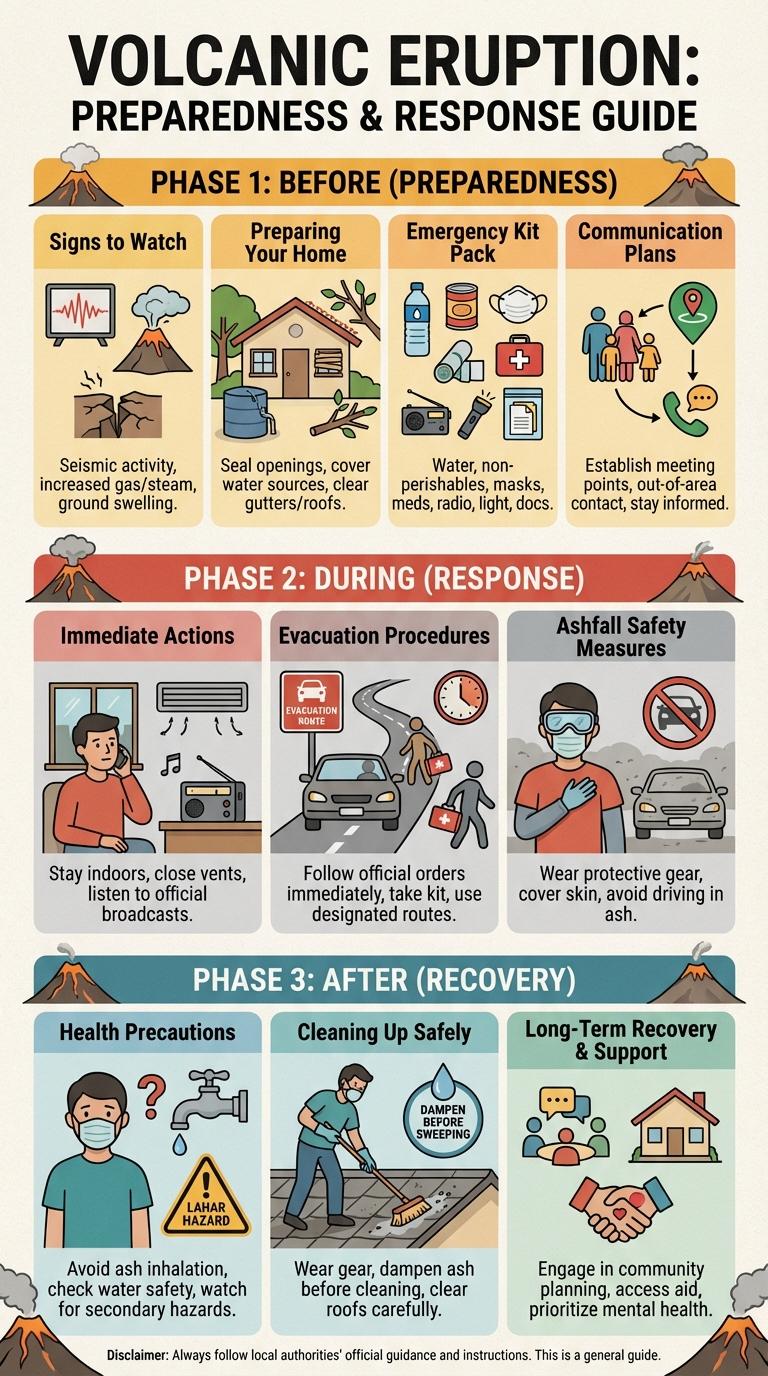
Volcanic eruptions unleash powerful forces that shape landscapes and impact ecosystems. Understanding the stages before, during, and after an eruption is crucial for safety and preparedness. This infographic breaks down key events and safety measures at each phase to help you stay informed and protected.
Signs to Watch for Before a Volcanic Eruption
Volcanic eruptions often show distinct signs before they occur, enabling early warnings. Monitoring these signs helps protect lives and property by allowing timely evacuations.
Seismic activity increases as magma moves beneath the surface, causing frequent small earthquakes. Gas emissions, such as sulfur dioxide, rise sharply, indicating rising magma. Ground deformation, including swelling and cracks, signals pressure buildup inside the volcano.
Preparing Your Home Before an Eruption
Preparing your home before a volcanic eruption involves securing windows and doors to prevent ash and debris from entering. Creating an emergency supply kit with essentials such as water, food, masks, and first aid supplies is crucial.
Clearing gutters and drains helps avoid blockages caused by falling ash. Identifying a safe evacuation route and establishing communication plans with family members can save lives during an eruption.
What to Pack in Your Emergency Kit
Emergency Communication Plans Before Eruption
How can emergency communication plans be effectively prepared before a volcanic eruption? Establishing clear communication strategies ensures timely warnings and coordinated responses. Communities should identify key contacts, set up alert systems, and conduct regular drills to enhance readiness.
Immediate Actions During a Volcanic Eruption
Volcanic eruptions pose serious threats requiring prompt actions to ensure safety. Understanding immediate measures during an eruption can significantly reduce risk and harm.
Quick response during an eruption is essential for protection from hazards such as ashfall, lava flows, and toxic gases.
- Seek Shelter Indoors - Stay inside a sturdy building to avoid falling ash and debris which can cause respiratory issues and injuries.
- Use Masks and Protective Eyewear - Wear masks to filter ash particles and goggles to protect eyes from irritation and abrasion.
- Avoid Rivers and Low-Lying Areas - Stay away from zones prone to lahars and flash floods, which often occur shortly after eruptions.
Evacuation Procedures While the Volcano Erupts
Volcanic eruptions require precise evacuation procedures to ensure public safety. Understanding actions before, during, and after an eruption minimizes risks and enhances emergency response effectiveness.
- Before Eruption - Identify evacuation routes and prepare emergency kits with essential supplies and protective gear.
- During Eruption - Follow official evacuation orders immediately, avoiding low-lying areas prone to lava flows and ash deposits.
- After Eruption - Return only when authorities declare it safe, monitoring for hazards like ash inhalation and unstable ground.
Timely and informed evacuation procedures significantly reduce injuries and save lives during volcanic events.
Safety Measures During Volcanic Ashfall
Volcanic ashfall poses significant health and safety risks during an eruption. Stay indoors, keep windows and doors closed, and use masks to prevent inhalation of ash particles. Protect electronics and machinery by covering them, and avoid driving due to reduced visibility and slippery roads.
Health Precautions After a Volcanic Eruption
Volcanic eruptions pose significant health risks, especially after the event when ash and gases remain in the environment. Taking proper health precautions minimizes respiratory issues, eye irritations, and long-term health complications.
- Wear Protective Masks - Use N95 masks to prevent inhalation of fine volcanic ash particles that can damage the lungs.
- Avoid Contaminated Water - Do not drink or use water that may be polluted by ash fallout or volcanic chemicals.
- Clean Up Safely - Use wet methods to clean ash indoors to reduce airborne contaminants and avoid dry sweeping.
Cleaning Up Safely After the Eruption
Volcanic eruptions release ash and debris that require careful cleanup to ensure safety. Proper protective gear prevents respiratory and skin irritation during cleanup activities.
Begin by removing ash from roofs and gutters to prevent structural damage and water blockages. Wetting ash before shoveling controls dust and reduces airborne particles.