
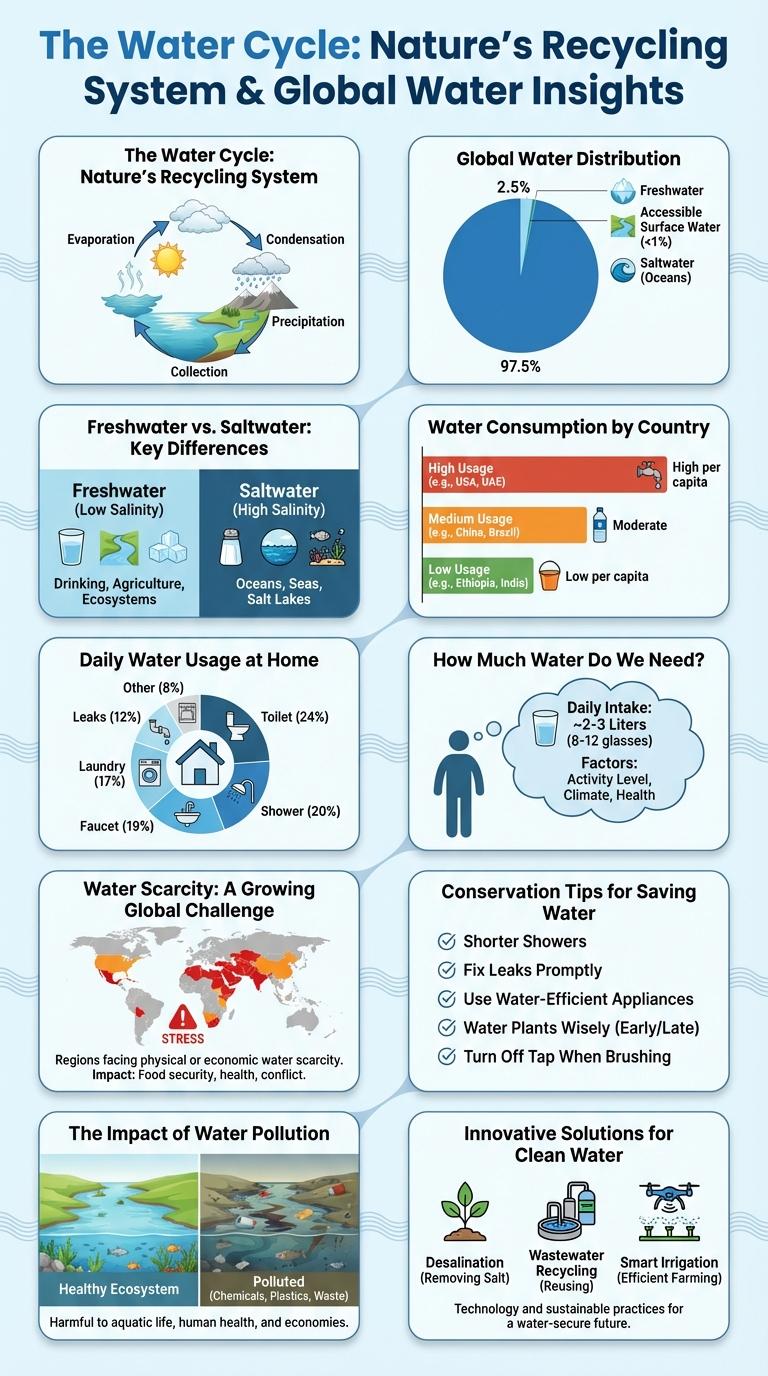
Water is essential for life, impacting health, agriculture, and the environment. Infographics can visually highlight key facts about water usage, conservation, and pollution. Understanding these statistics promotes better water management and sustainability practices.
The Water Cycle: Nature's Recycling System
Global Water Distribution
Water covers approximately 71% of the Earth's surface, with oceans holding about 97.5% of this water. Freshwater accounts for only 2.5%, crucial for human consumption and ecosystems.
Of the freshwater available, nearly 68.7% is trapped in glaciers and ice caps, while 30.1% is groundwater. Less than 1% of freshwater exists in lakes, rivers, and the atmosphere, making it vital to conserve these limited sources.
Freshwater vs. Saltwater: Key Differences
Water on Earth exists primarily in two forms: freshwater and saltwater. Freshwater, which comprises only about 2.5% of the planet's water, is found in rivers, lakes, and underground aquifers, and is essential for drinking and agriculture. Saltwater makes up approximately 97.5% of Earth's water, found mostly in oceans and seas, and contains high concentrations of dissolved salts.
Water Consumption by Country
Which countries consume the most water globally? Water consumption varies significantly across nations due to population size, industrial activity, and climate conditions. Understanding these differences helps address water management and sustainability challenges.
| Country | Annual Water Consumption (Billion Cubic Meters) |
|---|---|
| United States | 482 |
| China | 618 |
| India | 761 |
| Russia | 338 |
| Brazil | 194 |
Daily Water Usage at Home
Daily water usage at home averages around 80-100 gallons per person. The majority of this water is consumed in bathrooms, with showers and toilets accounting for nearly 60% of household water use. Efficient appliances and mindful habits can reduce daily water consumption significantly, conserving this vital resource.
How Much Water Do We Need?
Water is essential for maintaining bodily functions and overall health. Daily water intake varies based on age, activity level, and climate.
- Recommended Daily Intake - Adults need about 2.7 to 3.7 liters of water per day including fluids from all beverages and foods.
- Age and Gender Differences - Men generally require more water than women due to higher muscle mass and activity levels.
- Activity and Environment - Increased physical activity and hot climates elevate water needs to prevent dehydration.
Water Scarcity: A Growing Global Challenge
Water scarcity affects over 2 billion people worldwide, limiting access to safe drinking water and sanitation. Rapid population growth and climate change intensify the pressure on freshwater resources.
Only 2.5% of Earth's water is freshwater, with less than 1% accessible for human use. Efficient water management and conservation efforts are critical to addressing this escalating global challenge.
Conservation Tips for Saving Water
Water conservation is essential for preserving natural resources and reducing utility costs. Implementing simple habits can significantly decrease water wastage at home and in communities.
- Fix Leaks Promptly - Repairing dripping faucets or pipes saves gallons of water daily, preventing unnecessary waste.
- Use Water-Efficient Fixtures - Installing low-flow showerheads and toilets reduces water usage without compromising performance.
- Turn Off Taps When Not in Use - Shutting off the tap while brushing teeth or washing dishes conserves liters of water every day.
The Impact of Water Pollution
Water pollution significantly affects ecosystems and human health worldwide. Contaminated water sources disrupt aquatic life and compromise drinking water quality.
- Marine Life Disruption - Pollutants cause oxygen depletion, killing fish and other aquatic organisms.
- Health Risks - Polluted water leads to diseases such as cholera and dysentery in affected populations.
- Economic Impact - Water pollution increases treatment costs and damages fisheries and tourism industries.
Reducing water pollution is essential to preserving biodiversity and ensuring safe water for future generations.