
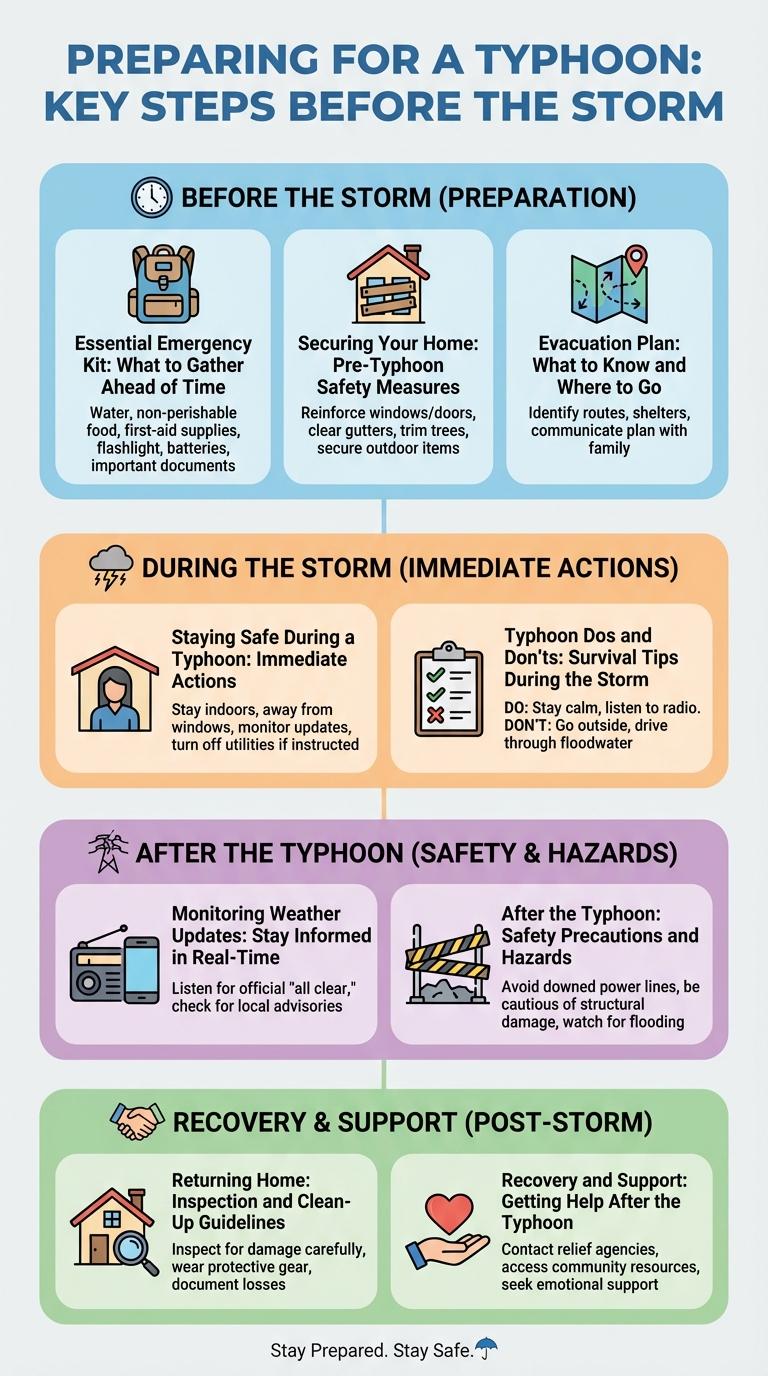
Understanding the key phases before, during, and after a typhoon is essential for effective preparation and response. This infographic visually breaks down the critical actions to take at each stage to ensure safety and minimize damage. Clear guidance helps individuals and communities stay informed and resilient throughout the typhoon cycle.
Preparing for a Typhoon: Key Steps Before the Storm
Preparing for a typhoon is essential to ensure safety and reduce damage. Knowing the key steps before the storm can help protect lives and property.
- Create an Emergency Kit - Assemble supplies including water, non-perishable food, flashlight, batteries, and first aid essentials.
- Secure Your Home - Reinforce windows, doors, and roofs; clear drains and secure outdoor objects to prevent damage.
- Stay Informed - Monitor weather updates through reliable sources such as local authorities and meteorological agencies.
Taking proactive measures before a typhoon increases resilience and safety for you and your community.
Essential Emergency Kit: What to Gather Ahead of Time
Prepare an essential emergency kit before a typhoon to ensure safety and readiness. Include items such as water, non-perishable food, flashlights, batteries, first aid supplies, and important documents. Having these essentials gathered ahead of time helps you stay protected during and recover quickly after the storm.
Securing Your Home: Pre-Typhoon Safety Measures
Securing your home before a typhoon is crucial to minimize damage and ensure safety. Proper preparation can significantly reduce risks associated with strong winds and flooding.
Inspect and reinforce windows and doors using storm shutters or plywood. Clear gutters and drains to prevent water buildup and potential flooding. Secure loose outdoor items like furniture and tools to avoid projectiles during the storm.
Evacuation Plan: What to Know and Where to Go
Develop a clear evacuation plan before a typhoon strikes to ensure safety for you and your family. Know the nearest evacuation centers and safe zones designated by local authorities.
During the typhoon, follow evacuation orders promptly and avoid flooded or hazardous areas. Keep emergency supplies and important documents with you for a smooth evacuation process.
After the typhoon, return home only when authorities declare it safe. Check for structural damage and avoid downed power lines to prevent injuries.
Staying Safe During a Typhoon: Immediate Actions
Typhoons pose significant risks requiring clear, immediate safety measures. Understanding actions before, during, and after a typhoon enhances survival and minimizes harm.
- Before the Typhoon - Secure windows and doors, and stock essential supplies like water, food, and medications.
- During the Typhoon - Stay indoors, away from windows, and monitor weather updates via radio or mobile alerts.
- After the Typhoon - Avoid floodwaters, check for injuries, and follow official guidelines for returning home safely.
Typhoon Dos and Don'ts: Survival Tips During the Storm
Prepare emergency kits with water, food, and essential supplies before the typhoon hits. Stay indoors, away from windows, and avoid using electrical appliances during the storm. After the typhoon passes, check for hazards like downed power lines and avoid floodwaters to stay safe.
Monitoring Weather Updates: Stay Informed in Real-Time
Monitoring weather updates before a typhoon is crucial for early preparation. Reliable sources include meteorological agencies, weather apps, and local news channels.
During a typhoon, continuous real-time updates help track storm intensity and movement. Stay connected to official alerts via radio, mobile notifications, or emergency broadcasts.
After the typhoon passes, weather updates provide essential information about ongoing risks such as flooding or landslides. Follow local authorities' advice to ensure safety and plan recovery efforts effectively.
After the Typhoon: Safety Precautions and Hazards
After a typhoon passes, it is critical to assess damage and prioritize safety before resuming normal activities. Hazards such as contaminated water, downed power lines, and unstable structures pose serious risks.
- Avoid Floodwater - Floodwater can contain harmful bacteria, chemicals, and debris that can cause injury or illness.
- Steer Clear of Downed Power Lines - Electrical wires may remain live and pose electrocution hazards; report them to authorities immediately.
- Inspect Buildings Carefully - Structural damage may make buildings unsafe to enter; wait for official clearance before reentering.
Returning Home: Inspection and Clean-Up Guidelines
What should you check first when returning home after a typhoon?
Inspect the structural integrity of your home, focusing on the roof, walls, and foundation. Look for any visible damage such as cracks, leaks, or missing shingles.
How can you safely clean up debris inside and outside your home?
Wear protective clothing, gloves, and sturdy shoes to avoid injuries. Remove fallen branches, broken glass, and scattered materials carefully to prevent accidents.
What is important to verify regarding utilities before fully resuming normal activities?
Ensure that electrical systems and gas lines are intact and have no leaks. Turn off utilities if you suspect damage and contact professionals for inspection and repair.
How should you handle water damage and prevent mold growth post-typhoon?
Dry out your home as quickly as possible by ventilating rooms and using fans or dehumidifiers. Clean and disinfect affected areas to reduce the risk of mold and bacteria.
What steps help maintain safety during the overall inspection and clean-up process?
Work during daylight and avoid entering flooded or unstable structures. Have emergency contact numbers ready and seek professional assistance when necessary.