
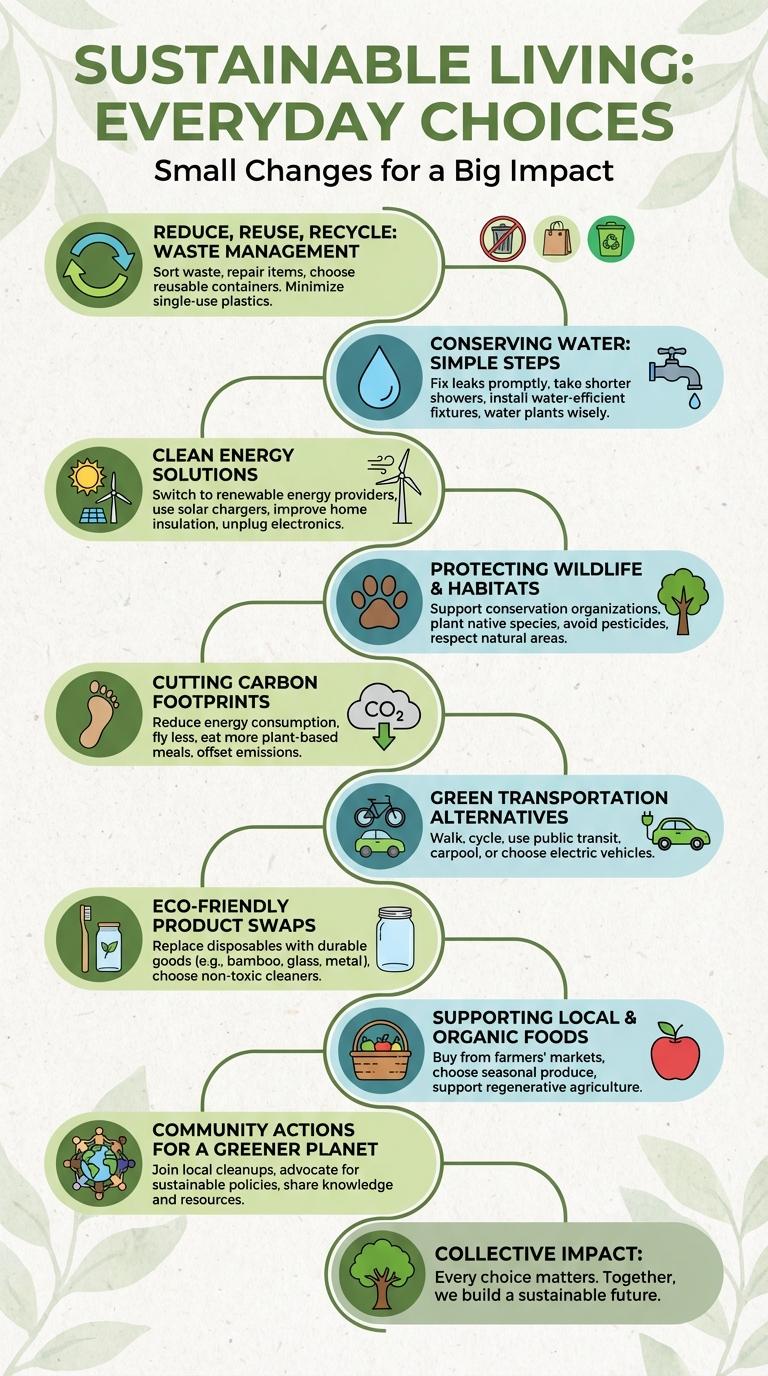
Protecting the environment is essential for preserving natural resources and ensuring a healthy planet for future generations. This infographic highlights key actions individuals and communities can take to reduce pollution, conserve energy, and support sustainable practices. Understanding these steps empowers everyone to contribute effectively to environmental conservation.
Sustainable Living: Everyday Choices
Sustainable living involves making eco-friendly choices daily to reduce waste and conserve resources. Simple actions like using reusable bags, conserving water, and choosing energy-efficient appliances significantly lower your environmental impact. Embracing these habits contributes to a healthier planet and supports global efforts against climate change.
Reduce, Reuse, Recycle: Waste Management
Effective waste management is crucial for protecting the environment and conserving natural resources. The principles of Reduce, Reuse, Recycle help minimize pollution and decrease landfill waste.
- Reduce Waste - Limiting the amount of waste produced reduces pollution and conserves resources.
- Reuse Materials - Using items multiple times prevents unnecessary disposal and saves energy.
- Recycle Products - Recycling converts waste into new materials, reducing the need for raw resources.
Conserving Water: Simple Steps
| Step | Description |
|---|---|
| Fix Leaks | Repair dripping faucets and running toilets to save gallons of water daily. |
| Use Water-Efficient Fixtures | Install low-flow showerheads, faucets, and toilets to reduce water consumption. |
| Turn Off Taps | Shut off the tap while brushing teeth or washing dishes to prevent unnecessary water waste. |
| Collect Rainwater | Use rain barrels to gather rainwater for gardening and outdoor cleaning purposes. |
| Water Plants Wisely | Water plants early morning or late evening to minimize evaporation loss. |
Clean Energy Solutions
Clean energy solutions are essential for reducing carbon emissions and combating climate change. Transitioning to renewable sources supports sustainable development and environmental protection.
- Solar Power - Harnesses energy from the sun, providing a limitless and clean electricity source.
- Wind Energy - Converts wind currents into power without producing greenhouse gases.
- Hydropower - Uses flowing water to generate electricity with minimal environmental impact.
Investing in clean energy technology drives a healthier planet and a resilient future for generations.
Protecting Wildlife & Habitats
Protecting wildlife and habitats is essential for maintaining biodiversity and ecosystem balance. Human activities threaten many species, making conservation efforts critical for environmental health.
- Preserve Natural Habitats - Safeguarding forests, wetlands, and grasslands ensures wildlife have secure environments to thrive.
- Reduce Pollution - Limiting chemicals and waste in ecosystems prevents harm to animals and plants.
- Support Conservation Programs - Participating in or funding wildlife protection initiatives helps restore endangered species populations.
Cutting Carbon Footprints
Cutting carbon footprints is essential to slowing climate change and protecting natural ecosystems. Using renewable energy sources such as solar and wind significantly reduces greenhouse gas emissions. Adopting energy-efficient appliances, reducing waste, and supporting sustainable transportation helps lower individual and community carbon footprints.
Green Transportation Alternatives
Green transportation alternatives reduce carbon emissions and minimize environmental impact. Promoting sustainable travel options helps preserve natural resources and improve air quality.
Electric vehicles produce zero tailpipe emissions and decrease reliance on fossil fuels. Biking and walking offer healthy, eco-friendly ways to travel short distances. Public transit systems lower traffic congestion and overall pollution by carrying more passengers efficiently.
Eco-Friendly Product Swaps
Choosing eco-friendly products reduces waste and minimizes environmental impact. Simple swaps in everyday items contribute significantly to sustainability.
Replace plastic bags with reusable cloth bags to cut down on plastic pollution. Opt for bamboo toothbrushes instead of plastic ones for a biodegradable alternative.
Supporting Local & Organic Foods
Supporting local and organic foods reduces the carbon footprint associated with long-distance transportation. These foods are grown without synthetic pesticides, promoting healthier soil and water quality.
Choosing local produce boosts regional economies and preserves farmland from urban development. Organic farming practices enhance biodiversity by maintaining natural habitats and pollinators.