
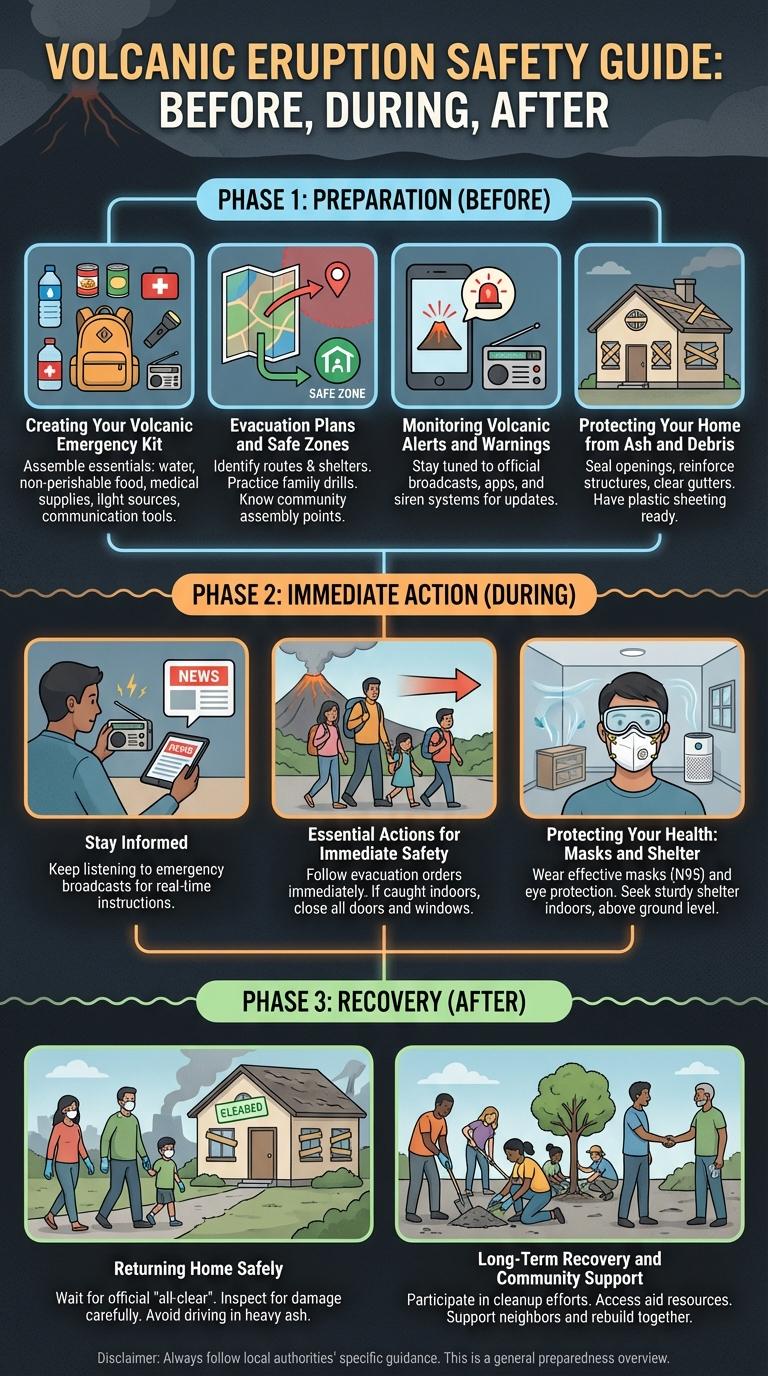
Preparing for a volcanic eruption involves understanding key safety measures to protect yourself and your loved ones. Knowing what to do before, during, and after the event can significantly reduce risks and enhance survival. This infographic outlines essential steps to follow at each stage of a volcanic eruption for effective emergency preparedness and response.
Before a Volcanic Eruption: Preparation Steps
Volcanic eruptions can pose significant risks to life and property. Preparing in advance helps minimize dangers and ensures safety for you and your loved ones.
Create an emergency kit with essentials such as water, food, masks, and first aid supplies. Develop a family communication plan and identify escape routes away from the volcano. Stay informed by monitoring local alerts and volcano activity updates from geological agencies.
Creating Your Volcanic Emergency Kit
Preparing a volcanic emergency kit is essential for safety before an eruption. Include items such as masks, goggles, water, non-perishable food, and a first aid kit.
During an eruption, keep your emergency kit accessible and follow local evacuation orders. Protect yourself from ash by using masks and goggles from your kit.
After the eruption, use your emergency supplies to stay safe while assessing any damage. Restock your kit as needed to prepare for possible future events.
Evacuation Plans and Safe Zones
Before a volcanic eruption, familiarize yourself with local evacuation plans and identify designated safe zones through official community resources. During the eruption, follow evacuation routes promptly and avoid entering hazardous areas to ensure personal safety. After the eruption, remain in safe zones until authorities declare it safe to return, and follow updates on potential secondary hazards like lava flows or ashfall.
Monitoring Volcanic Alerts and Warnings
| Stage | Monitoring Volcanic Alerts and Warnings |
|---|---|
| Before Eruption | Subscribe to official volcano monitoring services. Follow updates from geological agencies like USGS or local volcano observatories. Develop an emergency plan based on alert levels. |
| During Eruption | Observe alerts for evacuation orders or danger zones. Monitor real-time updates via radio, TV, or mobile alerts. Avoid downwind areas based on ash plume reports. |
| After Eruption | Continue tracking volcanic activity warnings and hazard maps. Await official clearance before returning to affected zones. Report any new signs of volcanic activity to authorities. |
Protecting Your Home from Ash and Debris
How can you protect your home from ash and debris during a volcanic eruption? Cover windows, doors, and vents with plastic sheeting to prevent ash from entering your home. Clear gutters and downspouts to avoid clogging and water damage caused by ash accumulation.
What should you do before a volcanic eruption to secure your property? Reinforce roofs to withstand the weight of volcanic ash deposits. Store outdoor equipment and furniture indoors to prevent damage from falling debris and ash.
How can you maintain your home's safety immediately after an eruption? Remove ash carefully using damp cloths or a vacuum designed for fine particles to avoid aerosolizing harmful dust. Inspect your roof and repair any cracks or leaks caused by the ash weight.
During a Volcanic Eruption: Stay Informed
During a volcanic eruption, staying informed is crucial for your safety and the safety of those around you. Use reliable sources such as local authorities, emergency services, and official weather updates to receive real-time information about the eruption's progress and impact.
Keep a battery-powered radio or a charged mobile device with access to emergency alerts. Follow instructions from emergency services carefully, especially regarding evacuation orders and safe shelter locations to minimize risk from ash, lava flows, and toxic gases.
Essential Actions for Immediate Safety
Volcanic eruptions pose severe risks to health and property, requiring prompt and informed action. Knowing what to do before, during, and after an eruption significantly enhances survival chances.
- Prepare an emergency kit - Gather essentials like water, food, masks, and a flashlight well before the eruption occurs.
- Seek shelter indoors - Stay inside to avoid ash inhalation and falling debris during the eruption.
- Follow official evacuation orders - Leave the area immediately when instructed to ensure safe relocation.
- Avoid river valleys and low-lying areas - Stay clear of regions prone to lava flow and mudslides during and after the eruption.
- Clean ash from roofs and gutters cautiously - Remove volcanic ash promptly to prevent structural damage but wear protective gear to avoid inhalation.
Protecting Your Health: Masks and Shelter
Wear N95 masks or equivalent to protect your respiratory system from volcanic ash during an eruption. Seek shelter indoors, preferably in rooms with closed windows and doors, to avoid inhaling harmful ash particles. After the eruption, continue using masks when going outside and clean your living area to reduce exposure to ash and related health hazards.
After a Volcanic Eruption: Returning Home Safely
Returning home safely after a volcanic eruption requires careful attention to hazards and following official guidelines to ensure your well-being. Taking proper precautions helps protect you from lingering dangers and facilitates a smoother recovery process.
- Wait for official clearance - Authorities assess volcanic activity and declare when it is safe to return to evacuated areas.
- Wear protective gear - Use masks, gloves, and sturdy footwear to avoid inhaling ash and protect against sharp debris.
- Inspect and clean the property - Check for structural damage and clear ash from roofs, gutters, and outdoor spaces to prevent further issues.
- Avoid contaminated water - Verify the safety of water sources before use, as ash and chemicals can pollute supplies.
- Monitor health symptoms - Seek medical attention if respiratory issues or injuries arise from exposure to volcanic materials.
Careful preparation and adherence to safety instructions significantly reduce risks after a volcanic eruption.