
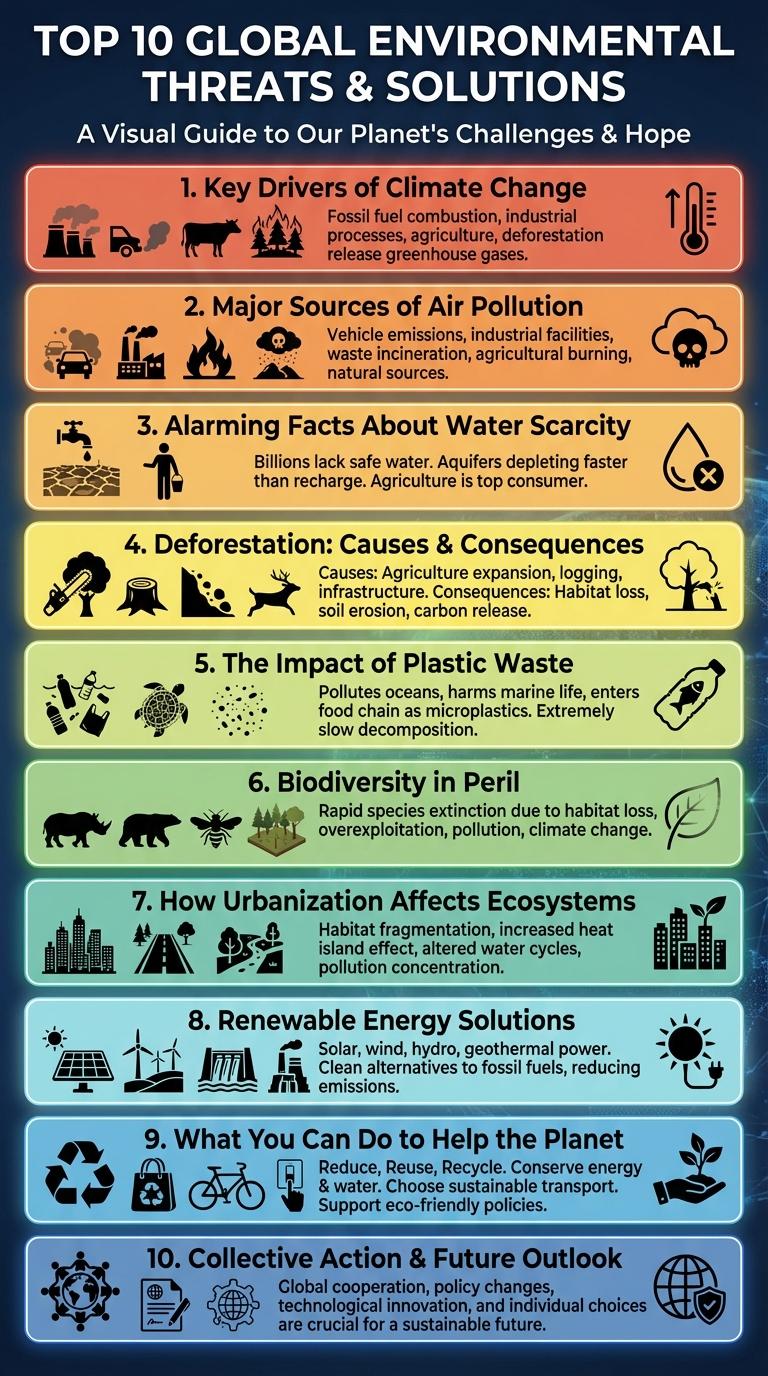
Environmental issues such as climate change, pollution, and deforestation pose significant threats to ecosystems and human health worldwide. Visualizing these challenges through an infographic helps to convey complex data clearly and highlights urgent areas for action. This approach enhances awareness and encourages informed decision-making toward sustainable solutions.
Top 10 Global Environmental Threats
Global environmental threats continue to impact ecosystems and human health worldwide. Understanding the top challenges helps prioritize sustainable solutions.
- Climate Change - Rising temperatures disrupt weather patterns, causing severe storms, droughts, and sea level rise.
- Air Pollution - Harmful emissions from industry and transportation degrade air quality and increase respiratory diseases.
- Deforestation - Large-scale forest clearing reduces biodiversity and contributes to carbon emissions.
- Water Scarcity - Overuse and contamination of freshwater resources threaten drinking water and agriculture.
- Loss of Biodiversity - Habitat destruction and poaching cause rapid declines in plant and animal species.
- Ocean Acidification - Increased CO2 absorption lowers ocean pH, harming marine life and coral reefs.
- Waste Pollution - Plastic and hazardous waste accumulate in environments, impacting wildlife and human health.
- Soil Degradation - Intensive farming and deforestation lead to erosion, nutrient loss, and reduced agricultural productivity.
- Overpopulation - Growing human populations increase pressure on natural resources and ecosystems.
- Ozone Layer Depletion - Chemicals like CFCs damage the ozone, increasing UV radiation exposure risks.
Addressing these threats requires global cooperation and sustainable environmental management strategies.
Key Drivers of Climate Change
| Key Drivers | Impact on Climate Change |
|---|---|
| Greenhouse Gas Emissions | Carbon dioxide and methane trap heat, raising global temperatures. |
| Deforestation | Reduces carbon absorption, increasing atmospheric CO2 levels. |
| Fossil Fuel Consumption | Burning coal, oil, and gas releases large quantities of greenhouse gases. |
| Industrial Processes | Emit various greenhouse gases and contribute to air pollution. |
| Agriculture | Produces methane and nitrous oxide through livestock and soil management. |
Major Sources of Air Pollution
Air pollution significantly impacts public health and the environment worldwide. Identifying major sources helps target effective solutions for cleaner air.
Major sources of air pollution arise from both human activities and natural processes, contributing various harmful pollutants.
- Transportation - Emissions from cars, trucks, and airplanes release nitrogen oxides and particulate matter into the atmosphere.
- Industrial Production - Factories emit large quantities of sulfur dioxide, volatile organic compounds, and heavy metals during manufacturing processes.
- Agricultural Activities - Use of fertilizers and livestock farming produce methane and ammonia, affecting air quality.
Alarming Facts About Water Scarcity
Water scarcity affects over 2 billion people worldwide, leading to severe health and economic consequences. Freshwater resources are depleting rapidly due to overuse and climate change.
By 2025, nearly half of the global population could face water shortages. Agriculture consumes 70% of freshwater, intensifying the crisis. Urgent conservation and sustainable management efforts are needed to protect this vital resource.
Deforestation: Causes & Consequences
Deforestation involves the large-scale clearing of forests, primarily due to agriculture, logging, and urban expansion. This process leads to habitat loss, reduced biodiversity, and contributes significantly to climate change through increased carbon emissions. Protecting forests is crucial for maintaining ecosystems, regulating the global climate, and supporting the livelihoods of millions.
The Impact of Plastic Waste
How does plastic waste affect the environment?
Plastic waste contributes to pollution in oceans, rivers, and landscapes, harming wildlife and disrupting ecosystems. It takes hundreds of years to decompose, leading to long-term environmental damage.
What are the main sources of plastic waste?
Single-use plastics such as bags, bottles, and packaging materials generate the majority of plastic waste. Improper disposal and lack of recycling infrastructure worsen the accumulation of plastic in natural habitats.
What is the impact on marine life?
Marine animals often ingest plastic debris or become entangled, causing injury or death. Microplastics enter the food chain, posing health risks to aquatic species and humans alike.
How does plastic waste contribute to climate change?
Plastic production relies on fossil fuels, releasing greenhouse gases during manufacturing. Decomposing plastic in landfills emits methane, a potent greenhouse gas that accelerates global warming.
What solutions help reduce plastic waste?
Recycling, using biodegradable alternatives, and reducing single-use plastic consumption effectively lower plastic pollution. Public awareness and policy changes are crucial for sustainable waste management.
Biodiversity in Peril
Biodiversity is essential for ecosystem stability and human survival. Species extinction rates are accelerating due to habitat loss, pollution, and climate change.
Loss of biodiversity disrupts food chains and reduces ecosystem services like pollination and water purification. Protecting habitats and reducing human impact are critical to preserving global biodiversity.
How Urbanization Affects Ecosystems
Urbanization leads to habitat loss, fragmenting ecosystems and reducing biodiversity. Increased pollution from construction and transportation deteriorates air and water quality, impacting flora and fauna. Impervious surfaces disrupt natural water cycles, causing flooding and soil degradation in surrounding environments.
Renewable Energy Solutions
Renewable energy solutions are critical in addressing global environmental challenges and reducing carbon emissions. Transitioning to sustainable energy sources can mitigate climate change and promote long-term ecological balance.
- Solar Power - Converts sunlight into electricity, providing a clean and abundant energy source with zero emissions.
- Wind Energy - Utilizes wind turbines to generate electricity, reducing dependence on fossil fuels and lowering greenhouse gases.
- Hydropower - Harnesses flowing water to produce renewable energy, supporting reliable and scalable power generation.