
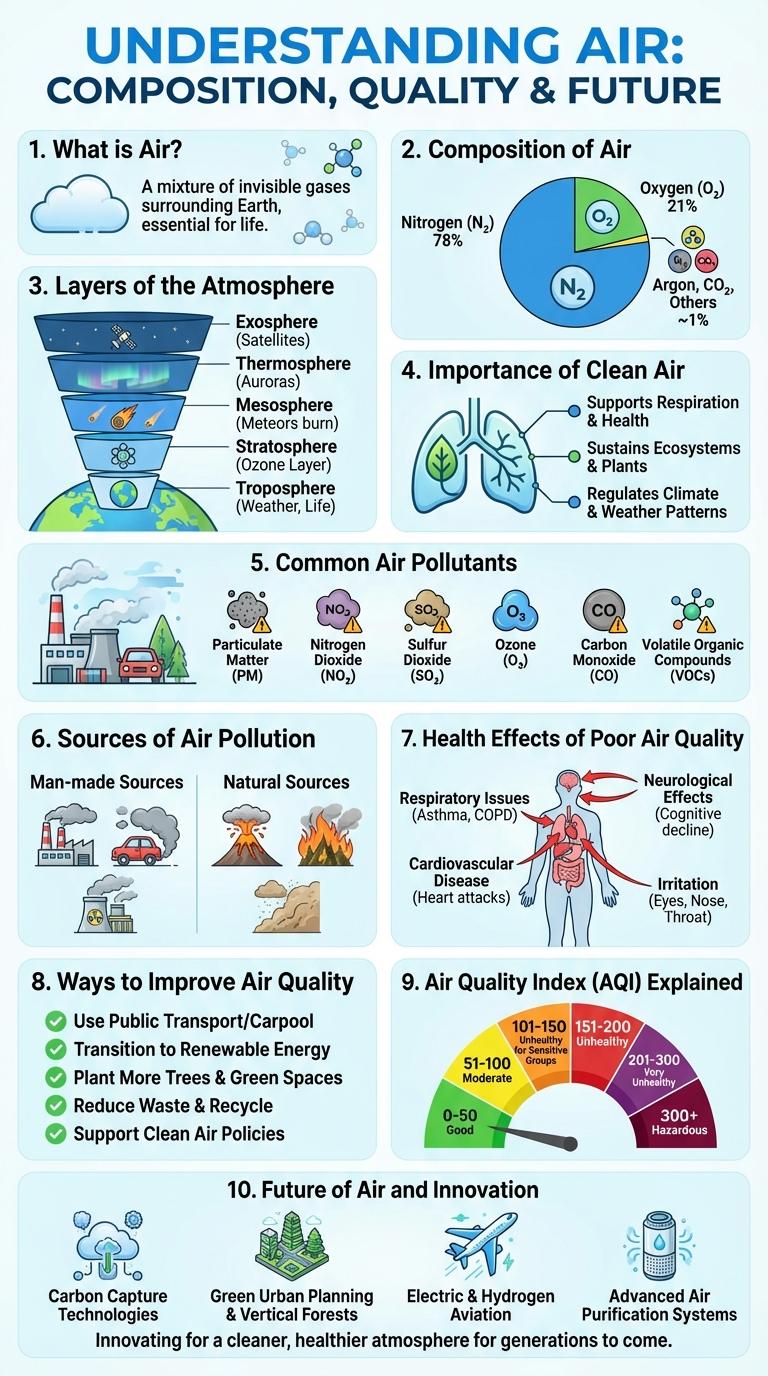
Air is a vital component of our environment, essential for all living organisms to survive and thrive. This infographic explores key facts about air quality, composition, and its impact on health and the planet. Understanding these elements helps raise awareness and promotes actions towards cleaner, healthier air worldwide.
What is Air?
| Aspect | Details |
|---|---|
| Definition | Air is a mixture of gases that surrounds Earth, essential for life and weather. |
| Main Components | Nitrogen (78%), Oxygen (21%), Argon (0.93%), Carbon Dioxide (0.04%), Trace Gases |
| Physical Properties | Colorless, odorless, tasteless, and transparent gas mixture at standard conditions. |
| Importance | Supports respiration in animals and plants, drives weather patterns, and enables combustion. |
| Density | Approximately 1.225 kg/m3 at sea level and 15degC. |
Composition of Air
Air is a mixture of various gases essential for life on Earth. The primary components include nitrogen (78%) and oxygen (21%), with trace amounts of argon, carbon dioxide, and other gases. Understanding air composition helps in fields such as environmental science, health, and meteorology.
Layers of the Atmosphere
The atmosphere consists of multiple layers, each with distinct characteristics and functions. These layers protect life on Earth and regulate temperature and weather patterns.
The five main layers are the Troposphere, Stratosphere, Mesosphere, Thermosphere, and Exosphere. They vary in temperature, density, and composition as altitude increases.
Importance of Clean Air
Clean air is essential for sustaining life and promoting health. It reduces the risk of respiratory diseases and supports ecosystem balance.
- Health Benefits - Breathing clean air lowers the incidence of asthma and cardiovascular diseases.
- Environmental Protection - Clean air helps maintain biodiversity by supporting plant and animal life.
- Economic Impact - Reducing air pollution decreases healthcare costs and increases workforce productivity.
Common Air Pollutants
Common air pollutants include particulate matter (PM2.5 and PM10), nitrogen dioxide (NO2), sulfur dioxide (SO2), carbon monoxide (CO), and ground-level ozone (O3). These pollutants originate from sources such as vehicle emissions, industrial activities, and burning fossil fuels. Exposure to these contaminants can cause respiratory problems, cardiovascular diseases, and environmental damage.
Sources of Air Pollution
Air pollution originates from various natural and human-made sources, significantly impacting environmental and human health. Understanding these sources is crucial for developing effective air quality management strategies.
- Industrial Emissions - Factories release pollutants like sulfur dioxide and nitrogen oxides through burning fossil fuels, contributing heavily to air pollution.
- Vehicle Exhaust - Cars, trucks, and buses emit carbon monoxide and particulate matter, making transportation a major pollution source.
- Agricultural Activities - Use of fertilizers and livestock farming releases methane and ammonia, affecting air quality.
- Natural Sources - Volcanic eruptions and wildfires emit dust and gases naturally increasing atmospheric pollutants.
- Residential Heating - Burning wood and coal in homes produces smoke and fine particles that pollute indoor and outdoor air.
Reducing emissions from these primary sources is essential to improve air quality and protect public health.
Health Effects of Poor Air Quality
How does poor air quality affect human health? Exposure to polluted air can lead to respiratory issues, including asthma and chronic bronchitis. Long-term exposure increases the risk of heart disease and lung cancer.
Which groups are most vulnerable to poor air quality? Children, the elderly, and individuals with pre-existing health conditions face greater risks. Their immune systems and lungs are more susceptible to damage from airborne pollutants.
What are common symptoms caused by poor air quality? Symptoms include coughing, wheezing, shortness of breath, and throat irritation. These indicate the body's reaction to inhaling harmful particles and gases.
Can poor air quality impact mental health? Studies show a correlation between air pollution and increased rates of anxiety and depression. Air pollutants may affect brain function through inflammation and oxidative stress.
How can individuals reduce health risks from poor air quality? Limiting outdoor activities during high pollution days and using air purifiers indoors help reduce exposure. Wearing masks and avoiding smoking further protect respiratory health.
Ways to Improve Air Quality
Air quality significantly impacts human health and the environment. Various strategies can effectively reduce air pollution and enhance the quality of the air we breathe.
Planting more trees helps absorb carbon dioxide and release oxygen, improving urban air quality. Reducing vehicle emissions by promoting public transportation and electric vehicles lowers the concentration of harmful pollutants.
Air Quality Index (AQI) Explained
The Air Quality Index (AQI) is a standardized tool used to communicate how polluted the air currently is or how polluted it is forecast to become. It helps individuals understand the health effects associated with different levels of air pollution.
AQI values range from 0 to 500, with lower numbers indicating better air quality. Key pollutants measured include particulate matter (PM2.5 and PM10), ozone, carbon monoxide, sulfur dioxide, and nitrogen dioxide. Higher AQI values correspond to increased health risks, especially for children, the elderly, and those with respiratory conditions.