
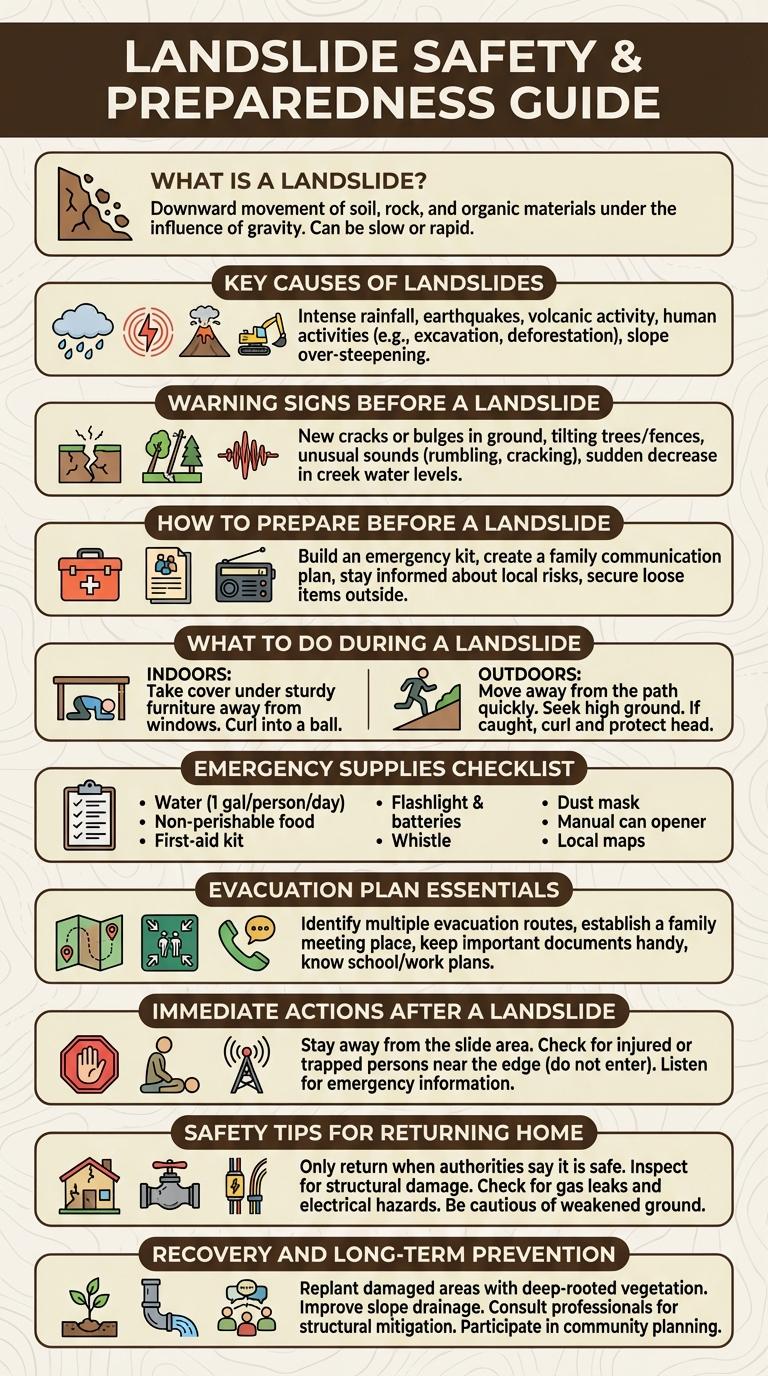
Landslides pose significant threats to communities, infrastructure, and ecosystems. Understanding the key stages--before, during, and after a landslide--helps in effective risk management and disaster response. This infographic visually breaks down essential safety measures and recovery steps to mitigate the impact of landslides.
What Is a Landslide?
What is a landslide?
A landslide is the movement of rock, earth, or debris down a slope due to gravity. It can be triggered by factors such as rainfall, earthquakes, volcanic activity, or human activities.
What happens before a landslide?
Before a landslide, the ground may show signs of cracking, tilting trees, or unusual water seepage. Heavy rainfall or rapid snowmelt often increases the risk by saturating the soil.
What occurs during a landslide?
During a landslide, soil and rock rapidly move downhill, damaging structures, roads, and vegetation. The speed and volume vary, ranging from slow creep to fast-moving debris flows.
What are the effects after a landslide?
After a landslide, the affected area may suffer loss of life, property damage, and disrupted infrastructure. Recovery involves debris removal, slope stabilization, and sometimes relocation of residents.
Key Causes of Landslides
Landslides occur due to a combination of natural and human-induced factors that weaken soil stability. Key causes include heavy rainfall, earthquakes, and deforestation, which increase slope vulnerability.
During a landslide, rapid movement of soil and rocks can destroy infrastructure and endanger lives. After the event, unstable terrain and disrupted vegetation contribute to ongoing risk and environmental damage.
Warning Signs Before a Landslide
Landslides often begin with warning signs such as unusual cracks in the soil, leaning trees, and sudden changes in landscape drainage patterns. Residents should monitor these signs, especially after heavy rainfall or earthquakes, which increase landslide risk. Early detection allows timely evacuation and effective emergency response to minimize damage and loss.
How to Prepare Before a Landslide
Preparing for a landslide involves understanding the risks specific to your area and creating an emergency plan. Identify safe zones on higher ground and establish communication methods with family members.
Secure your property by reinforcing slopes and clearing drainage systems to prevent water buildup. Keep emergency supplies like food, water, and first-aid kits readily accessible for swift evacuation.
What to Do During a Landslide
Landslides pose significant risks to life and property, requiring immediate and informed actions during their occurrence. Knowing what to do during a landslide can help minimize injuries and increase chances of safety.
During a landslide, stay alert and act quickly to protect yourself and others.
- Seek higher ground - Move uphill or to a safe, elevated location away from the slide path.
- Protect your head and neck - Use your arms or a sturdy object to shield yourself from debris.
- Avoid river valleys and low-lying areas - These areas can be rapidly flooded by landslide debris and water runoff.
Emergency Supplies Checklist
Landslides pose significant risks before, during, and after an event. Proper emergency supplies are essential for survival and safety throughout all stages.
Before a landslide, prepare with items like bottled water, non-perishable food, and a first aid kit. During the event, having a flashlight, sturdy gloves, and a dust mask helps protect against injuries and poor air quality. After the landslide, supplies such as a whistle for signaling, blankets for warmth, and a portable phone charger ensure continued safety and communication.
Evacuation Plan Essentials
Landslides pose serious risks that require structured evacuation plans to ensure safety before, during, and after the event. Understanding key actions in each phase reduces injury and property damage significantly.
- Before Landslide - Identify high-risk zones and establish clear evacuation routes with accessible meeting points.
- During Landslide - Follow evacuation alerts promptly and move quickly to safe, pre-identified shelters.
- After Landslide - Avoid returning to affected areas until authorities declare them safe and check for emergency updates regularly.
Immediate Actions After a Landslide
Landslides cause sudden ground movement affecting safety and property. Immediate actions after a landslide are crucial to reduce risk and assist recovery.
- Ensure Personal Safety - Evacuate the area to avoid further injury from unstable ground or debris.
- Notify Authorities - Contact emergency services to report the landslide and request aid.
- Avoid Driving or Walking Near the Slide Area - Prevent accidents by staying clear of potential secondary slides or damaged roads.
Quick and organized response helps save lives and begins the process of damage assessment and recovery.
Safety Tips for Returning Home
| Phase | Safety Tips for Returning Home |
|---|---|
| Before Landslide | Identify safe evacuation routes and establish an emergency communication plan with family members. |
| During Landslide | Move to higher ground immediately. Avoid crossing landslide paths or flooded areas. |
| After Landslide | Wait for official clearance before returning. Inspect your home for structural damage and gas leaks. |
| Returning Home | Wear protective clothing and boots to avoid injury. Use a flashlight to check for hazards inside the house. |
| Long-term Safety | Clear debris carefully, and repair damaged utilities under professional guidance to prevent future risks. |