
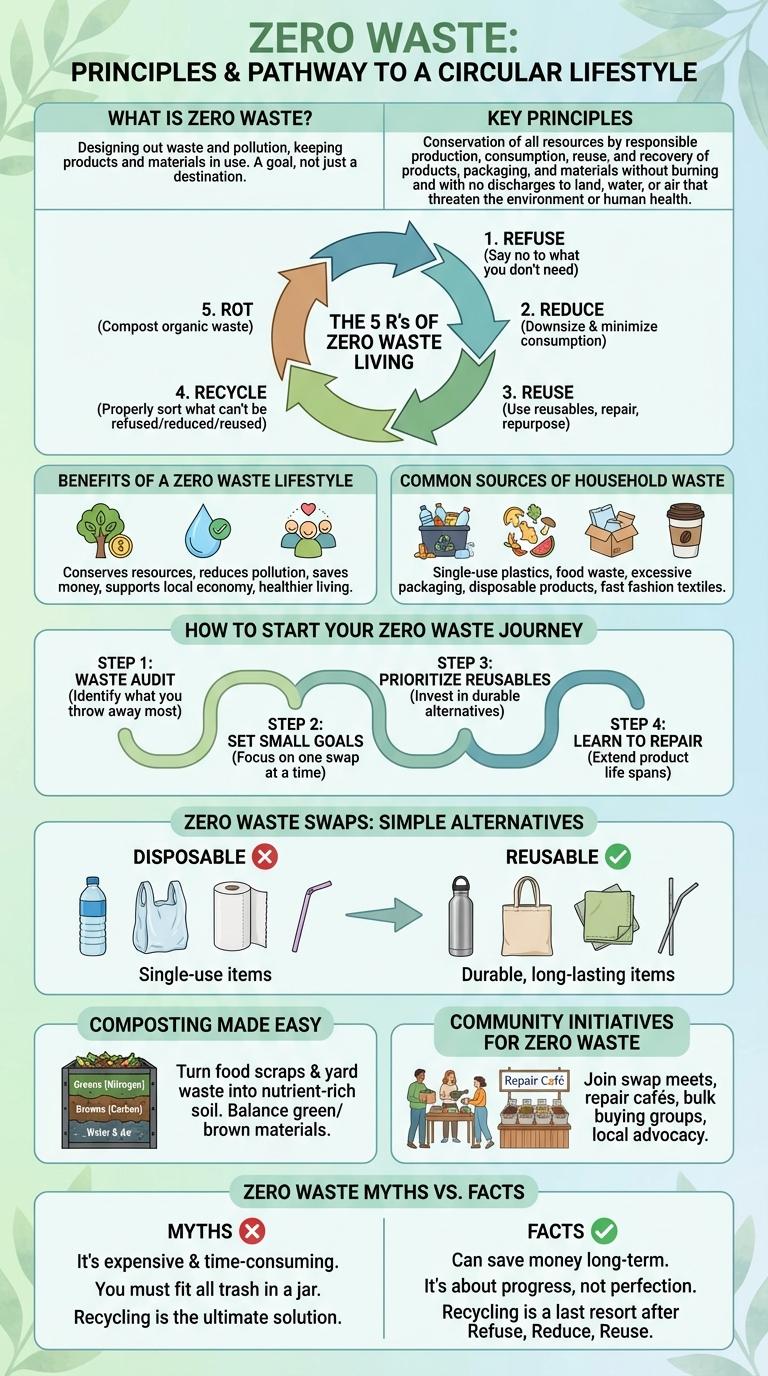
Zero waste infographics visually represent key strategies and benefits of minimizing waste to promote environmental sustainability. They highlight practical tips for reducing, reusing, and recycling materials in everyday life. These graphics simplify complex data, making zero waste principles accessible and actionable for diverse audiences.
What is Zero Waste?
Zero Waste is a philosophy aimed at minimizing waste generation by redesigning resource life cycles. The goal is to ensure that all products are reused, repaired, or recycled, eliminating landfill and incineration.
Zero Waste focuses on sustainable materials management to reduce environmental impact. It promotes practices such as composting, reducing single-use plastics, and choosing reusable products. Communities and businesses adopting Zero Waste strategies contribute to cleaner ecosystems and conserve natural resources.
Key Principles of Zero Waste
Zero Waste is a sustainable approach focused on reducing waste generation by promoting reuse, recycling, and composting. The key principles include designing products for durability, minimizing resource consumption, and encouraging circular economy practices. Adopting Zero Waste helps conserve natural resources, reduce pollution, and supports environmental health.
The 5 R's of Zero Waste Living
Zero waste living emphasizes reducing waste to protect the environment and conserve resources. The 5 R's provide a simple framework for sustainable habits in daily life.
- Refuse - Avoid unnecessary items to prevent waste before it starts.
- Reduce - Minimize consumption and waste generation.
- Reuse - Extend product life by using items multiple times.
- Recycle - Process materials to create new products and reduce landfill impact.
- Rot - Compost organic waste to enrich soil and reduce methane emissions.
Incorporating the 5 R's helps individuals significantly lower their environmental footprint.
Benefits of a Zero Waste Lifestyle
What are the benefits of adopting a zero waste lifestyle? Embracing zero waste significantly reduces environmental pollution by minimizing landfill waste. This approach conserves natural resources and supports sustainable living practices.
| Benefit | Description |
|---|---|
| Environmental Protection | Reduces pollution and waste in landfills, oceans, and natural habitats. |
| Resource Conservation | Preserves raw materials by encouraging reuse and recycling of products. |
| Financial Savings | Cut costs by reducing the need for disposable goods and packaging. |
| Health Improvement | Lowers exposure to harmful chemicals commonly found in waste. |
| Community Engagement | Fosters local initiatives and stronger community connections through shared sustainability goals. |
Common Sources of Household Waste
Household waste primarily originates from everyday activities such as food preparation, packaging, and personal care. Common sources include kitchen scraps, plastic containers, paper products, and discarded clothing.
Food waste accounts for a significant portion of household trash, often resulting from over-purchasing and improper storage. Reducing waste involves mindful consumption, recycling, and composting to minimize environmental impact.
How to Start Your Zero Waste Journey
| Step | Action |
|---|---|
| 1. Assess Your Waste | Track your daily waste to identify common disposable items and areas for reduction. |
| 2. Reduce Single-Use Plastics | Replace items like plastic bags, straws, and bottles with reusable alternatives. |
| 3. Shop Mindfully | Choose products with minimal packaging and support bulk stores or local markets. |
| 4. Compost Organic Waste | Start composting food scraps and yard waste to reduce landfill contribution. |
| 5. Reuse and Repurpose | Find creative ways to reuse containers, clothing, and other materials before discarding. |
Zero Waste Swaps: Simple Alternatives
Zero waste swaps reduce environmental impact by replacing single-use items with sustainable alternatives. Simple changes in daily habits contribute significantly to waste reduction and resource conservation.
- Reusable Bags - Swap plastic bags for cloth or mesh reusable bags to minimize plastic waste.
- Glass Water Bottles - Use glass or stainless steel bottles instead of disposable plastic bottles to cut down plastic pollution.
- Bamboo Toothbrushes - Choose bamboo toothbrushes with biodegradable handles instead of plastic ones to reduce landfill waste.
Composting Made Easy
Composting transforms kitchen scraps and yard waste into nutrient-rich soil, reducing landfill use and greenhouse gas emissions. Simple steps include separating compostable items, maintaining moisture, and turning the pile regularly for faster decomposition. Using compost in gardens improves soil health, conserves water, and supports plant growth naturally.
Community Initiatives for Zero Waste
Community initiatives for zero waste play a crucial role in reducing landfill waste and promoting sustainable living. Local groups organize educational workshops and clean-up events to engage residents in waste reduction efforts.
Zero waste communities implement programs like tool libraries, composting sites, and recycling hubs to minimize waste generation. Collaboration between residents, businesses, and local governments drives the success of these initiatives.