
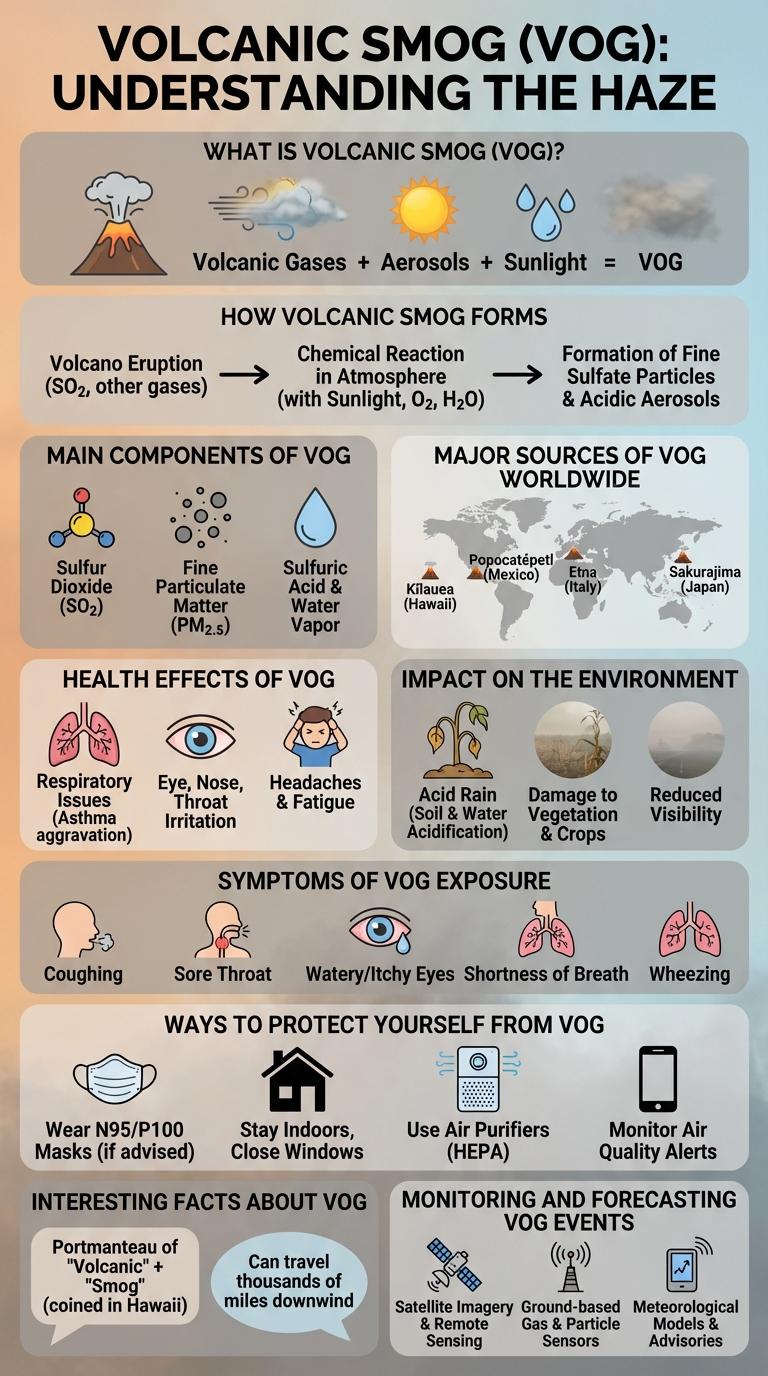
Volcanic smog, or "vog," results from volcanic gases mixing with sunlight and atmospheric moisture, creating a hazy, acidic atmosphere. This phenomenon poses health risks such as respiratory problems and eye irritation. Understanding vog's formation and effects is crucial for communities near active volcanoes.
What is Volcanic Smog (Vog)?
Volcanic smog, or Vog, is a type of air pollution caused by volcanic gases and particles mixing with the atmosphere. It originates primarily from sulfur dioxide released by volcanic eruptions.
- Definition - Vog is a haze formed when volcanic sulfur dioxide reacts with sunlight, oxygen, and moisture.
- Composition - It contains sulfur dioxide, sulfate particles, and other volcanic gases that affect air quality.
- Impact - Vog can cause respiratory problems and environmental damage in areas surrounding active volcanoes.
Understanding Vog helps communities prepare for its health and environmental effects.
How Volcanic Smog Forms
Volcanic smog, or "vog," forms when sulfur dioxide gas emitted from volcanic eruptions reacts with sunlight, oxygen, and moisture in the atmosphere. This chemical reaction produces sulfuric acid droplets and other aerosols that create a visible haze.
The concentration of vog depends on volcanic activity, wind patterns, and atmospheric conditions. High sulfur dioxide levels combined with stagnant air amplify vog formation, impacting air quality and visibility.
Main Components of Volcanic Smog
| Main Components | Description |
|---|---|
| Sulfur Dioxide (SO2) | Primary toxic gas emitted by volcanoes, causing respiratory issues and acid rain formation. |
| Particulate Matter (Ash) | Fine volcanic ash particles that reduce air quality and visibility. |
| Hydrogen Sulfide (H2S) | Volatile gas with a characteristic rotten egg odor, contributing to the smog's toxicity. |
| Hydrochloric Acid Aerosols (HCl) | Formed when volcanic gases react with moisture, leading to acidic airborne particles. |
| Carbon Dioxide (CO2) | Colorless gas released in large quantities, posing a danger in confined or low-lying areas. |
Major Sources of Vog Worldwide
Volcanic smog, or vog, is primarily produced by volcanic eruptions that release sulfur dioxide (SO2) into the atmosphere. Major sources of vog worldwide include the Kilauea volcano in Hawaii, Taal Volcano in the Philippines, Popocatepetl in Mexico, Mount Etna in Italy, and Mount Sakurajima in Japan. These active volcanoes emit significant amounts of volcanic gases that react with sunlight, oxygen, and moisture to form dense smog affecting air quality and public health in nearby regions.
Health Effects of Volcanic Smog
Volcanic smog, also known as vog, is a hazardous air pollution caused by volcanic emissions mixing with atmospheric moisture. Exposure to vog can significantly impact respiratory health and overall well-being.
- Respiratory Irritation - Inhalation of volcanic smog irritates the respiratory tract, causing symptoms such as coughing, throat pain, and shortness of breath.
- Aggravation of Lung Diseases - Vog exposure worsens conditions like asthma, bronchitis, and chronic obstructive pulmonary disease (COPD), increasing hospital visits.
- Eye and Skin Effects - The acidic components of volcanic smog can cause eye irritation, redness, and skin discomfort upon contact.
Impact on the Environment
What is volcanic smog and how does it impact the environment?
Volcanic smog, also known as "vog," is a type of air pollution caused by volcanic gas emissions mixing with oxygen and moisture in the atmosphere. It contributes to acid rain, damages vegetation, and affects air quality, posing risks to ecosystems and human health.
Symptoms of Vog Exposure
Volcanic smog, or vog, results from volcanic gases reacting with sunlight and moisture in the atmosphere. This haze commonly contains sulfur dioxide and fine particulate matter that impact air quality near volcanic regions.
Exposure to vog can cause respiratory symptoms including coughing, throat irritation, and difficulty breathing. Eye irritation and headaches are frequent complaints among individuals breathing vog. Sensitive groups such as children, the elderly, and those with asthma may experience more severe health effects.
Ways to Protect Yourself from Vog
Volcanic smog, or vog, is a hazardous air pollution caused by volcanic emissions reacting with sunlight and moisture. Exposure to vog can irritate the respiratory system and exacerbate existing health conditions.
To protect yourself from vog, stay indoors with windows and doors closed, especially during high vog levels. Use air purifiers with HEPA filters to reduce indoor air pollutants and avoid outdoor activities when vog concentrations are elevated.
Interesting Facts about Volcanic Smog
Volcanic smog, also known as "vog," is a hazardous mixture of volcanic gases and fine particulate matter. It significantly affects air quality and can impact human health and the environment in regions near active volcanoes.
- Composition of Vog - Vog primarily consists of sulfur dioxide (SO2), sulfuric acid droplets, and other volcanic gases released during eruptions.
- Health Effects - Exposure to vog can cause respiratory problems, eye irritation, and exacerbate conditions like asthma.
- Environmental Impact - Vog can damage vegetation, reduce visibility, and contribute to acid rain, affecting ecosystems downwind from volcanoes.