
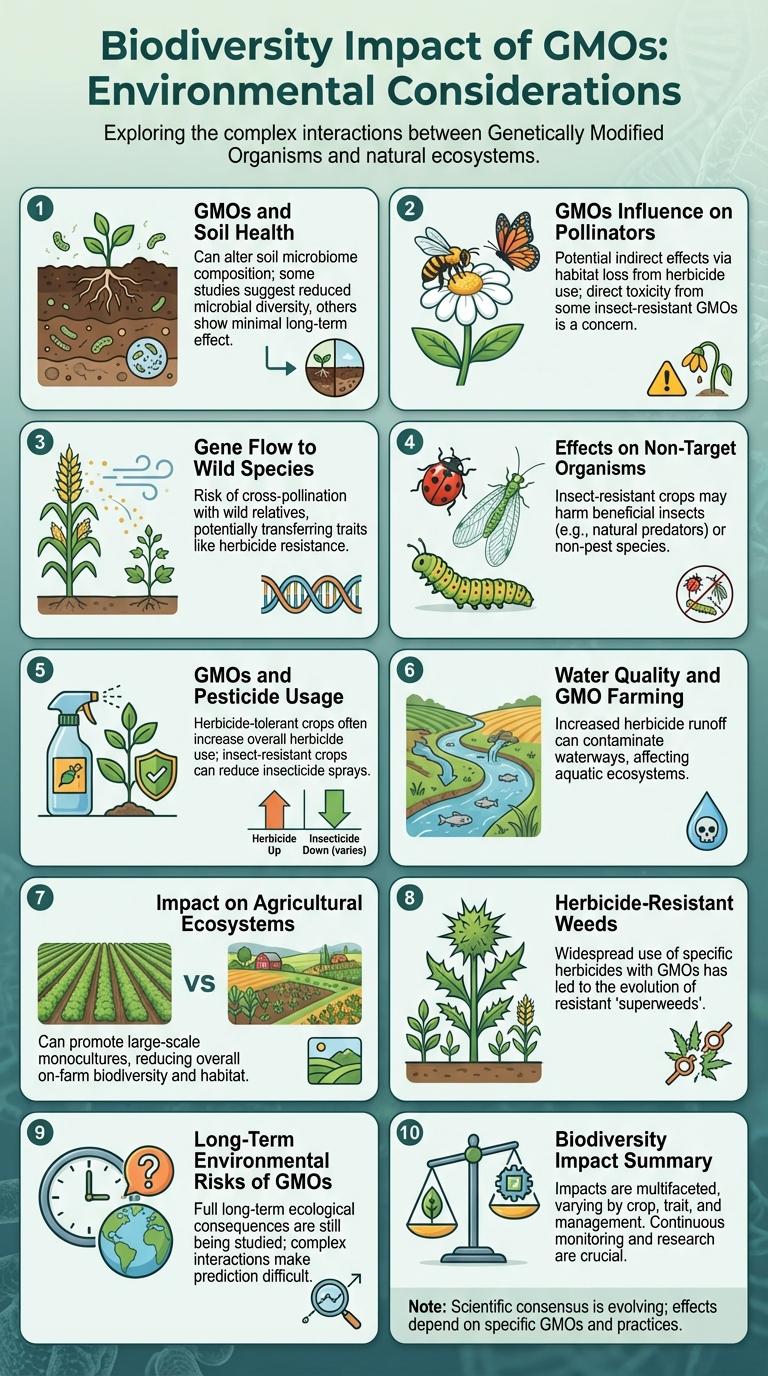
GMO cultivation impacts the environment through altered pesticide use, potential gene flow to wild plants, and changes in biodiversity. Understanding these effects involves examining soil health, water resources, and ecosystem balance. This infographic visualizes key environmental benefits and concerns linked to genetically modified organisms.
Biodiversity Impact of GMOs
| Aspect | Impact on Biodiversity |
|---|---|
| Gene Flow | GMOs can transfer modified genes to wild relatives, potentially affecting native plant genetics. |
| Non-Target Species | GM crops expressing pesticides may harm beneficial insects and soil organisms, reducing species diversity. |
| Monoculture Practices | Extensive GMO crop cultivation encourages monocultures, leading to habitat loss and decreased biodiversity. |
| Resistance Development | Pests evolving resistance to GM traits can disrupt ecological balances and threaten species variety. |
| Soil Microbiome | Altered root exudates from GM plants may impact soil microbial communities essential for ecosystem health. |
GMOs and Soil Health
Genetically Modified Organisms (GMOs) can influence soil health both positively and negatively based on crop type and management practices. Understanding the specific effects on soil properties helps optimize sustainable agricultural systems.
- Increased Microbial Diversity - Certain GMO crops promote higher soil microbial diversity by altering root exudates that feed beneficial microbes.
- Nutrient Cycling Enhancement - Some genetically engineered plants improve nitrogen fixation, boosting nutrient availability in the soil.
- Potential Soil Residue Accumulation - GMO crop residues may introduce novel compounds that accumulate, affecting soil chemical balance over time.
- Reduced Tillage Practices - GMO herbicide-tolerant crops enable reduced tillage, which preserves soil structure and organic matter.
- Soil Erosion Control - Improved root systems in certain GMO varieties contribute to better soil anchorage and erosion prevention.
GMOs Influence on Pollinators
Genetically Modified Organisms (GMOs) impact key pollinators like bees and butterflies, essential for ecosystem health. Research shows varied effects on pollinator populations and behaviors linked to GMO crops.
- Reduced Pollen Diversity - GMO crops may limit pollen variety, affecting nutrition available to pollinators.
- Altered Foraging Behavior - Pollinators exhibit changes in flower visitation patterns near GMO fields.
- Pesticide Exposure - Some GMO crops increase use of certain pesticides, potentially harming pollinator health.
Understanding GMO influence on pollinators guides sustainable agricultural practices and environmental protection efforts.
Gene Flow to Wild Species
Gene flow from genetically modified organisms (GMOs) to wild species occurs when transgenes transfer through cross-pollination or seed dispersal. This process can alter the genetic makeup of wild populations, potentially impacting biodiversity.
Gene flow may lead to the spread of traits such as herbicide resistance or pest tolerance, which can give wild species competitive advantages. This can disrupt ecosystems by outcompeting native plants or creating "superweeds." Monitoring and managing gene flow is essential to minimize unintended environmental consequences.
Effects on Non-Target Organisms
How do GMOs affect non-target organisms in the environment? Genetically modified organisms can unintentionally impact species that are not the intended targets, such as beneficial insects and soil microbes. These effects may alter biodiversity and disrupt ecological balance.
| Non-Target Organism | Potential Effect |
|---|---|
| Pollinators (e.g., bees) | Reduction in population due to exposure to GMO-related toxins |
| Soil Microbes | Changes in microbial diversity affecting soil health and nutrient cycling |
| Predatory Insects | Decline from reduced prey availability or direct toxicity |
| Aquatic Organisms | Negative effects from GMO crop runoff containing toxins |
GMOs and Pesticide Usage
Genetically Modified Organisms (GMOs) often lead to reduced pesticide usage due to engineered pest resistance. Crops like Bt corn produce proteins that target specific pests, decreasing the need for chemical insecticides.
Some GMO varieties may contribute to increased herbicide use, as herbicide-resistant crops allow farmers to apply chemicals more freely. This practice can lead to herbicide-resistant weed populations, impacting long-term environmental sustainability.
Water Quality and GMO Farming
GMO farming can impact water quality through the use of herbicide-resistant crops, which often lead to increased herbicide applications. These chemicals may run off into nearby water bodies, potentially harming aquatic ecosystems and contaminating drinking water sources. Careful management practices are essential to minimize water pollution associated with GMO cultivation.
Impact on Agricultural Ecosystems
Genetically modified organisms (GMOs) influence agricultural ecosystems by altering biodiversity and species interactions. Crop modifications often lead to reduced pesticide use, which can benefit non-target organisms and soil health. However, concerns exist about potential gene flow to wild relatives and the emergence of resistant pests, affecting ecosystem balance.
Herbicide-Resistant Weeds
Herbicide-resistant weeds pose a significant challenge in agricultural ecosystems due to their ability to survive common weed control methods. The rise of these weeds is closely linked to the widespread use of genetically modified crops designed to tolerate specific herbicides.
- Increased Herbicide Use - Herbicide-resistant weeds lead farmers to apply higher doses or multiple types of herbicides, escalating chemical use in the environment.
- Biodiversity Impact - Resistant weeds can outcompete native plant species, reducing biodiversity and altering ecosystem balance.
- Soil Health Changes - Intensive herbicide application disrupts soil microbial communities essential for nutrient cycling and soil fertility.