
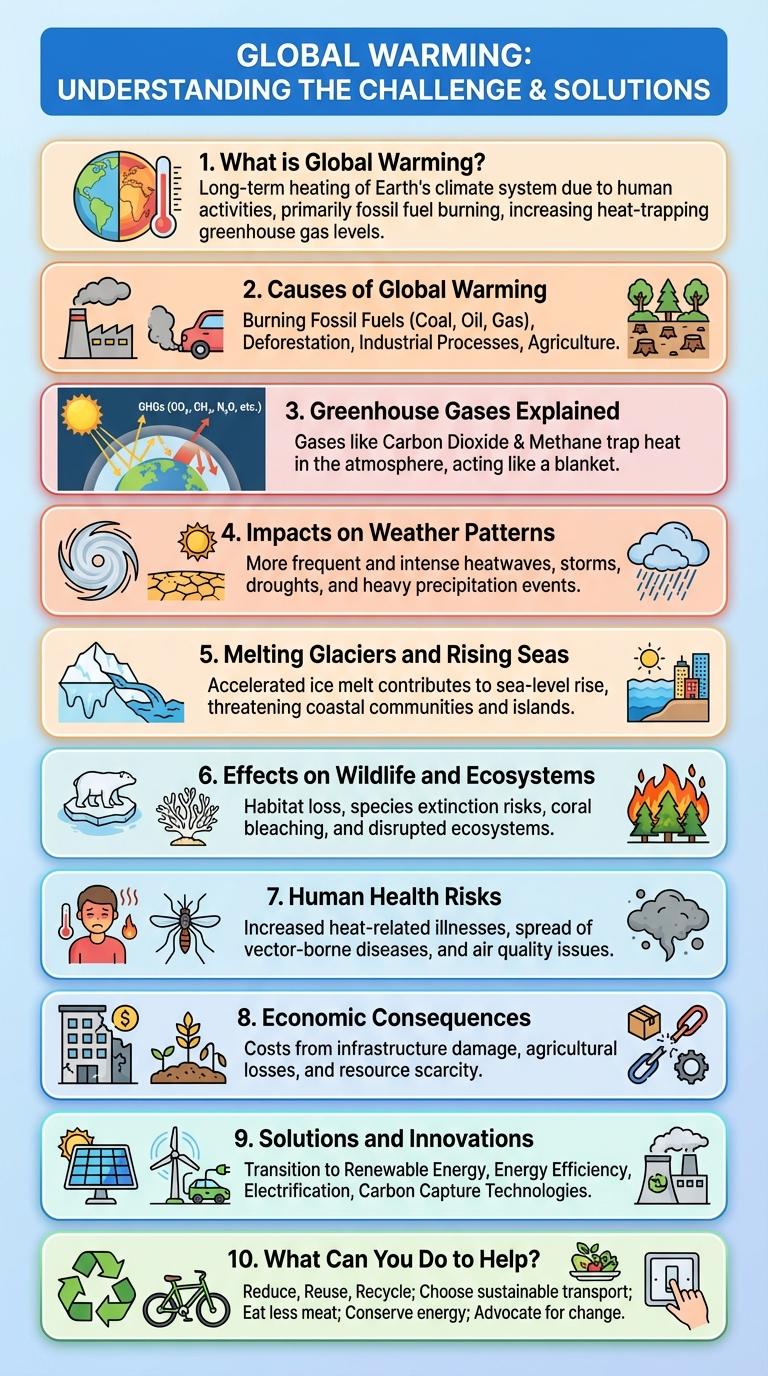
Global warming represents a critical environmental challenge characterized by rising average temperatures worldwide due to increased greenhouse gas emissions. This infographic visualizes key data on the causes, effects, and future projections associated with climate change. Understanding these patterns helps emphasize the urgency of reducing carbon footprints and adopting sustainable practices.
What is Global Warming?
Global warming refers to the long-term rise in Earth's average surface temperature due to human activities. It results from increased greenhouse gas emissions that trap heat in the atmosphere.
- Greenhouse Effect - Earth's atmosphere retains heat through gases like carbon dioxide and methane, causing warming.
- Human Impact - Industrial activities, deforestation, and fossil fuel burning significantly contribute to rising greenhouse gas levels.
- Temperature Rise - Global surface temperatures have increased by approximately 1.2degC since the late 19th century.
Global warming leads to climate changes that affect weather patterns, sea levels, and biodiversity worldwide.
Causes of Global Warming
Global warming is driven primarily by the increase of greenhouse gases such as carbon dioxide, methane, and nitrous oxide in the Earth's atmosphere. These gases trap heat, leading to a gradual rise in global temperatures.
Major sources include fossil fuel combustion, deforestation, and industrial processes that release large amounts of carbon emissions. Agriculture and waste management also contribute significantly to methane and nitrous oxide emissions, intensifying the warming effect.
Greenhouse Gases Explained
Greenhouse gases trap heat in the Earth's atmosphere, leading to global warming. Understanding these gases is essential for addressing climate change effectively.
- Carbon Dioxide (CO2) - The primary greenhouse gas emitted by burning fossil fuels and deforestation.
- Methane (CH4) - A potent gas released from agriculture, landfills, and natural gas production.
- Nitrous Oxide (N2O) - Emitted from soil management practices, fossil fuel combustion, and industrial activities.
Impacts on Weather Patterns
Global warming significantly alters weather patterns worldwide, leading to more frequent and intense extreme weather events. Temperature rises disrupt atmospheric circulation, affecting precipitation and storm behaviors.
Increased greenhouse gas concentrations cause shifts in jet streams, resulting in prolonged heatwaves and cold spells. Rainfall patterns become unpredictable, causing droughts in some regions and flooding in others. These changes threaten ecosystems, agriculture, and water resources, posing challenges for communities globally.
Melting Glaciers and Rising Seas
| Topic | Key Data |
|---|---|
| Melting Glaciers | Global glacier volume has decreased by approximately 267 billion tonnes annually since 2006, accelerating sea level rise. |
| Arctic Ice Loss | Arctic sea ice extent has declined by over 40% since 1979, with record lows observed in recent summers. |
| Greenland Ice Sheet | The Greenland ice sheet is losing about 279 billion tonnes of ice per year, contributing significantly to global sea levels. |
| Sea Level Rise | Global average sea levels have risen approximately 8-9 inches (21-24 cm) since 1880, with the rate increasing in recent decades. |
| Future Projections | Sea levels could rise between 1 to 4 feet (0.3 to 1.2 meters) by 2100, depending on greenhouse gas emission scenarios. |
Effects on Wildlife and Ecosystems
Global warming poses critical threats to wildlife and ecosystems worldwide. Rising temperatures and altered climate patterns disrupt natural habitats and biodiversity.
- Habitat Loss - Increased temperatures lead to the shrinking of polar ice caps, threatening species like polar bears and penguins.
- Species Migration - Many animals shift their habitats toward cooler areas, causing ecological imbalances in new regions.
- Coral Bleaching - Warmer ocean temperatures cause coral reefs to expel algae, resulting in large-scale reef degradation and loss of marine biodiversity.
Human Health Risks
Global warming significantly impacts human health by increasing the frequency and intensity of heatwaves, leading to heat-related illnesses and deaths. Rising temperatures exacerbate air pollution, contributing to respiratory conditions such as asthma and chronic obstructive pulmonary disease (COPD). Climate change also facilitates the spread of vector-borne diseases like malaria and dengue fever, posing heightened risks to vulnerable communities worldwide.
Economic Consequences
How does global warming impact the global economy? Rising temperatures cause severe weather events that disrupt industries and reduce productivity worldwide. Economic losses from climate-related disasters exceed hundreds of billions of dollars annually.
What sectors face the greatest financial risks from climate change? Agriculture suffers from droughts and shifting growing seasons, while coastal infrastructure faces damage from sea-level rise. Insurance costs and recovery expenses put pressure on governments and businesses globally.
How do energy costs relate to global warming? Increased demand for cooling during heatwaves raises electricity consumption and prices. Transitioning to renewable energy sources requires significant upfront investments but reduces long-term economic risks.
Can global warming affect employment rates? Climate-related disruptions in manufacturing, agriculture, and tourism can lead to job losses and reduced incomes. Investing in green jobs and climate resilience creates new economic opportunities and supports workforce adaptation.
What are the projected economic losses if global warming continues unchecked? Estimates suggest a reduction of global GDP by 10% to 30% by 2100 under high-emission scenarios. Mitigation and adaptation strategies are critical to minimizing these economic impacts.
Solutions and Innovations
Innovations such as renewable energy technologies, including solar and wind power, play a critical role in reducing carbon emissions worldwide. Energy-efficient solutions like smart grids and electric vehicles help decrease reliance on fossil fuels while promoting sustainable development. Carbon capture and storage (CCS) techniques alongside reforestation projects further support global efforts to mitigate global warming.