
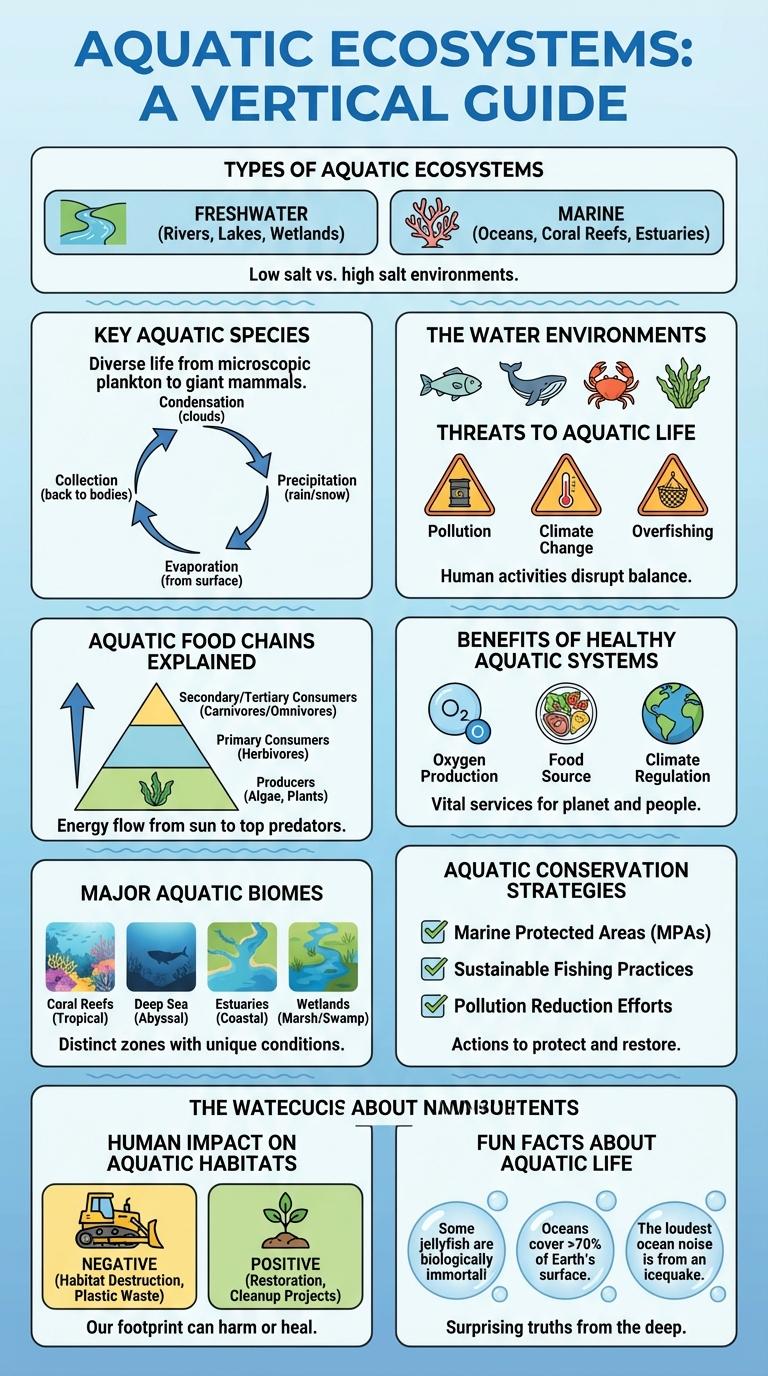
Aquatic ecosystems teem with diverse life forms, from microscopic plankton to massive whales, each playing a crucial role in maintaining ecological balance. Understanding the intricate relationships and environmental factors within these habitats reveals the importance of water conservation and pollution control. Visualizing this complex data through an infographic offers a clear, engaging way to appreciate aquatic biodiversity and the challenges it faces.
Types of Aquatic Ecosystems
Aquatic ecosystems are diverse environments that include both freshwater and marine habitats. These ecosystems support a wide variety of plant and animal species essential for ecological balance.
- Freshwater Ecosystems - Include rivers, lakes, ponds, and wetlands with low salt concentration.
- Marine Ecosystems - Comprise oceans, coral reefs, and estuaries with high salt content and vast biodiversity.
- Estuarine Ecosystems - Transitional zones where freshwater mixes with seawater, rich in nutrients and species diversity.
- Wetlands - Areas saturated with water, supporting amphibians, birds, and aquatic plants.
- Brackish Water Ecosystems - Contain a mixture of fresh and saltwater, providing unique habitats for specialized organisms.
Understanding these types of aquatic ecosystems is crucial for conservation and sustainable management efforts.
Key Aquatic Species
Aquatic ecosystems host a diverse range of species essential for environmental balance and human livelihood. Key aquatic species include fish, crustaceans, mollusks, marine mammals, and aquatic plants.
Fish such as salmon, tuna, and cod play crucial roles in food webs and commercial fisheries. Crustaceans like shrimp and crabs support global seafood markets and contribute to aquatic biodiversity.
The Water Cycle in Aquatic Environments
How does the water cycle operate in aquatic environments? The water cycle in aquatic environments involves continuous movement of water through evaporation, condensation, precipitation, and collection. This cycle sustains aquatic ecosystems by regulating water levels and supporting life processes.
| Stage | Description |
|---|---|
| Evaporation | Water from oceans, lakes, and rivers changes into vapor due to sunlight. |
| Condensation | Water vapor cools and forms clouds over aquatic environments. |
| Precipitation | Condensed water returns as rain or snow, replenishing water bodies. |
| Collection | Water gathers in oceans, lakes, and rivers, completing the cycle. |
Threats to Aquatic Life
Aquatic life faces numerous threats that jeopardize the health of ecosystems worldwide. Pollution, habitat destruction, and climate change significantly impact marine and freshwater species.
Chemical pollutants from industrial runoff contaminate water bodies, leading to toxicity in aquatic organisms. Overfishing disrupts food chains and reduces biodiversity in oceans and rivers. Rising ocean temperatures and acidification caused by increased CO2 levels further stress aquatic habitats, endangering countless species.
Aquatic Food Chains Explained
Aquatic food chains illustrate the flow of energy through marine and freshwater ecosystems. These chains start with producers and end with top predators.
Understanding aquatic food chains is essential for preserving biodiversity and maintaining ecological balance.
- Primary Producers - Phytoplankton and algae convert sunlight into energy through photosynthesis, forming the base of aquatic food chains.
- Primary Consumers - Zooplankton and small fish feed on primary producers, transferring energy to higher levels.
- Secondary and Tertiary Consumers - Larger fish, marine mammals, and birds prey on smaller consumers, regulating populations and maintaining ecosystem stability.
Benefits of Healthy Aquatic Systems
Healthy aquatic systems provide essential habitats for diverse marine and freshwater species, supporting biodiversity and ecosystem stability. They contribute to clean water by filtering pollutants and nutrients, promoting water quality for human consumption and recreation. These systems also offer economic benefits through fisheries, tourism, and coastal protection against erosion and flooding.
Major Aquatic Biomes
Aquatic biomes cover more than 70% of the Earth's surface, providing habitats for diverse plant and animal species. These biomes are categorized based on salinity, depth, and water flow.
Major aquatic biomes include freshwater, marine, and estuarine environments. Each biome supports unique ecosystems essential for ecological balance and human livelihoods.
Aquatic Conservation Strategies
Aquatic conservation strategies are essential for preserving freshwater and marine ecosystems. These approaches protect biodiversity, support sustainable resource use, and combat environmental threats like pollution and habitat loss.
Effective conservation requires scientific research, community engagement, and policy implementation focused on aquatic environments.
- Habitat Protection - Establishing protected areas safeguards critical aquatic habitats from development and degradation.
- Pollution Control - Reducing pollutants entering water bodies helps maintain water quality and aquatic health.
- Restoration Projects - Restoring wetlands, coral reefs, and river systems enhances ecosystem resilience and species diversity.
Human Impact on Aquatic Habitats
Human activities drastically alter aquatic habitats, leading to habitat loss and decreased biodiversity. Pollution from industrial runoff, plastic waste, and chemical contaminants severely affects water quality and aquatic life health. Overfishing and coastal development disrupt ecosystems, threatening the survival of numerous aquatic species.