
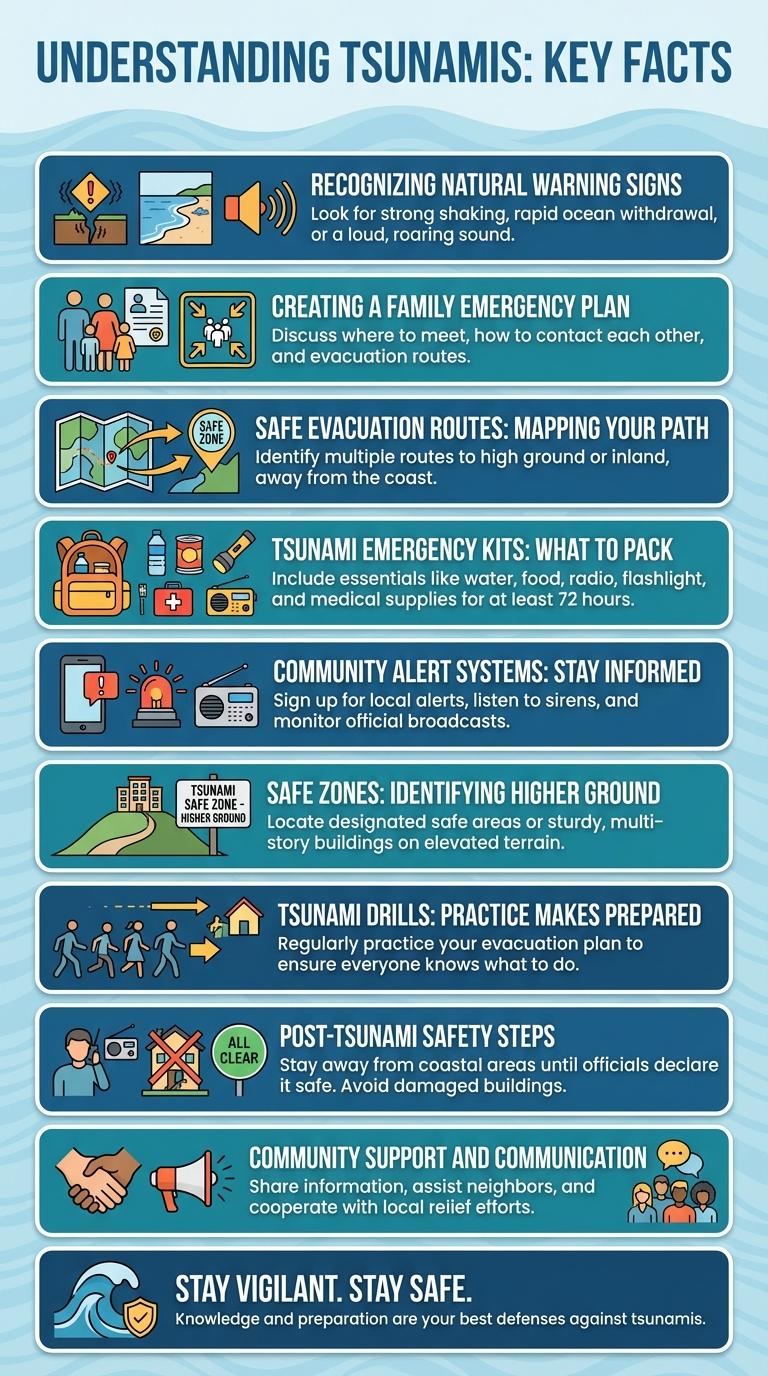
Creating a tsunami preparedness plan is essential for minimizing risks and ensuring safety in coastal areas. Understanding evacuation routes, emergency kits, and communication strategies can save lives during a tsunami event. This infographic highlights key steps and practical tips to help individuals and communities stay prepared and respond effectively.
Understanding Tsunamis: Key Facts
| Key Fact | Description |
|---|---|
| Definition | A tsunami is a series of powerful ocean waves caused by underwater earthquakes, volcanic eruptions, or landslides. |
| Wave Speed | Tsunami waves can travel at speeds exceeding 500 miles per hour (800 km/h) in deep water. |
| Warning Signs | Strong ground shaking, sudden ocean withdrawal, or an unusual ocean roar often precede a tsunami. |
| Impact Zone | Coastal regions are most vulnerable; even distant earthquakes can trigger tsunamis affecting shores thousands of miles away. |
| Preparedness | Understanding evacuation routes, establishing communication plans, and recognizing natural warning signs save lives. |
Recognizing Natural Warning Signs
Tsunamis often follow natural warning signs such as strong earthquakes and unusual sea behavior. Recognizing these signs quickly can save lives by allowing immediate evacuation.
Watch for sudden ocean recession, exposing the sea floor, or a loud roaring sound coming from the ocean. Local residents and visitors should always respond promptly to these natural alerts to stay safe.
Creating a Family Emergency Plan
Creating a Family Emergency Plan is essential for tsunami preparedness. It ensures all family members know how to respond quickly and safely during a tsunami warning.
Identify safe evacuation routes and establish a designated meeting point. Keep important documents and emergency supplies in an easily accessible location.
Safe Evacuation Routes: Mapping Your Path
Identifying safe evacuation routes is crucial for effective tsunami preparedness. Maps highlighting high ground and designated evacuation paths ensure quick, secure movement away from hazard zones. Regularly updating and practicing these routes increases your chances of safe escape during an emergency.
Tsunami Emergency Kits: What to Pack
What items should you include in a tsunami emergency kit to stay prepared? A well-stocked tsunami emergency kit is essential for survival during and after a tsunami event. It ensures you have the necessary supplies to remain safe and sustain yourself until help arrives.
| Essential Items | Purpose |
|---|---|
| Water (1 gallon per person per day for 3 days) | Hydration during emergencies |
| Non-perishable food (3-day supply) | Nutrition when food sources are unavailable |
| First aid kit | Treat injuries and prevent infections |
| Flashlight and extra batteries | Provide light during power outages |
| Whistle and emergency radio | Signal for help and receive updates |
How do emergency tools help improve safety in a tsunami? Tools in your tsunami kit allow you to communicate and navigate in chaotic situations. Having equipment like whistles and radios increases chances of rescue and staying informed about evolving dangers.
Community Alert Systems: Stay Informed
Community alert systems are vital for timely tsunami warnings and can save lives by providing early notifications. Staying informed through these systems ensures individuals can take immediate action to reach safety.
- Emergency Sirens - Loud sirens are installed in coastal areas to warn residents of an impending tsunami threat.
- Mobile Alerts - Text messages and app notifications deliver real-time tsunami alerts directly to smartphones.
- Radio Broadcasts - Local radio stations broadcast continuous updates and instructions during a tsunami emergency.
Safe Zones: Identifying Higher Ground
Identifying safe zones and higher ground is crucial for tsunami preparedness. Knowing these locations can save lives by providing immediate refuge during a tsunami event.
- Locate Elevated Areas - Safe zones are typically hills or elevated land at least 100 feet above sea level or 2 miles inland.
- Mark Escape Routes - Clear and accessible paths to higher ground must be identified and practiced regularly.
- Community Planning - Local authorities should map and communicate designated safe zones to residents and visitors.
Preparedness means knowing the nearest higher ground and reaching it quickly during tsunami warnings.
Tsunami Drills: Practice Makes Prepared
Tsunami drills play a crucial role in enhancing community readiness by simulating real emergency scenarios. Regular practice ensures individuals understand evacuation routes and safety protocols, reducing panic and confusion during actual events.
- Increased Response Time - Practicing drills helps people react quickly and efficiently, minimizing delays in evacuation.
- Improved Awareness - Drills educate participants on recognizing warning signs and following safety procedures.
- Community Coordination - Rehearsals foster communication and cooperation among residents, emergency teams, and local authorities.
Post-Tsunami Safety Steps
After a tsunami, move to higher ground and stay away from affected shorelines to avoid secondary waves and hazards. Follow official updates from emergency services via radio or mobile alerts to receive accurate information and instructions. Check for injuries, provide first aid if necessary, and avoid entering damaged buildings until they have been declared safe.