
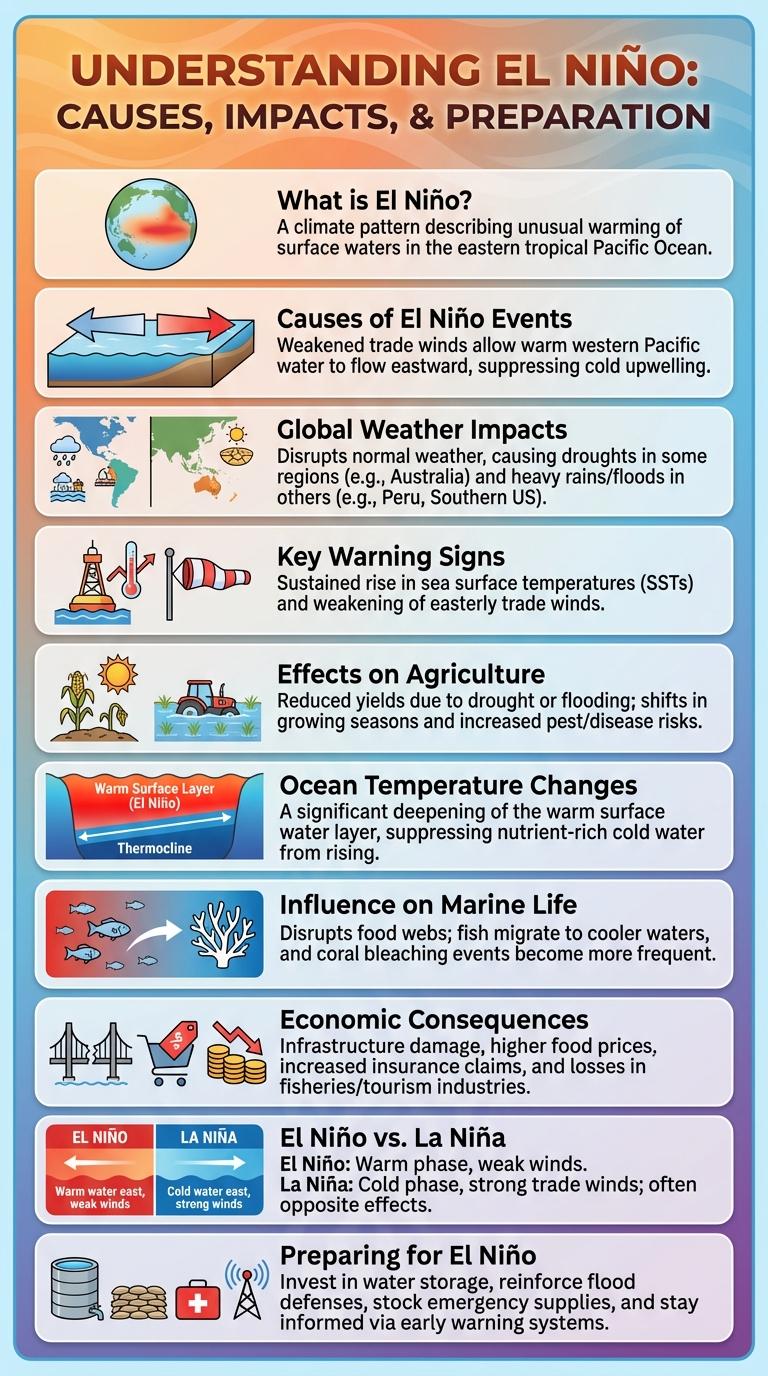
El Nino is a complex climate phenomenon characterized by the warming of sea surface temperatures in the central and eastern Pacific Ocean. This shift disrupts weather patterns globally, leading to significant impacts such as altered rainfall, droughts, and storms. Understanding these effects is crucial for preparing and mitigating risks associated with El Nino events.
What is El Niño?
El Nino is a climate phenomenon characterized by the periodic warming of sea surface temperatures in the central and eastern Pacific Ocean. It significantly impacts global weather patterns, causing changes in rainfall, temperature, and storm activity.
- Ocean Temperature Increase - El Nino results from unusual warming of the Pacific Ocean near the equator.
- Atmospheric Changes - This warming alters wind patterns and atmospheric circulation worldwide.
- Weather Impact - El Nino often leads to extreme weather events such as droughts, floods, and hurricanes.
El Nino occurs irregularly every 2 to 7 years and can last from several months to over a year.
Causes of El Niño Events
El Nino events are caused by the weakening of trade winds over the Pacific Ocean. This weakening allows warm water from the western Pacific to move eastward toward the coast of South America. The shift in ocean temperatures disrupts normal weather patterns and impacts global climate systems.
Global Weather Impacts
What is El Nino and how does it affect global weather patterns?
El Nino is a climate phenomenon characterized by the warming of sea surface temperatures in the central and eastern Pacific Ocean. It disrupts global weather by altering jet streams and atmospheric circulation.
How does El Nino influence rainfall across different regions?
El Nino causes increased rainfall in the southern United States and Peru, often resulting in flooding. Conversely, it brings drought conditions to Australia, Indonesia, and parts of Southeast Asia.
What are the temperature effects linked to El Nino events worldwide?
During El Nino, global average temperatures tend to rise, contributing to warmer winters in North America and parts of Europe. These temperature shifts can affect agriculture and energy demand globally.
How does El Nino impact severe weather occurrences?
El Nino often intensifies hurricanes in the Pacific Ocean while suppressing Atlantic hurricane activity. It also increases the frequency of heatwaves and wildfires in affected regions.
What economic and environmental sectors suffer most from El Nino?
Agriculture, fisheries, and water resource management face major disruptions from El Nino-induced weather extremes. Damage to crops, fish populations, and water shortages can lead to significant economic losses worldwide.
Key Warning Signs
| Key Warning Sign | Description |
|---|---|
| Warmer Pacific Ocean Surface | Unusual rise in sea surface temperatures in the central and eastern equatorial Pacific Ocean |
| Shifts in Trade Winds | Weakening or reversal of the normal easterly trade winds across the Pacific Ocean |
| Changes in Rainfall Patterns | Increased precipitation in the central and eastern Pacific and drought in western Pacific regions |
| Atmospheric Pressure Variations | Alterations in the Southern Oscillation Index reflecting air pressure changes between Tahiti and Darwin |
| Unusual Cloud Formation | Increased cloudiness and convection over the central Pacific as monitored by satellite imagery |
Effects on Agriculture
El Nino significantly disrupts global weather patterns, leading to irregular rainfall and temperature fluctuations that impact agriculture. Crops such as maize, rice, and wheat often experience reduced yields due to droughts or excessive rainfall caused by these events.
Regions like Southeast Asia, Australia, and parts of Africa face severe agricultural challenges during El Nino episodes. Farmers encounter increased risks of crop failure, pest outbreaks, and soil degradation, which threaten food security and economic stability.
Ocean Temperature Changes
El Nino is characterized by a significant increase in ocean surface temperatures in the central and eastern Pacific Ocean. These temperature changes disrupt normal weather patterns and impact marine ecosystems globally. Ocean temperature anomalies during El Nino can rise by 1 to 3 degrees Celsius above average, influencing climate and ocean circulation.
Influence on Marine Life
El Nino is a climate phenomenon characterized by the warming of sea surface temperatures in the central and eastern Pacific Ocean. This event disrupts normal oceanic and atmospheric patterns.
Marine life is significantly affected by El Nino due to changes in water temperature and nutrient availability. Warmer waters reduce upwelling, which decreases the supply of nutrients essential for plankton growth. This decline cascades through the food chain, impacting fish populations, seabirds, and marine mammals.
Economic Consequences
El Nino is a climate phenomenon characterized by the warming of sea surface temperatures in the central and eastern Pacific Ocean. This event disrupts weather patterns globally, leading to significant economic impacts across multiple sectors.
The agricultural industry often suffers from droughts or excessive rainfall, causing crop failures and food price volatility. Coastal fisheries also experience declines due to altered marine ecosystems, affecting livelihoods and food supply chains.
El Niño vs. La Niña
El Nino and La Nina are opposite phases of the El Nino-Southern Oscillation (ENSO) cycle, significantly impacting global weather patterns. Understanding their differences helps predict climate variations and prepare for associated natural events.
El Nino is characterized by unusually warm ocean temperatures in the central and eastern Pacific, while La Nina features cooler-than-average sea surface temperatures in the same region.
- Temperature Anomalies - El Nino causes warming of Pacific waters; La Nina causes cooling.
- Weather Impact - El Nino often leads to wetter conditions in the Americas and dry weather in Australia and Southeast Asia; La Nina typically results in drier conditions in the Americas and wetter weather in Australia and Southeast Asia.
- Frequency - These events usually occur every 2-7 years and last for 9-12 months.