
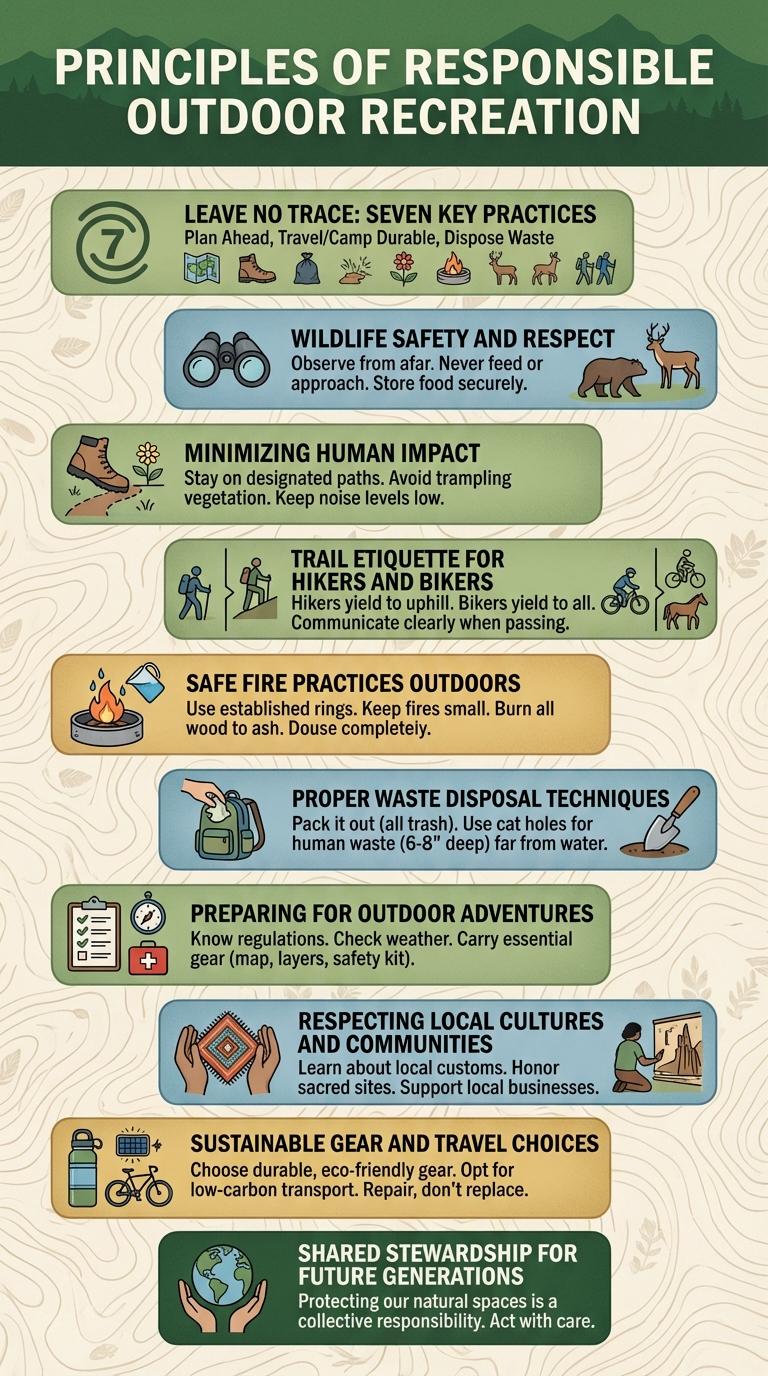
Practicing responsible outdoor recreation helps preserve natural environments and ensures safety for all visitors. Understanding Leave No Trace principles minimizes human impact on trails, wildlife, and vegetation. Embracing sustainable habits fosters a healthier planet and enriches outdoor experiences for future generations.
Principles of Responsible Outdoor Recreation
Responsible outdoor recreation promotes sustainable enjoyment of natural spaces while protecting the environment. Understanding key principles helps minimize human impact on ecosystems.
- Respect Nature - Avoid disturbing plants, animals, and cultural sites to preserve biodiversity and heritage.
- Stay on Trails - Use designated paths to prevent soil erosion and damage to vegetation.
- Pack Out Waste - Carry out all trash and leftovers to maintain cleanliness and prevent harm to wildlife.
Adhering to these principles ensures outdoor areas remain beautiful and accessible for future generations.
Leave No Trace: Seven Key Practices
Responsible outdoor recreation helps preserve natural environments for future generations. The Leave No Trace principles guide visitors to minimize their impact while enjoying the outdoors.
These seven key practices support sustainable interaction with nature by promoting respect and care.
- Plan Ahead and Prepare - Organize trips to avoid overcrowding and bring necessary gear to reduce waste and damage.
- Travel and Camp on Durable Surfaces - Use established trails and campsites to protect fragile ecosystems and prevent erosion.
- Dispose of Waste Properly - Pack out all trash and use restroom facilities or follow best practices for human waste disposal.
- Leave What You Find - Preserve natural and cultural artifacts by avoiding collection or disturbance.
- Minimize Campfire Impact - Use lightweight stoves or established fire rings to reduce fire scars and hazards.
- Respect Wildlife - Observe animals from a distance and avoid feeding to maintain their natural behaviors.
- Be Considerate of Other Visitors - Keep noise levels low and yield right of way to ensure a positive experience for everyone.
Wildlife Safety and Respect
Respecting wildlife during outdoor recreation ensures the safety of both animals and visitors. Observing animals from a distance prevents stress and harmful encounters.
Never feed wild animals as it disrupts their natural diet and behavior. Secure food and trash to avoid attracting wildlife to campsites or trails.
Minimizing Human Impact
Responsible outdoor recreation emphasizes minimizing human impact to preserve natural environments. Staying on designated trails reduces soil erosion and protects native vegetation. Carrying out all trash and avoiding disturbing wildlife ensures ecosystems remain healthy for future generations.
Trail Etiquette for Hikers and Bikers
Responsible outdoor recreation enhances safety and preserves natural environments for all users. Proper trail etiquette fosters respect between hikers and bikers on shared paths.
- Yield to Hikers - Bikers should slow down and yield the right of way to hikers, signaling their approach clearly.
- Stay on Designated Trails - Both hikers and bikers must stay on marked trails to protect vegetation and prevent erosion.
- Keep Noise to a Minimum - Lower noise levels to avoid disturbing wildlife and other trail users.
Safe Fire Practices Outdoors
Safe fire practices are essential for protecting natural areas and preventing wildfires. Outdoor enthusiasts must always follow regulations and use designated fire rings or pits.
Always clear the area around your fire from flammable materials, keeping it at least 10 feet in diameter. Never leave a fire unattended and have water or a shovel nearby to extinguish it quickly. Ensure the fire is completely out before leaving by dousing it with water and stirring the ashes until cool to the touch.
Proper Waste Disposal Techniques
How can proper waste disposal enhance outdoor recreation? Responsible disposal of waste protects natural habitats from pollution. It helps maintain clean and safe environments for all visitors.
What are the best practices for disposing of waste outdoors? Pack out all trash, including food scraps and biodegradable items. Use designated waste bins or carry reusable containers to store trash securely.
Why is it important to avoid burying or burning waste in nature? Burying waste can harm soil quality and local wildlife. Burning waste releases harmful chemicals and damages air quality.
How can hikers manage human waste responsibly? Use established restroom facilities or carry portable waste bags if none are available. Follow Leave No Trace principles to minimize environmental impact.
What materials require special disposal methods during outdoor activities? Hazardous waste like batteries, fuel containers, and electronics must be taken to recycling centers. Proper handling prevents contamination and supports ecosystem health.
Preparing for Outdoor Adventures
Preparing for outdoor adventures ensures safety and enhances the enjoyment of nature. Proper planning includes researching the area, checking weather conditions, and informing someone about your trip details.
Pack essential gear such as a map, water, first-aid kit, and suitable clothing. Understanding local regulations and Leave No Trace principles helps protect natural environments for future visitors.
Respecting Local Cultures and Communities
Respect local cultures and communities by learning about their traditions and customs before visiting outdoor recreation areas. Support local businesses and artisans to contribute positively to the community's economy. Always seek permission and follow guidelines when accessing culturally sensitive sites to preserve their heritage and respect their people.