
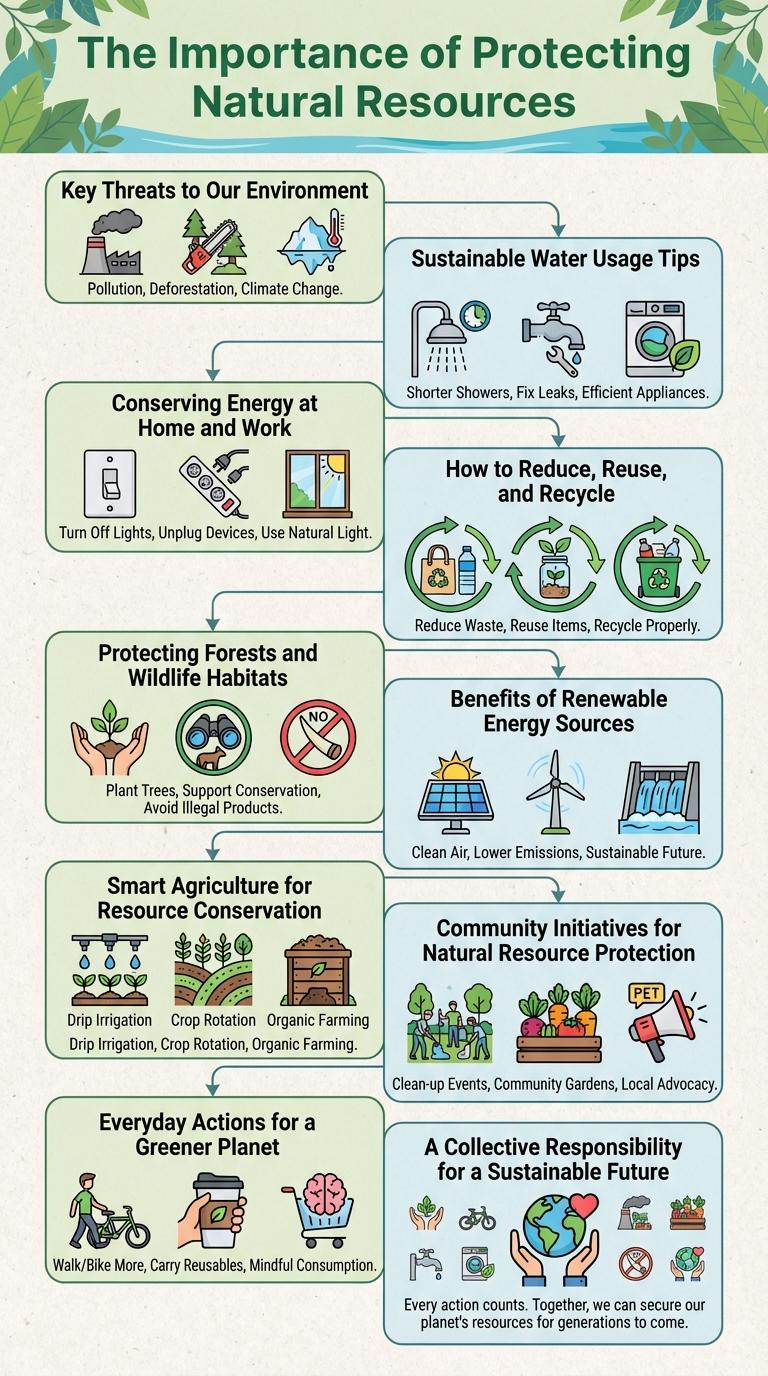
Protecting our natural resources is essential for maintaining ecological balance and ensuring a sustainable future. Conserving water, forests, and minerals helps preserve biodiversity and supports human well-being. Infographics provide a clear and engaging way to understand the importance of responsible resource management.
The Importance of Protecting Natural Resources
Protecting natural resources is essential for maintaining biodiversity and ensuring sustainable development. Conserving these resources helps preserve ecosystems that support life on Earth.
- Supports Ecosystem Health - Natural resources provide habitats and food sources for countless species, maintaining ecological balance.
- Ensures Resource Availability - Responsible management guarantees that water, soil, and minerals remain accessible for future generations.
- Mitigates Climate Change - Forests and oceans act as carbon sinks, reducing greenhouse gases and regulating global temperatures.
Preserving natural resources is a critical step toward a healthier planet and a sustainable future.
Key Threats to Our Environment
Protecting our natural resources is essential for maintaining biodiversity and sustaining human life. Identifying key environmental threats helps prioritize conservation efforts effectively.
- Deforestation - Large-scale tree removal disrupts ecosystems and reduces carbon sequestration.
- Water Pollution - Contaminants from industrial and agricultural sources degrade freshwater quality.
- Climate Change - Rising temperatures and extreme weather impact habitats and resource availability.
Sustainable Water Usage Tips
Protecting natural resources is essential for maintaining a healthy environment and ensuring future generations have access to clean water. Sustainable water usage reduces waste and preserves this vital resource for ecosystems and communities.
- Fix Leaks Promptly - Repairing dripping faucets and pipes prevents unnecessary water loss and saves hundreds of gallons annually.
- Use Water-Efficient Fixtures - Installing low-flow showerheads and toilets minimizes water consumption without sacrificing performance.
- Harvest Rainwater - Collecting rainwater for irrigation reduces reliance on municipal water and conserves potable water supplies.
Conserving Energy at Home and Work
Conserving energy at home and work reduces environmental impact and lowers utility costs. Simple actions like using energy-efficient appliances, switching off lights when not in use, and optimizing heating and cooling systems contribute significantly. Promoting sustainable habits supports the preservation of natural resources for future generations.
How to Reduce, Reuse, and Recycle
Protecting our natural resources is essential for sustaining the planet's health and ensuring future generations have access to clean air, water, and soil. Effective strategies involve reducing waste, reusing materials, and recycling products to minimize environmental impact.
Reduce consumption by choosing products with less packaging and conserving energy to lower resource depletion. Reuse items like containers and clothing to extend their life cycle and decrease landfill waste.
Protecting Forests and Wildlife Habitats
Forests cover 31% of the Earth's land area and provide habitat for over 80% of terrestrial species. Protecting forests helps maintain biodiversity and supports the livelihoods of millions of people globally.
Wildlife habitats are critical for species survival, ensuring food, shelter, and breeding grounds. Conservation efforts reduce habitat fragmentation, prevent species extinction, and promote ecosystem balance.
Benefits of Renewable Energy Sources
| Benefit | Description |
|---|---|
| Environmental Protection | Reduces greenhouse gas emissions and air pollution, preserving ecosystems and biodiversity. |
| Resource Conservation | Limits dependence on finite fossil fuels, conserving natural resources for future generations. |
| Economic Growth | Generates jobs and stimulates investment in sustainable technologies and infrastructure. |
| Energy Security | Diversifies energy supply, reducing vulnerability to fuel price fluctuations and geopolitical risks. |
| Health Benefits | Improves air quality, which reduces respiratory and cardiovascular diseases caused by pollution. |
Smart Agriculture for Resource Conservation
Smart agriculture integrates advanced technologies to optimize water usage, reduce chemical inputs, and enhance soil health, ensuring sustainable resource management. Precision farming techniques like GPS-guided equipment and sensor-based irrigation minimize waste and boost crop yields. Adopting these practices promotes conservation of natural resources while supporting food security and environmental resilience.
Community Initiatives for Natural Resource Protection
How can communities actively contribute to protecting natural resources? Community initiatives play a crucial role in preserving local ecosystems and promoting sustainable practices. These efforts enhance environmental awareness and empower residents to take meaningful action.
| Community Gardening | Supports local biodiversity and reduces urban heat. |
| Clean-Up Drives | Reduces pollution and prevents waste from entering waterways. |
| Tree Planting Programs | Restores natural habitats and improves air quality. |
| Water Conservation Campaigns | Promotes efficient water use and protects freshwater resources. |
| Education Workshops | Raises awareness about sustainable resource management. |
Community-led projects foster a sense of stewardship over natural resources and encourage ongoing commitment to environmental health. These initiatives provide measurable benefits, including biodiversity protection and reduced carbon footprints.