
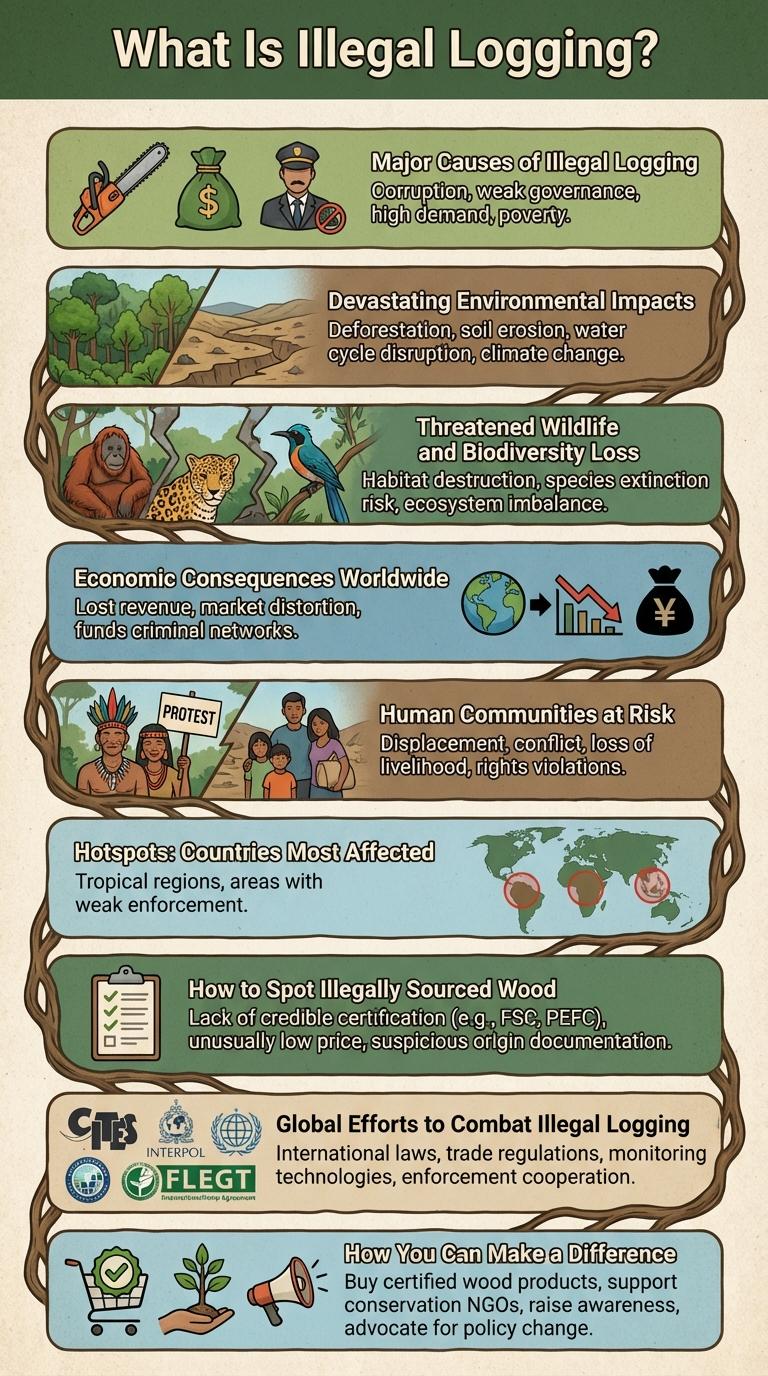
Illegal logging causes significant deforestation, disrupts ecosystems, and threatens biodiversity worldwide. This infographic highlights key statistics and the environmental, economic, and social impacts of unauthorized tree harvesting. Visualizing these facts emphasizes the urgent need for sustainable forestry practices and stronger enforcement policies.
What Is Illegal Logging?
Illegal logging refers to the harvest, transportation, purchase, or sale of timber in violation of national laws. It contributes significantly to deforestation, biodiversity loss, and climate change. This activity undermines legal forestry operations and damages the livelihoods of local communities.
Major Causes of Illegal Logging
Illegal logging is a critical environmental issue causing rapid deforestation worldwide. Identifying its major causes helps in developing effective prevention strategies.
- Poverty - Economic hardship drives communities to harvest timber illegally for income and survival.
- Weak Law Enforcement - Insufficient monitoring and penalties enable illegal loggers to operate with minimal risk.
- Corruption - Officials may accept bribes, allowing unauthorized logging to continue unchecked.
- High Demand for Timber - Global markets create pressure for cheap wood products, incentivizing illegal cutting.
- Lack of Land Tenure - Unclear property rights lead to exploitation of forest resources without regulation.
Devastating Environmental Impacts
Illegal logging causes severe damage to global ecosystems and accelerates climate change. The rampant destruction jeopardizes biodiversity and disrupts vital environmental services.
- Deforestation Rate - Illegal logging accounts for up to 90% of deforestation in some tropical countries, leading to habitat loss.
- Carbon Emissions - Forest degradation from illegal logging releases millions of tons of carbon dioxide annually, worsening global warming.
- Species Extinction - Many endangered species lose critical habitats due to unauthorized tree harvesting, increasing extinction risks.
Stopping illegal logging is essential to preserving environmental stability and biodiversity worldwide.
Threatened Wildlife and Biodiversity Loss
Illegal logging significantly threatens wildlife by destroying natural habitats essential for survival. This activity accelerates biodiversity loss, jeopardizing countless plant and animal species worldwide.
Forests affected by illegal logging lose their ability to support diverse ecosystems, leading to population declines in endangered species such as orangutans, tigers, and elephants. The disruption of habitats fragments ecosystems, making it difficult for species to find food and reproduce. Protecting forests from illegal logging is vital for maintaining global biodiversity and ecosystem health.
Economic Consequences Worldwide
Human Communities at Risk
Illegal logging significantly threatens the livelihoods of human communities dependent on forests. These activities lead to loss of resources, increased poverty, and social instability.
- Resource Depletion - Illegal logging reduces access to timber, food, and medicinal plants essential for local populations.
- Economic Impact - Communities face reduced income opportunities as sustainable forest products become scarce.
- Increased Vulnerability - Deforestation exacerbates natural disasters, leaving communities exposed to floods and landslides.
Hotspots: Countries Most Affected
Illegal logging poses a significant threat to global forests, with hotspots concentrated in tropical regions. Countries most affected include Brazil, Indonesia, Democratic Republic of Congo, Peru, and Malaysia. These nations face severe environmental, economic, and social impacts due to unauthorized timber extraction.
How to Spot Illegally Sourced Wood
Illegally sourced wood often lacks proper certification labels such as FSC or PEFC, making it difficult to verify its origin. Look for clear, traceable documentation that confirms the wood's legal harvest and supply chain.
Wood from illegal logging frequently shows signs of excessive damage or poor processing, including rough cuts and inconsistent wood quality. Vendors selling suspiciously cheap wood or avoiding transparency should raise concerns about legality.
Global Efforts to Combat Illegal Logging
What global initiatives target illegal logging? International organizations like the United Nations and the World Bank lead efforts to enforce sustainable forestry practices. These initiatives promote legal timber trade and support reforestation projects worldwide.
How are countries collaborating to stop illegal logging? Cross-border agreements enhance monitoring and law enforcement in tropical regions prone to deforestation. Sharing satellite data and intelligence improves the detection of illegal activities in real time.
What role do regulations play in combating illegal logging? Laws such as the EU Timber Regulation and the US Lacey Act prohibit importing illegally sourced wood products. Strict compliance requirements encourage transparency within supply chains.
How does technology contribute to fighting illegal logging? Advanced satellite imagery and drones provide accurate forest cover assessments and detect unauthorized logging. Digital platforms help track timber from forest to market, ensuring legality.
What impact do community programs have in reducing illegal logging? Empowering indigenous and local populations with rights and resources helps protect forests. Community-led monitoring and sustainable livelihoods reduce reliance on illicit timber extraction.