
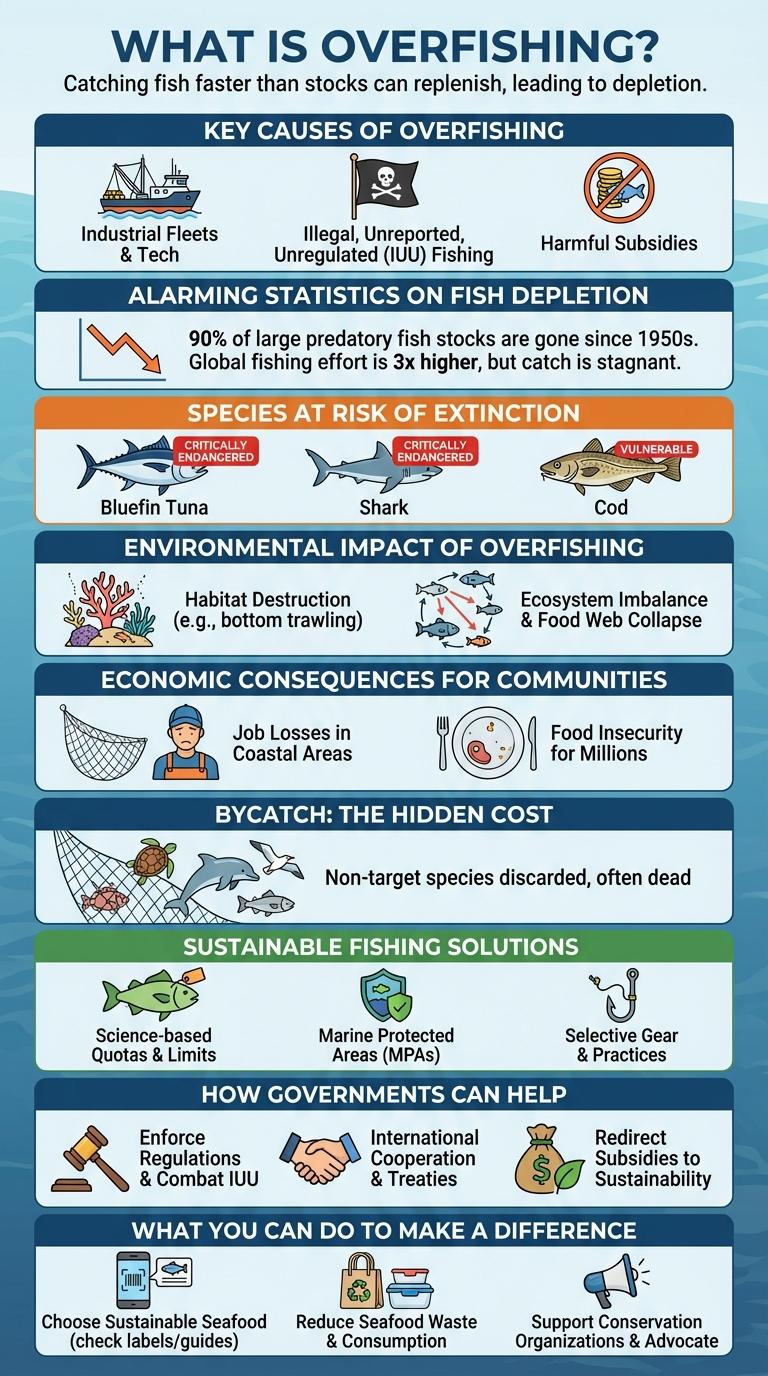
Overfishing drastically reduces fish populations, threatening marine ecosystems and global food security. This infographic highlights key statistics, causes, and impact of overfishing on biodiversity and coastal communities. Understanding these factors is crucial for promoting sustainable fishing practices and preserving ocean health.
What is Overfishing?
Overfishing refers to the excessive harvesting of fish from bodies of water at a rate faster than populations can replenish. It threatens marine ecosystems and the sustainability of fish species worldwide.
- Depletes Fish Stocks - Overfishing significantly reduces populations of key fish species, disrupting food chains.
- Harms Biodiversity - Removing large numbers of fish alters marine habitats and decreases species diversity.
- Impacts Economy - Overfishing jeopardizes fisheries' economic stability, affecting livelihoods and food security.
Effective management and conservation efforts are essential to address overfishing and restore ocean health.
Key Causes of Overfishing
| Key Causes | Description |
|---|---|
| Industrial Fishing | Large-scale fishing operations with advanced technology that catch fish at unsustainable rates. |
| Bycatch | Unintentional capture of non-target species, contributing to population declines and ecosystem imbalance. |
| Lack of Regulation | Insufficient or poorly enforced fishing laws leading to over-exploitation of fish stocks. |
| Illegal Fishing | Unlawful fishing activities that disregard quotas and protected areas. |
| High Demand | Growing global seafood consumption places pressure on marine populations beyond natural replenishment rates. |
Alarming Statistics on Fish Depletion
Overfishing leads to a dramatic decline in global fish populations, threatening marine biodiversity and food security. Statistics reveal that approximately 33% of global fish stocks are overexploited, with some species facing extinction if current trends continue.
According to the Food and Agriculture Organization (FAO), nearly 60% of world fish stocks are fully exploited, leaving little room for sustainable growth. Over 90% of large predatory fish like tuna and swordfish have disappeared from the oceans in the past 50 years. These alarming numbers highlight the urgent need for effective fishery management and conservation efforts worldwide.
Species at Risk of Extinction
Overfishing threatens marine biodiversity by depleting key species faster than they can reproduce. Many commercially valuable fish are on the verge of extinction due to unsustainable fishing practices.
- Atlantic Bluefin Tuna - Populations have declined by over 80% in the past 40 years from intense fishing pressure.
- Orange Roughy - Slow-growing and late to mature, making it highly vulnerable to overexploitation.
- Vaquita Porpoise - Critically endangered with fewer than 10 individuals left, mostly caught in illegal fishing nets.
Environmental Impact of Overfishing
Overfishing significantly disrupts marine ecosystems, leading to severe environmental consequences. The depletion of fish populations affects biodiversity and the health of ocean habitats.
- Loss of Biodiversity - Overfishing removes key species, reducing genetic diversity and destabilizing marine food webs.
- Habitat Destruction - Intensive fishing methods damage coral reefs and seafloor habitats critical for marine life.
- Imbalance in Ecosystems - The decline of predator species causes overpopulation of prey, disturbing ecological equilibrium.
Economic Consequences for Communities
How does overfishing impact local economies?
Overfishing depletes fish stocks, causing a decline in catch sizes for fishermen. This leads to reduced income and increased unemployment in coastal communities.
What are the financial costs for seafood industries?
Declining fish populations force industries to invest more in finding and harvesting fish. Increased operational costs reduce profitability and can result in business closures.
How do communities adapt economically to overfishing?
Many communities shift to alternative livelihoods like tourism or aquaculture. However, these transitions often require time and investment, creating short-term economic hardships.
What is the effect on food prices due to overfishing?
Reduced fish supply drives up seafood prices in local and global markets. Higher prices negatively affect consumers and increase food insecurity in vulnerable populations.
How does overfishing influence government revenue?
Falling fish stocks decrease tax revenues from fishing licenses and seafood exports. Governments face reduced budgets for community development and conservation efforts.
Bycatch: The Hidden Cost
Bycatch refers to the unintended capture of non-target species such as dolphins, turtles, and seabirds during commercial fishing operations. This hidden cost significantly threatens marine biodiversity and disrupts ocean ecosystems.
Millions of tons of bycatch are discarded annually, often resulting in high mortality rates for vulnerable species. Reducing bycatch through improved fishing practices is essential for sustainable fisheries and ocean health.
Sustainable Fishing Solutions
Overfishing threatens marine biodiversity and disrupts ocean ecosystems. Sustainable fishing solutions promote responsible practices that protect fish populations and habitats. Implementing quotas, using selective gear, and establishing marine protected areas help maintain healthy fisheries for future generations.
How Governments Can Help
Governments can enforce sustainable fishing quotas to prevent overexploitation of marine life. Implementing marine protected areas helps rebuild fish populations and preserve biodiversity. Supporting research and monitoring programs enables informed policy decisions and effective management of fisheries.