
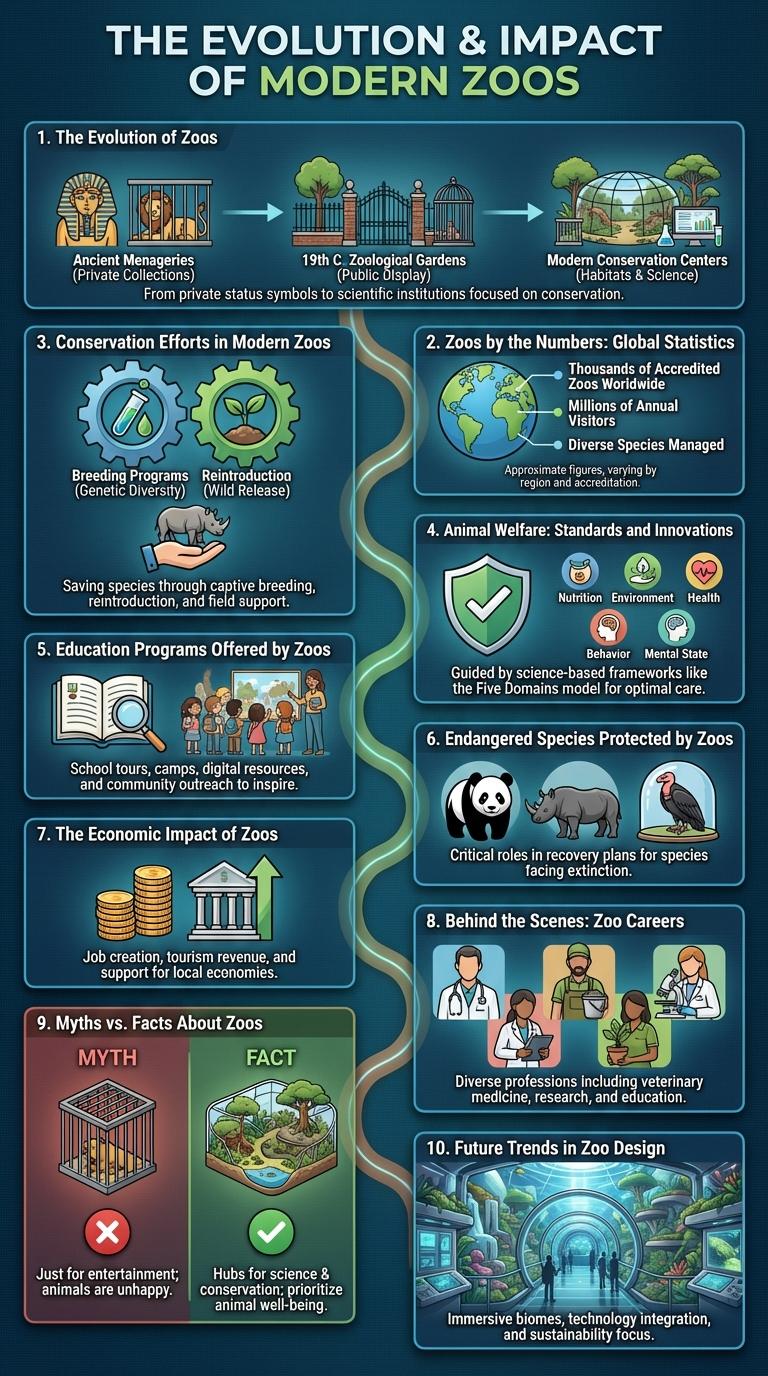
Zoos provide a unique opportunity to experience wildlife up close while promoting conservation and education. This infographic highlights key statistics about animal species, visitor engagement, and the role zoos play in protecting endangered animals. Understanding these facts reveals the importance of zoos in fostering awareness and supporting biodiversity.
The Evolution of Zoos
Zoos have transformed significantly from mere animal collections to centers focused on conservation and education. This evolution reflects changing societal values and advancements in animal care.
- Ancient Menageries - Early zoos were private collections of exotic animals owned by royalty and used to display power.
- 19th Century Public Zoos - Zoos became public attractions, emphasizing entertainment over animal welfare.
- Modern Conservation Focus - Today's zoos prioritize species preservation, habitat simulation, and public education.
Understanding the history of zoos highlights their role in wildlife conservation and environmental awareness.
Zoos by the Numbers: Global Statistics
Zoos play a crucial role in wildlife conservation, housing over 700 million animals worldwide. There are approximately 10,000 zoos across the globe, spread over 150 countries.
Globally, zoos collectively care for more than 8,000 species, including endangered and extinct-in-the-wild animals. On average, zoos receive around 700 million visitors annually, educating the public about biodiversity.
Conservation Efforts in Modern Zoos
Modern zoos play a crucial role in wildlife conservation by implementing breeding programs and habitat restoration projects. These efforts help protect endangered species and promote biodiversity globally.
- Endangered Species Breeding - Zoos participate in captive breeding programs to increase populations of threatened animals and prevent extinction.
- Habitat Restoration - Many zoos collaborate with conservation organizations to restore natural habitats and improve survival chances for wild populations.
- Public Education - Educational initiatives raise awareness about wildlife conservation and encourage community involvement in protecting natural resources.
Animal Welfare: Standards and Innovations
Zoos play a crucial role in animal conservation by adhering to strict welfare standards. They continually innovate to improve the living conditions and care of captive animals.
Modern zoos implement enriched habitats that mimic natural environments, reducing stress and promoting natural behaviors. Advanced monitoring technology helps track animal health and well-being in real time. Educational programs raise public awareness about animal conservation and ethical treatment.
Education Programs Offered by Zoos
What types of education programs do zoos offer to the public?
Zoos provide a variety of education programs designed to increase awareness about wildlife conservation and animal behavior. These programs cater to different age groups and include interactive workshops, guided tours, and hands-on activities.
Endangered Species Protected by Zoos
Zoos play a crucial role in the conservation of endangered species by providing safe habitats and breeding programs. Many zoos collaborate globally to protect animals at risk of extinction through scientific research and education.
Species such as the Amur leopard, Sumatran orangutan, and black rhinoceros benefit from these efforts. Conservation initiatives in zoos help maintain genetic diversity and raise public awareness about wildlife preservation.
The Economic Impact of Zoos
Zoos contribute significantly to local economies by attracting millions of visitors annually, generating substantial revenue through ticket sales, gift shops, and concessions. They create numerous jobs, ranging from animal care to hospitality services, supporting employment in surrounding communities. Investment in zoos also boosts tourism-related businesses, further amplifying their economic influence.
Behind the Scenes: Zoo Careers
Myths vs. Facts About Zoos
Zoos are often misunderstood spaces where animals live in captivity. Myths suggest zoos only confine animals for entertainment, but facts show many zoos prioritize conservation and education. Modern zoos contribute to endangered species preservation and promote awareness about wildlife protection.
| Myths | Facts |
|---|---|
| Zoos harm animals' wellbeing. | Zoos provide medical care and enriched habitats to ensure animal welfare. |
| Animals in zoos are taken from the wild. | Most zoo animals are bred in captivity under managed programs. |
| Zoos do not help conservation efforts. | Zoos actively participate in breeding programs for endangered species. |
| Visiting zoos damages natural animal behavior. | Zoos educate the public about wildlife and habitats to encourage protection. |
| Enclosures are small and uncomfortable for animals. | Modern zoos design spacious, naturalistic environments for animals' comfort. |