
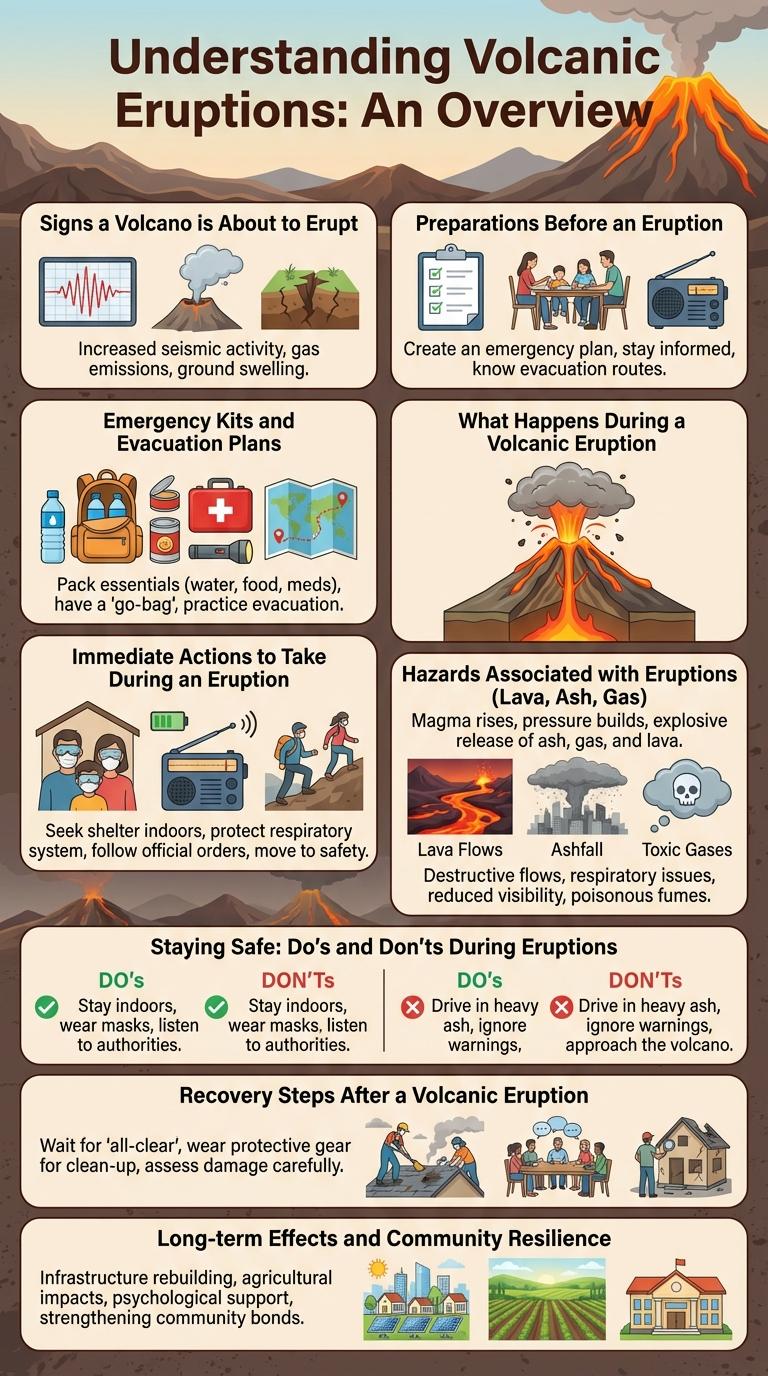
Volcanic eruptions unfold in distinct stages marked by specific geological and atmospheric changes. Before an eruption, increasing seismic activity and gas emissions signal rising magma pressure beneath the surface. During the eruption, explosive lava flows and ash clouds dramatically reshape the surrounding landscape, while the aftermath involves cooling lava, ash settling, and ecological recovery.
Understanding Volcanic Eruptions: An Overview
Volcanic eruptions begin with magma rising through Earth's crust, causing seismic activity and gas emissions before the eruption. During an eruption, lava flows, ash clouds, and pyroclastic materials are expelled, impacting the environment and air quality. After the eruption, the landscape undergoes changes with cooled lava forming new rock, ash layers enriching soil, and ongoing monitoring ensuring safety.
Signs a Volcano is About to Erupt
Volcanic eruptions are preceded by distinct signs that indicate increasing volcanic activity. Monitoring these signs helps predict eruptions and mitigate risks to nearby populations.
Before an eruption, increased seismic activity and ground deformation are common indicators. Gas emissions, such as sulfur dioxide, also intensify as magma rises toward the surface.
During an eruption, ash clouds and lava flows become visible, posing immediate dangers to the environment and human health. Authorities issue warnings based on these observations to ensure public safety.
After an eruption, volcanic activity gradually subsides, but hazards like lahars and ashfall remain risks. Continuous monitoring is essential during this phase to anticipate secondary events and begin recovery efforts.
Preparations Before an Eruption
Volcanic eruptions pose significant risks to nearby communities, making early preparations crucial for safety and mitigation. Understanding the necessary steps before an eruption can save lives and reduce property damage.
- Monitoring Volcano Activity - Scientists use seismic instruments and satellite data to detect early signs of an eruption.
- Evacuation Planning - Authorities establish clear evacuation routes and designate safe zones for residents.
- Emergency Supplies Stockpiling - Families prepare essential kits including water, food, masks, and first aid materials.
Effective preparation before an eruption ensures timely response and minimizes the impact on affected populations.
Emergency Kits and Evacuation Plans
Preparing for a volcanic eruption requires careful planning and essential emergency supplies. Knowing the steps before, during, and after an eruption increases safety and readiness.
- Emergency Kits Before Eruption - Assemble kits with water, non-perishable food, masks, and first aid supplies for quick evacuation readiness.
- Evacuation Plans During Eruption - Follow designated routes and alerts to avoid danger zones and reach safe shelters promptly.
- Emergency Kits After Eruption - Include items like clean water, flashlights, and dust masks to cope with ashfall and disrupted services post-eruption.
What Happens During a Volcanic Eruption
| Phase | What Happens During a Volcanic Eruption |
|---|---|
| Pre-eruption | Magma accumulates in magma chambers, pressure builds beneath the Earth's surface causing cracks and seismic activity. |
| Initial Eruption | Gas and magma escape through vents, creating explosive bursts or lava flows, releasing ash, volcanic gases, and pyroclastic material. |
| Main Eruption | Continued release of lava, ash clouds rise into the atmosphere, pyroclastic flows spread across nearby areas, and volcanic bombs may be ejected. |
| Aftermath | Volcanic activity diminishes, lava cools and solidifies, ash settles, and the landscape is reshaped by deposits and erosion. |
Immediate Actions to Take During an Eruption
During a volcanic eruption, seek immediate shelter indoors to protect yourself from ashfall and toxic gases. Use masks or cloth to cover your nose and mouth, and stay away from windows and doors to avoid injury from flying debris. Follow official evacuation orders promptly and stay informed through emergency broadcasts for your safety.
Hazards Associated with Eruptions (Lava, Ash, Gas)
What hazards are associated with volcanic eruptions before, during, and after the event?
Lava flows pose significant risks during eruptions, destroying everything in their path. Volcanic ash and gases present threats before, during, and after eruptions, impacting air quality and respiratory health.
Staying Safe: Do's and Don'ts During Eruptions
Volcanic eruptions pose serious risks to safety and health. Knowing how to act before, during, and after an eruption can save lives.
- Before the eruption: Prepare an emergency kit - Include masks, water, food, and important documents to stay ready for evacuation.
- During the eruption: Seek shelter indoors - Stay inside away from windows to avoid ash inhalation and flying debris.
- After the eruption: Avoid river valleys and low-lying areas - These areas may experience dangerous lahars or mudflows following an eruption.
Recovery Steps After a Volcanic Eruption
Volcanic eruptions cause significant damage to the environment and communities. Recovery requires coordinated efforts to restore safety and rebuild infrastructure.
Before an eruption, evacuation plans and emergency supplies are crucial. During the eruption, staying indoors and avoiding lava flows protect lives.
After the eruption, clearing ash and debris enables transportation and agriculture to resume. Providing medical aid and psychological support helps affected populations recover.
Restoring water systems and rebuilding homes are vital recovery steps. Long-term monitoring of volcanic activity ensures preparedness for future eruptions.