
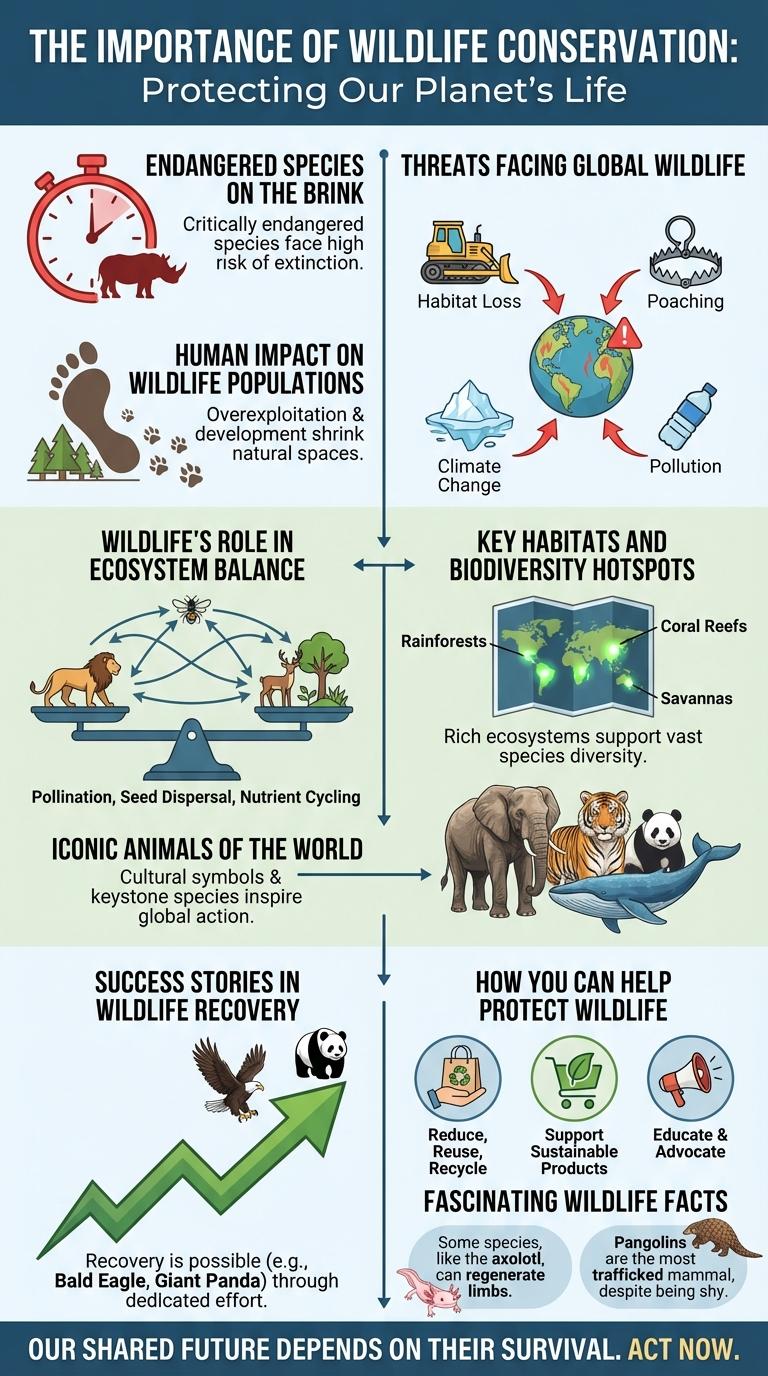
Wildlife plays a crucial role in maintaining ecological balance and supporting biodiversity across the planet. Infographics offer a visually engaging way to explore the diverse species, their habitats, and the challenges they face from human activities. Understanding this information promotes conservation efforts and raises awareness about protecting endangered animals and fragile ecosystems.
The Importance of Wildlife Conservation
Wildlife conservation is essential for maintaining ecosystem balance and supporting biodiversity. It helps protect endangered species from extinction and preserves natural habitats.
Healthy wildlife populations contribute to environmental stability and provide resources for medicine and agriculture. Protecting wildlife ensures future generations can experience the richness of nature.
Endangered Species on the Brink
Wildlife faces unprecedented threats, pushing many species to the brink of extinction. Endangered species such as the Amur leopard, Javan rhino, and Vaquita porpoise are critically vulnerable due to habitat loss, poaching, and climate change. Conservation efforts focus on habitat restoration, anti-poaching laws, and breeding programs to prevent irreversible biodiversity loss.
Threats Facing Global Wildlife
Global wildlife faces unprecedented challenges due to human activities and environmental changes. Protecting biodiversity is critical to maintaining ecosystem balance and overall planetary health.
- Habitat Loss - Urbanization and deforestation reduce natural habitats, threatening numerous species with extinction.
- Poaching and Illegal Trade - Illegal hunting and trafficking significantly diminish populations of endangered animals worldwide.
- Climate Change - Altered temperature and weather patterns disrupt migration, breeding, and food availability for wildlife.
Effective conservation strategies require global cooperation and sustained commitment to protect wildlife for future generations.
Key Habitats and Biodiversity Hotspots
Wildlife thrives in diverse habitats that support complex ecosystems. Biodiversity hotspots are regions with exceptional species richness and endemism, crucial for conservation efforts.
These habitats sustain ecological balance and provide essential resources for many species.
- Tropical Rainforests - Home to over half of the world's terrestrial species, these forests offer vital habitats for countless animals and plants.
- Coral Reefs - Marine biodiversity hotspots that support 25% of all marine life despite covering less than 1% of the ocean floor.
- Mountains - Contain unique climates and elevations, fostering diverse species adapted to extreme conditions.
- Wetlands - Serve as breeding grounds and nutrient-rich environments essential for birds, fish, and amphibians.
- Madagascar - A biodiversity hotspot with over 90% endemic species, highlighting the island's evolutionary importance.
Wildlife's Role in Ecosystem Balance
Wildlife plays a crucial role in maintaining ecosystem balance by regulating population dynamics of various species. Predators control herbivore numbers, preventing overgrazing and promoting vegetation growth. Diverse wildlife contributes to nutrient cycling, pollination, and seed dispersal, ensuring ecosystem health and resilience.
Iconic Animals of the World
Iconic animals represent the rich biodiversity found across the globe. They symbolize unique ecosystems and cultural heritage linked to wildlife conservation.
Examples include the African elephant, Bengal tiger, giant panda, bald eagle, and kangaroo. Each species plays a crucial role in their habitat and inspires global protection efforts.
Human Impact on Wildlife Populations
Human activities significantly influence wildlife populations worldwide. Changes in natural habitats and ecosystems often threaten the survival of numerous species.
- Habitat Destruction - Urban development and deforestation reduce living spaces for many animals.
- Pollution - Contaminants in air, water, and soil harm wildlife health and reproduction.
- Overexploitation - Excessive hunting and fishing deplete animal numbers beyond recovery.
Success Stories in Wildlife Recovery
| Species | Recovery Highlight |
|---|---|
| Bald Eagle | Population rebounded from 417 nesting pairs in 1963 to over 70,000 individuals by 2024 due to banning of DDT and habitat protection. |
| Gray Wolf | Reintroduced to Yellowstone National Park in 1995, wolf populations stabilized and helped restore ecosystem balance. |
| California Condor | Rescue programs increased numbers from 27 individuals in 1987 to over 500 in the wild and captivity by 2024. |
| Giant Panda | Conservation efforts and habitat preservation raised wild populations to 1,800 by 2024, downlisted from endangered to vulnerable. |
| American Alligator | Protected status allowed recovery from near extinction in the 1960s to over a million in the US today. |
How You Can Help Protect Wildlife
How can you contribute to the protection of wildlife? Protecting wildlife starts with awareness and responsible actions. Simple efforts like reducing plastic use and supporting conservation projects make a significant impact.
What types of habitat protection can benefit wildlife? Preserving natural habitats ensures animals have safe places to live and thrive. Supporting local parks and wildlife reserves helps maintain biodiversity and ecosystem health.
How does sustainable living influence wildlife preservation? Choosing eco-friendly products and minimizing waste reduces environmental harm. Sustainable practices decrease pollution, which directly affects wildlife survival.
Can supporting wildlife organizations aid species conservation? Donating to or volunteering with trusted conservation groups accelerates protection efforts. These organizations fund research, rescue missions, and education programs worldwide.
Why is responsible pet ownership important for wildlife? Preventing pets from roaming freely protects native animals from harm. Training and managing pets helps maintain local wildlife populations and biodiversity.