
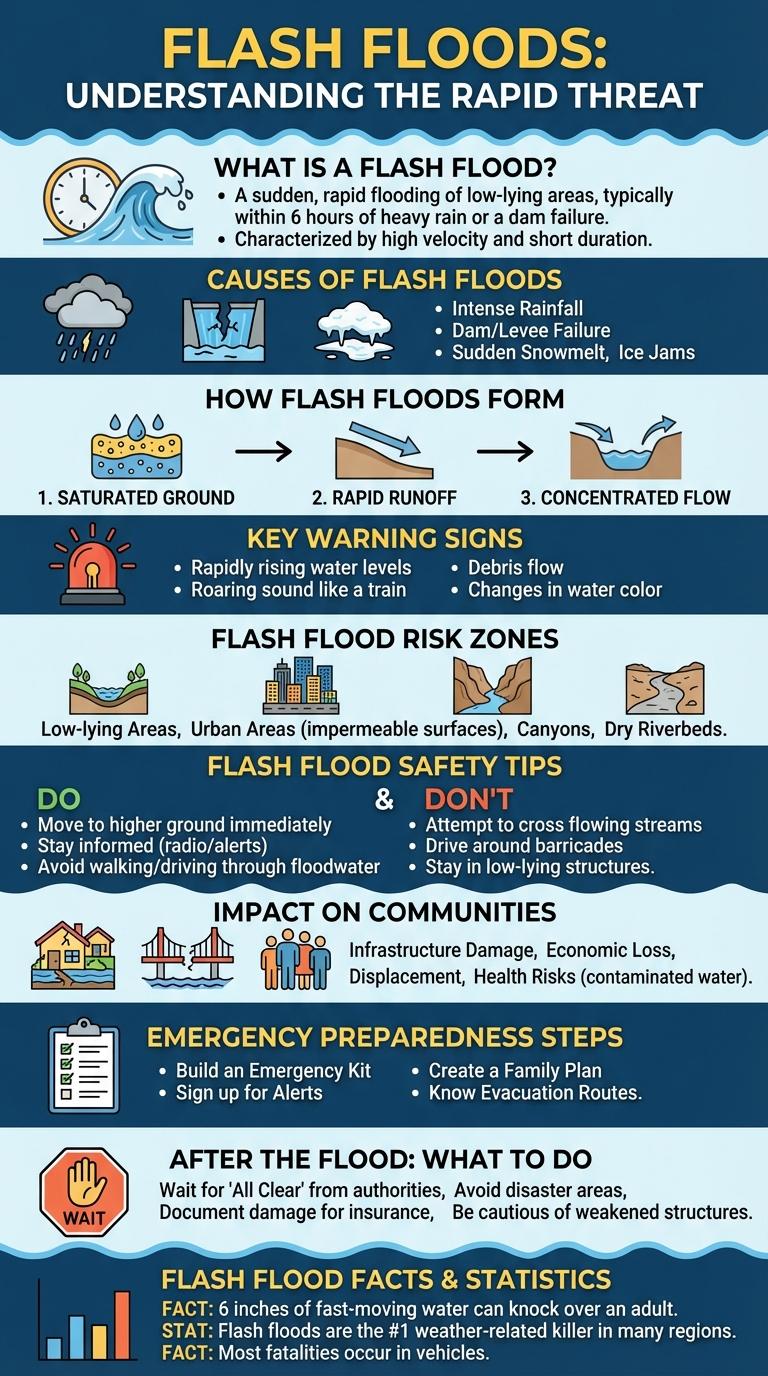
Flash floods occur rapidly, often with little warning, causing severe damage to property and posing significant risks to human life. Understanding the causes, warning signs, and safety measures through an infographic can help communities prepare and respond effectively. Visualizing this critical information enhances awareness and promotes timely action during flash flood emergencies.
What is a Flash Flood?
A flash flood is a sudden and intense flood that occurs within minutes or hours of heavy rainfall. It typically develops quickly, causing rapid water accumulation in low-lying areas.
Flash floods pose significant threats to life and property due to their unpredictable nature and high water velocity. They often result from intense storms, dam breaks, or rapid snowmelt.
Causes of Flash Floods
Flash floods occur rapidly due to intense rainfall or sudden water surges. These floods can cause severe damage in a very short time.
- Heavy Rainfall - Intense and continuous rain overwhelms drainage systems and soil absorption capacity.
- Urbanization - Impervious surfaces like roads and buildings prevent water infiltration, increasing runoff.
- Dam or Levee Failure - Structural breaches release large volumes of water suddenly downstream.
Understanding the causes of flash floods helps improve early warning systems and disaster preparedness.
How Flash Floods Form
Flash floods occur when intense rainfall overwhelms the ground's ability to absorb water, causing rapid surface runoff. These floods develop quickly in low-lying areas, river valleys, and urban regions with poor drainage systems.
Heavy rain from thunderstorms or sudden dam breaks can trigger flash floods within minutes to hours. The rapid rise of water levels poses significant danger to people, vehicles, and infrastructure in affected areas.
Key Warning Signs
What are the key warning signs of a flash flood?
Rapidly rising water levels in streams or rivers can signal an impending flash flood. Dark, heavy rain clouds and sudden heavy rainfall are critical indicators to watch for.
How can you recognize a flash flood before it happens?
Unusual sounds of rushing water or debris flowing downstream often precede a flash flood. Watching for water pooling in low-lying areas helps identify early flooding.
Which natural phenomena warn of a potential flash flood?
Severe thunderstorms and intense, short bursts of rain increase the risk of flash floods. Muddy or murky water flowing in normally clear waterways suggests dangerous conditions.
What should you notice about the weather to detect flash flood risks?
Heavy rainfall over a short period, especially in hilly or urban areas, can trigger flash floods. Persistent thunder or lightning storms are crucial weather signals to consider.
How does terrain affect flash flood warnings?
Steep slopes and narrow valleys can accelerate water flow, causing quick and unexpected floods. Presence of fallen trees or debris in water channels can indicate approaching flash flood danger.
Flash Flood Risk Zones
Flash flood risk zones are areas prone to sudden and intense flooding caused by heavy rainfall or rapid water runoff. These zones often include low-lying regions, riverbanks, and urban areas with poor drainage systems. Understanding and identifying flash flood risk zones is crucial for effective disaster preparedness and mitigation strategies.
Flash Flood Safety Tips
Flash floods occur suddenly, posing a serious threat to life and property. Being prepared and knowing safety tips can significantly reduce the risk of harm during these events.
Follow essential flash flood safety tips to protect yourself and your family effectively.
- Stay Informed - Monitor weather alerts and warnings through reliable sources to receive timely updates about potential flash floods.
- Evacuate Early - Leave low-lying and flood-prone areas immediately when a flash flood warning is issued to avoid being trapped by rising waters.
- Avoid Floodwaters - Never attempt to walk, swim, or drive through floodwaters, as even a few inches of moving water can be dangerous and unpredictable.
Impact on Communities
Flash floods cause rapid damage to communities, disrupting daily life and infrastructure. They pose significant risks to human safety and local economies.
- Property Damage - Flash floods destroy homes, businesses, and public buildings, leading to costly repairs and displacement.
- Transportation Disruption - Roads and bridges become impassable, hindering emergency services and daily commuting.
- Health Hazards - Floodwaters carry contaminants and increase the risk of waterborne diseases among affected populations.
Emergency Preparedness Steps
Flash floods are sudden, powerful floods that can cause severe damage and pose significant risks to life and property. Understanding emergency preparedness steps helps minimize these risks and ensures swift action during such events.
Prepare an emergency kit with essential supplies like water, non-perishable food, flashlight, batteries, and first aid materials. Develop a family communication plan and identify safe evacuation routes before a flood occurs. Stay informed through weather alerts and avoid driving or walking through flooded areas to prevent accidents.
After the Flood: What to Do
| Step | Action |
|---|---|
| 1. Stay Safe | Remain away from floodwaters and avoid driving through flooded roads. |
| 2. Check for Injuries | Provide first aid and seek medical attention for serious injuries immediately. |
| 3. Inspect Your Home | Carefully check for structural damage, gas leaks, and electrical hazards before entering. |
| 4. Clean and Disinfect | Remove mud and debris; disinfect all surfaces to prevent mold and bacteria growth. |
| 5. Report Damage | Contact local authorities and your insurance company to document flood damage and start recovery. |