
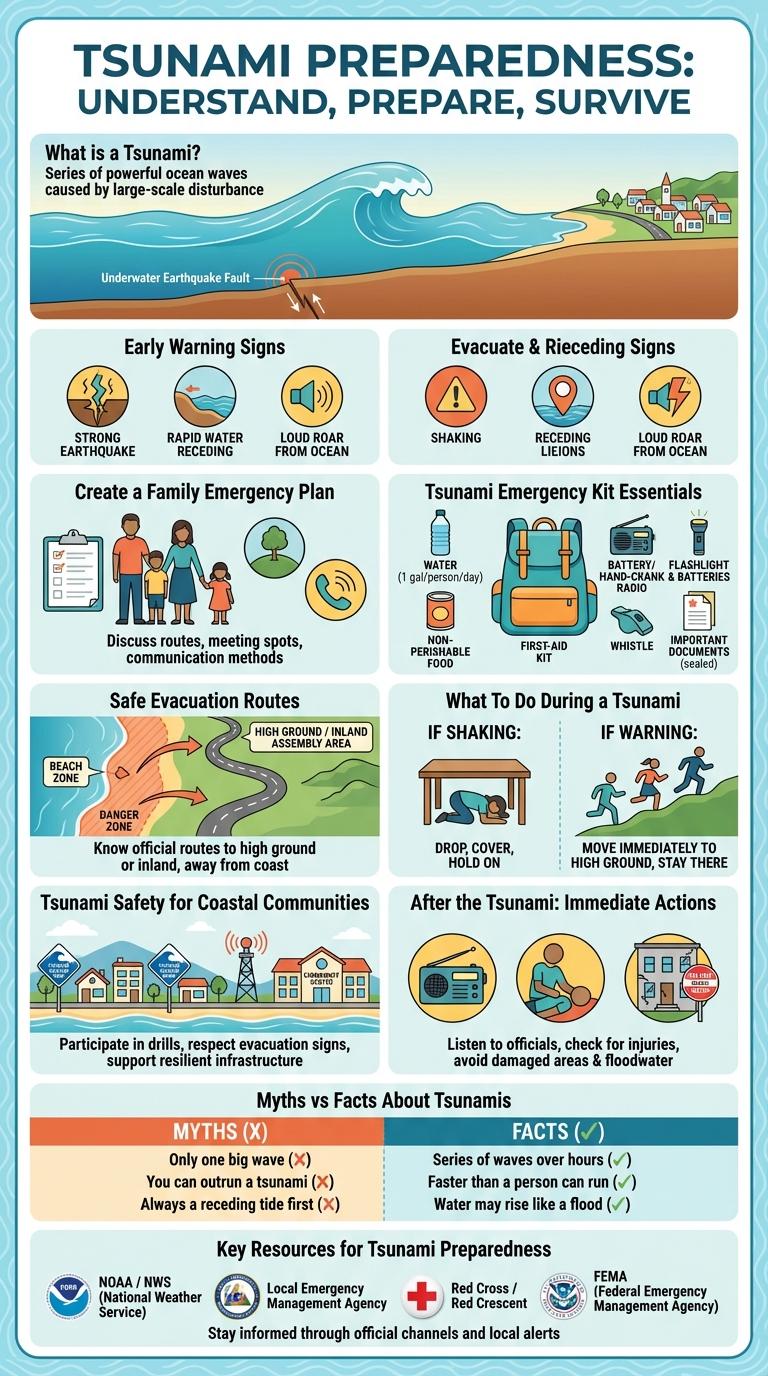
Tsunami preparedness is essential to protect lives and reduce damage in coastal communities. Understanding early warning signs and evacuation routes can significantly increase survival chances during a tsunami event. This infographic provides key steps and safety tips to help individuals and families stay ready when seconds count.
What is a Tsunami?
A tsunami is a series of ocean waves caused by underwater seismic activity, such as earthquakes or volcanic eruptions. These waves can travel at high speeds across oceans, causing devastating coastal flooding upon arrival.
- Origin - Tsunamis typically result from underwater disturbances like earthquakes, landslides, or volcanic activity.
- Wave Speed - Tsunami waves can travel at speeds up to 500 miles per hour in deep water.
- Impact - When reaching shallow coastal areas, tsunami waves increase in height and can cause extensive flooding and damage.
Early Warning Signs
Tsunami preparedness begins with recognizing early warning signs such as a sudden, rapid retreat of ocean water or an unusually loud roar from the sea. These natural alerts often occur minutes before a tsunami strikes, offering a critical timeframe for evacuation. Understanding these signs can save lives by allowing individuals to move to higher ground immediately.
Create a Family Emergency Plan
Creating a family emergency plan is essential for tsunami preparedness. It ensures every member knows how to respond quickly and safely during an emergency.
Discuss evacuation routes, designate meeting spots, and identify emergency contacts. Regularly practice the plan to keep everyone familiar with the procedures.
Tsunami Emergency Kit Essentials
Preparing a tsunami emergency kit is crucial for survival during and after a tsunami event. Having essential supplies ready can ensure safety and self-sufficiency when evacuation or rescue is delayed.
A well-stocked kit includes items that address basic needs such as hydration, nutrition, first aid, and communication.
- Water Supply - Store at least one gallon of water per person per day for a minimum of three days.
- Non-Perishable Food - Include canned goods, energy bars, and dried foods that do not require cooking.
- First Aid Kit - Pack bandages, antiseptics, and necessary medications to treat injuries and prevent infections.
- Communication Devices - Keep a battery-powered radio and extra batteries to receive emergency updates.
- Important Documents - Secure copies of personal identification, insurance papers, and emergency contact information in a waterproof container.
Safe Evacuation Routes
Understanding safe evacuation routes is crucial for tsunami preparedness. These routes lead to higher ground or designated safe zones away from the impact area.
Local authorities provide maps marking these evacuation paths, which are often well-signposted in tsunami-prone regions. Following these routes promptly during an alert increases survival chances significantly.
What To Do During a Tsunami
| Action | Details |
|---|---|
| Move to Higher Ground | Immediately evacuate coastal areas and move to elevated locations at least 100 feet above sea level or 2 miles inland. |
| Listen to Alerts | Use a battery-powered radio or smartphone to follow tsunami warnings from official sources like the National Tsunami Warning Center. |
| Avoid the Beach | Stay away from beaches, rivers, and estuaries as tsunamis can cause strong currents and sudden flooding. |
| Do Not Return Too Soon | Wait for official all-clear signals before returning. Tsunamis often come in multiple waves over several hours. |
| Help Others | Assist children, elderly, and disabled persons during evacuation to ensure their safety. |
Tsunami Safety for Coastal Communities
How can coastal communities effectively prepare for tsunamis? Understanding tsunami warning signs and evacuation routes is crucial for safety. Communities should conduct regular drills and ensure access to emergency supplies.
What are the immediate steps to take when a tsunami warning is issued? Move to higher ground or designated safe zones without delay. Avoid the shoreline as tsunamis can arrive within minutes after an earthquake or warning.
Which items are essential in a tsunami emergency kit? Include water, non-perishable food, first aid supplies, and important documents. Flashlights, batteries, and communication devices improve readiness during power outages.
How important is community education in tsunami preparedness? Educating residents on risks and responses reduces panic and saves lives. Local governments should provide resources and workshops to enhance awareness.
What infrastructure upgrades support tsunami safety in coastal areas? Elevated shelters and reinforced buildings increase protection. Early warning systems and clear signage guide residents during emergencies.
After the Tsunami: Immediate Actions
After a tsunami, safety and quick action are critical to minimize harm and begin recovery. Knowing the immediate steps can significantly improve survival and aid efforts.
- Evacuate to Higher Ground - Move to elevated areas to avoid secondary waves and flooding that often follow the initial tsunami.
- Avoid Floodwaters - Stay clear of moving water and debris, which can be dangerous and carry harmful contaminants.
- Check for Injuries and Provide Aid - Assess yourself and others for injuries and administer first aid if trained, calling for emergency help when possible.
Stay informed via radio or official sources for updates and instructions as the situation evolves.
Myths vs Facts About Tsunamis
Tsunamis are massive ocean waves caused by underwater earthquakes or volcanic eruptions. Many myths surround tsunamis, leading to confusion during emergencies.
One common myth is that tsunamis are like regular waves and can be easily seen approaching; in reality, they often appear as rapidly rising tides. Another misconception is that tsunamis only occur in certain parts of the world, but they can happen wherever underwater seismic activity occurs. Understanding these facts improves preparedness and can save lives during a tsunami event.