
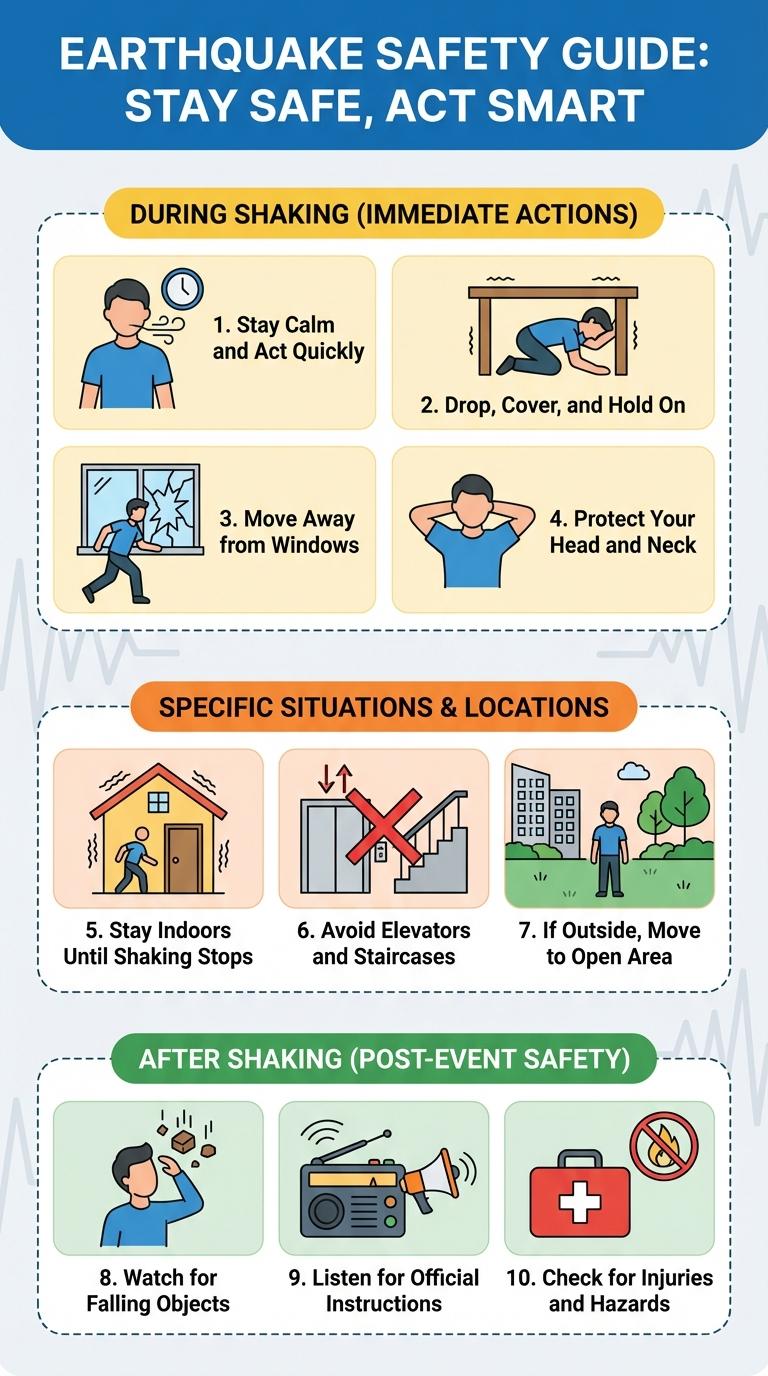
During an earthquake, staying calm and knowing the right actions can significantly increase your safety. Drop to your hands and knees, cover your head and neck, and hold on to sturdy furniture until shaking stops. After the quake, check for injuries, avoid damaged structures, and be prepared for aftershocks.
Stay Calm and Act Quickly
Earthquakes can strike without warning, making it essential to stay calm and act quickly. Keeping a clear mind helps you make safe decisions under pressure.
Immediately protect yourself by dropping to the ground, taking cover under sturdy furniture, and holding on until the shaking stops. Avoid running outside or using elevators to prevent injury.
Drop, Cover, and Hold On
| Step | Action |
|---|---|
| Drop | Get down on your hands and knees to prevent falling. |
| Cover | Protect your head and neck by taking cover under sturdy furniture or against an interior wall away from windows. |
| Hold On | Grip the shelter firmly and stay in place until shaking stops. |
Move Away from Windows
When an earthquake strikes, moving away from windows is crucial to prevent injury from shattered glass. Stay in a safe spot away from any glass surfaces to minimize the risk of cuts and other injuries.
- Seek a safe zone - Identify areas in the room that are free from windows to reduce exposure to breaking glass.
- Drop, Cover, and Hold On - Drop to your hands and knees, cover your head, and hold onto sturdy furniture away from windows.
- Stay indoors - Avoid running outside during shaking to prevent falling or being hit by glass shards.
Protect Your Head and Neck
Protecting your head and neck during an earthquake is crucial to prevent serious injuries. Taking immediate and proper actions can significantly reduce the risk of trauma.
- Cover your head with your arms - Use your forearms to shield your skull and neck from falling debris and impact.
- Find a safe spot to crouch - Stay low in a sturdy location, such as under a heavy table, to protect vital areas from sharp or heavy objects.
- Use a pillow or cushion if indoors - Shield your head by holding a pillow close during tremors, especially when lying down or unable to move quickly.
Stay Indoors Until Shaking Stops
When an earthquake strikes, stay indoors until the shaking completely stops to avoid injury from falling debris. Find shelter under sturdy furniture like a table or against an interior wall away from windows. Protect your head and neck with your arms and remain calm until it is safe to exit.
Avoid Elevators and Staircases
During an earthquake, avoid using elevators as they can become stuck or malfunction due to power outages. Elevators pose a significant risk of trapping individuals inside during seismic activity.
Stay away from staircases since they may collapse or suffer structural damage. Use safe areas away from these exits and wait for the shaking to stop before moving.
If Outside, Move to Open Area
Experiencing an earthquake while outdoors requires quick and careful action. Moving to an open area significantly reduces the risk of injury from falling debris.
- Identify Open Spaces - Locate parks, playgrounds, or empty fields away from trees and buildings.
- Avoid Hazards - Stay clear of power lines, streetlights, and billboards that might fall during shaking.
- Stay Calm and Alert - Be aware of aftershocks and remain in the open area until shaking stops completely.
Being prepared and moving promptly to a safe open area can save lives during an earthquake.
Watch for Falling Objects
Earthquakes can cause objects to fall unexpectedly, posing serious injury risks. Stay alert and protect yourself from falling debris during the shaking.
Drop to your hands and knees to prevent being knocked down. Cover your head and neck with your arms or seek shelter under sturdy furniture. Stay away from windows, glass, and heavy objects that might fall.
Listen for Official Instructions
What should you do when an earthquake strikes? Listen for official instructions from emergency services immediately. Staying informed through trusted sources ensures your safety and timely response during the crisis.