
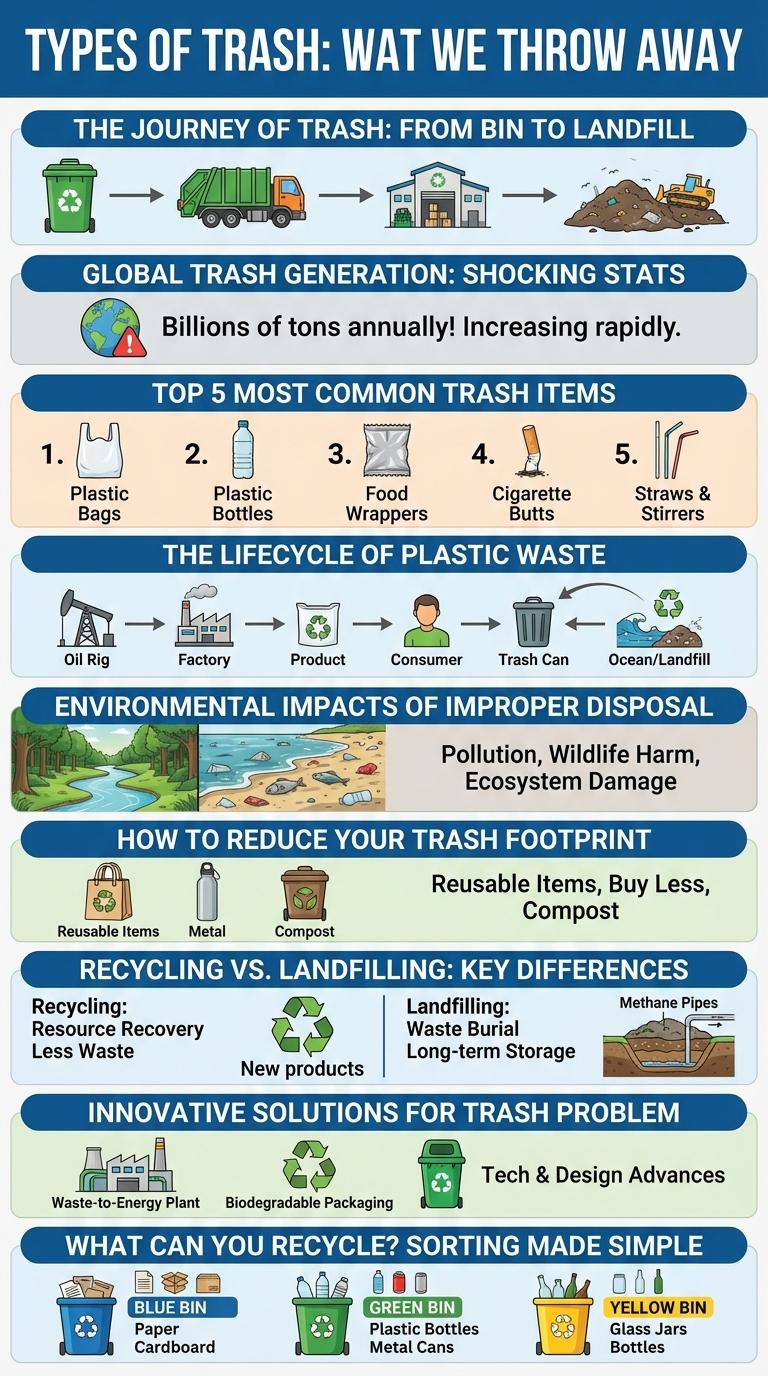
Visual representations of trash data highlight the staggering volume of waste generated globally each year. Infographics reveal key insights into types of waste, recycling rates, and environmental impact. Understanding these patterns is crucial for promoting sustainable waste management and reducing pollution.
Types of Trash: What We Throw Away
Trash consists of various materials discarded daily, impacting the environment and waste management systems. Understanding the types of trash helps promote better recycling and disposal practices.
- Organic Waste - Includes food scraps and yard waste that decompose naturally and can be composted.
- Plastic Waste - Comprises bottles, bags, and packaging that take hundreds of years to break down.
- Electronic Waste - Consists of old gadgets and appliances with hazardous components requiring special recycling.
- Paper Waste - Contains newspapers, cardboard, and office paper often recyclable if uncontaminated.
- Metal Waste - Involves cans, foil, and scrap metals that can be melted and reused efficiently.
The Journey of Trash: From Bin to Landfill
The journey of trash begins when waste is discarded into bins, where it is temporarily stored before collection. Waste management services transport the trash to sorting facilities or directly to landfills for disposal. At the landfill, waste is compacted and covered to minimize environmental impact and prepare for eventual decomposition.
Global Trash Generation: Shocking Stats
How much trash does the world generate each year? Global trash generation reaches approximately 2.12 billion tons annually, with urban areas producing 70% of this waste. This massive volume challenges waste management systems worldwide.
Which countries produce the most trash? High-income countries generate up to 34% of global waste but contain only 16% of the world's population. Rapid urbanization in developing nations is driving a surge in waste production.
What types of trash dominate global waste? Organic waste makes up about 44% of global trash, followed by plastics at 17%. The high plastic content contributes significantly to environmental pollution.
How much trash goes uncollected? Nearly 33% of global waste is not properly managed or collected, leading to environmental hazards and health risks. This issue is most severe in low-income countries.
What is the projected future of trash generation? By 2050, global waste could reach 3.4 billion tons annually if current trends continue. Effective recycling and waste reduction strategies are critical to mitigating this growth.
Top 5 Most Common Trash Items
| Top 5 Most Common Trash Items | Percentage of Total Waste |
|---|---|
| Plastic Bottles | 13% |
| Food Wrappers | 12% |
| Cigarette Butts | 10% |
| Plastic Bags | 9% |
| Paper Cups | 7% |
The Lifecycle of Plastic Waste
The lifecycle of plastic waste begins with production, where raw materials are transformed into plastic products. After use, plastic waste often ends up in landfills, oceans, or recycling facilities. Recycling can extend the life of plastics, but a significant portion remains as environmental pollutants, posing challenges for sustainability.
Environmental Impacts of Improper Disposal
Improper disposal of trash leads to significant environmental damage, contaminating soil, water, and air. Toxic substances from waste infiltrate ecosystems, harming wildlife and disrupting natural processes.
Landfills produce methane, a potent greenhouse gas contributing to climate change. Marine debris causes ocean pollution, threatening aquatic life and degrading marine habitats.
How to Reduce Your Trash Footprint
Reducing your trash footprint helps protect the environment by minimizing waste that goes to landfills and oceans. Simple lifestyle changes can significantly decrease the amount of trash you produce daily.
Start by adopting the 3 Rs: Reduce, Reuse, and Recycle. Choose reusable products, avoid single-use plastics, and recycle items according to local guidelines to cut down on waste effectively.
Recycling vs. Landfilling: Key Differences
Recycling and landfilling are two primary methods of waste management. Each approach impacts the environment and resource use differently.
Recycling converts waste materials into new products, reducing the need for raw resources and energy. Landfilling involves burying waste, which can lead to soil and groundwater contamination. Choosing recycling over landfilling helps conserve natural resources and reduce greenhouse gas emissions.
Innovative Solutions for Trash Problem
Innovative solutions are transforming the global trash problem by reducing waste and promoting sustainability. Cutting-edge technologies and community initiatives are driving effective waste management worldwide.
- Smart Waste Bins - Equipped with sensors, these bins optimize trash collection by signaling when they are full.
- Plastic-Eating Enzymes - Engineered enzymes break down plastic waste faster, accelerating recycling processes.
- Waste-to-Energy Plants - Convert non-recyclable waste into electricity, reducing landfill use and generating power.
Adopting these innovative methods can significantly decrease environmental pollution and conserve natural resources.