
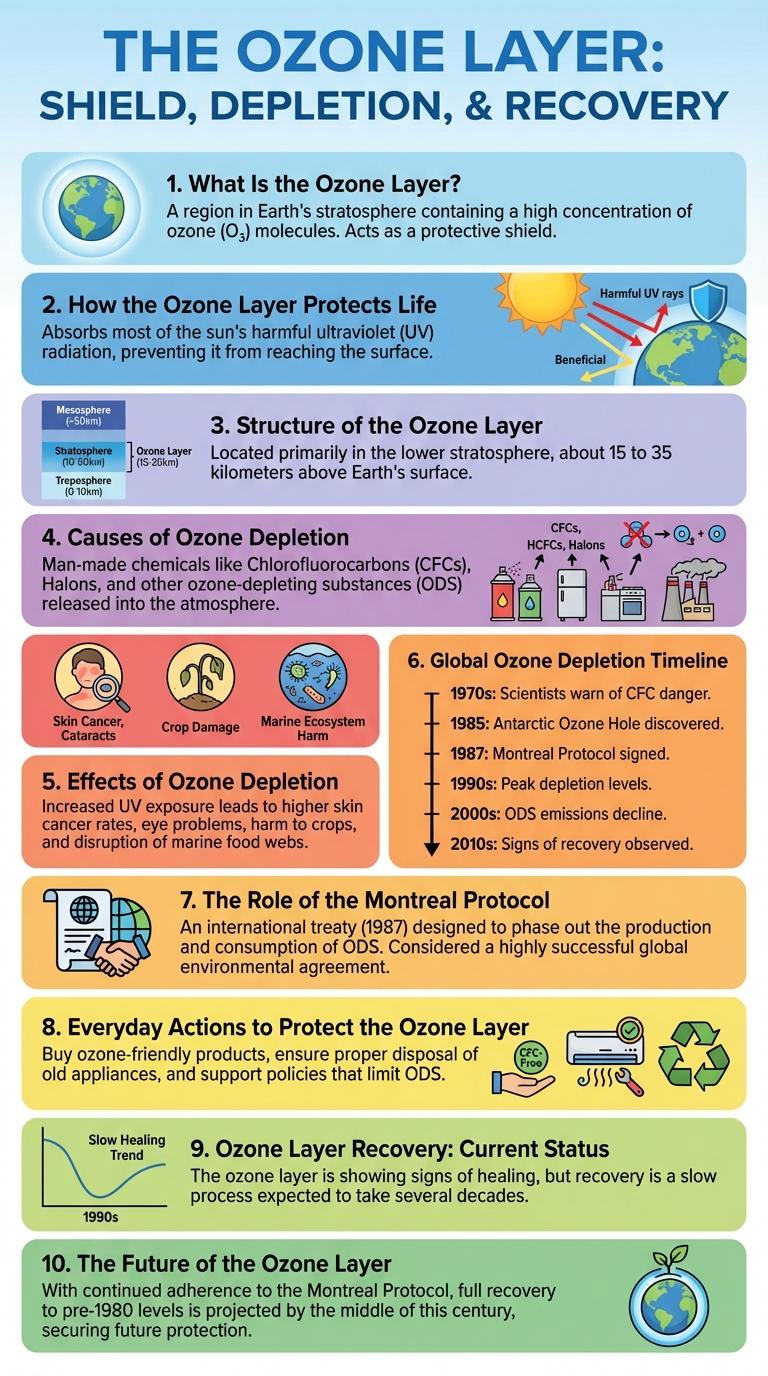
The ozone layer is a critical component of Earth's atmosphere, shielding life from harmful ultraviolet radiation. This infographic illustrates the structure, importance, and current threats facing the ozone layer. Understanding these factors highlights the need for continued global efforts to protect and restore this vital shield.
What Is the Ozone Layer?
The ozone layer is a region of Earth's stratosphere containing a high concentration of ozone (O3) molecules. It plays a critical role in absorbing most of the sun's harmful ultraviolet (UV) radiation.
The ozone layer helps protect living organisms by reducing UV exposure, which can cause skin cancer and cataracts. It is located approximately 15 to 35 kilometers above Earth's surface.
How the Ozone Layer Protects Life
How does the ozone layer protect life on Earth?
The ozone layer absorbs the majority of the Sun's harmful ultraviolet (UV) radiation, preventing it from reaching the Earth's surface. This protection reduces the risk of skin cancer, cataracts, and damage to ecosystems, ensuring a safer environment for all living organisms.
Structure of the Ozone Layer
The ozone layer is a crucial part of Earth's stratosphere, absorbing the majority of the sun's harmful ultraviolet radiation. It is composed of ozone (O3) molecules distributed unevenly at specific altitudes.
- Tropopause Boundary - The ozone layer lies above the tropopause, typically between 15 and 35 kilometers altitude.
- Ozone Concentration Peak - Maximum ozone concentration occurs around 20 to 25 kilometers in the stratosphere.
- Variable Thickness - Thickness of the ozone layer varies by latitude and season, affecting UV protection.
The structured ozone layer plays a vital role in protecting life on Earth by filtering out damaging ultraviolet rays.
Causes of Ozone Depletion
The ozone layer protects life on Earth by absorbing most of the Sun's harmful ultraviolet (UV) radiation. It is located in the stratosphere, approximately 10 to 30 miles above the Earth's surface.
Ozone depletion is mainly caused by human-made chemicals like chlorofluorocarbons (CFCs), halons, and carbon tetrachloride. These substances release chlorine and bromine atoms that destroy ozone molecules, thinning the ozone layer over time.
Effects of Ozone Depletion
The depletion of the ozone layer leads to increased ultraviolet (UV) radiation reaching Earth's surface. This rise in UV exposure causes higher rates of skin cancer, cataracts, and immune system suppression in humans. Ecosystems, especially marine life and plant growth, also suffer significant damage due to ozone layer thinning.
Global Ozone Depletion Timeline
| Year | Event |
|---|---|
| 1928 | Discovery of the ozone layer by Gordon Dobson using spectrophotometer measurements. |
| 1974 | F. Sherwood Rowland and Mario Molina identify chlorofluorocarbons (CFCs) as a cause of ozone depletion. |
| 1985 | British Antarctic Survey discovers the Antarctic ozone hole, revealing significant ozone layer thinning. |
| 1987 | Montreal Protocol is signed to phase out ozone-depleting substances globally. |
| 2020 | NASA reports signs of ozone layer recovery due to decreased CFC emissions following international regulations. |
The Role of the Montreal Protocol
The Montreal Protocol is a global agreement aimed at protecting the ozone layer by phasing out the production and use of ozone-depleting substances (ODS). It has significantly contributed to the recovery of the ozone layer since its adoption in 1987.
- Global Cooperation - The Montreal Protocol unites 197 countries in a shared effort to reduce emissions of harmful chemicals.
- Phase-Out Schedule - It enforces strict timelines for eliminating substances like CFCs and halons that damage the ozone layer.
- Ozone Recovery - Scientific assessments show gradual healing of the ozone layer due to the Protocol's effective regulations.
Everyday Actions to Protect the Ozone Layer
The ozone layer shields Earth from harmful ultraviolet (UV) radiation. Protecting it is crucial for human health and the environment.
Everyday actions can significantly reduce ozone depletion. Avoid using products with harmful chemicals like CFCs and HCFCs. Opt for eco-friendly alternatives and properly dispose of old appliances. Supporting policies and raising awareness also help preserve the ozone layer for future generations.
Ozone Layer Recovery: Current Status
The ozone layer, crucial for protecting Earth from harmful ultraviolet radiation, has shown significant signs of recovery in recent years. Satellite data indicates a steady decrease in ozone-depleting substances, leading to the gradual healing of the ozone hole, especially over Antarctica. Continued global efforts under the Montreal Protocol are essential to maintain this positive trend and ensure long-term atmospheric health.