
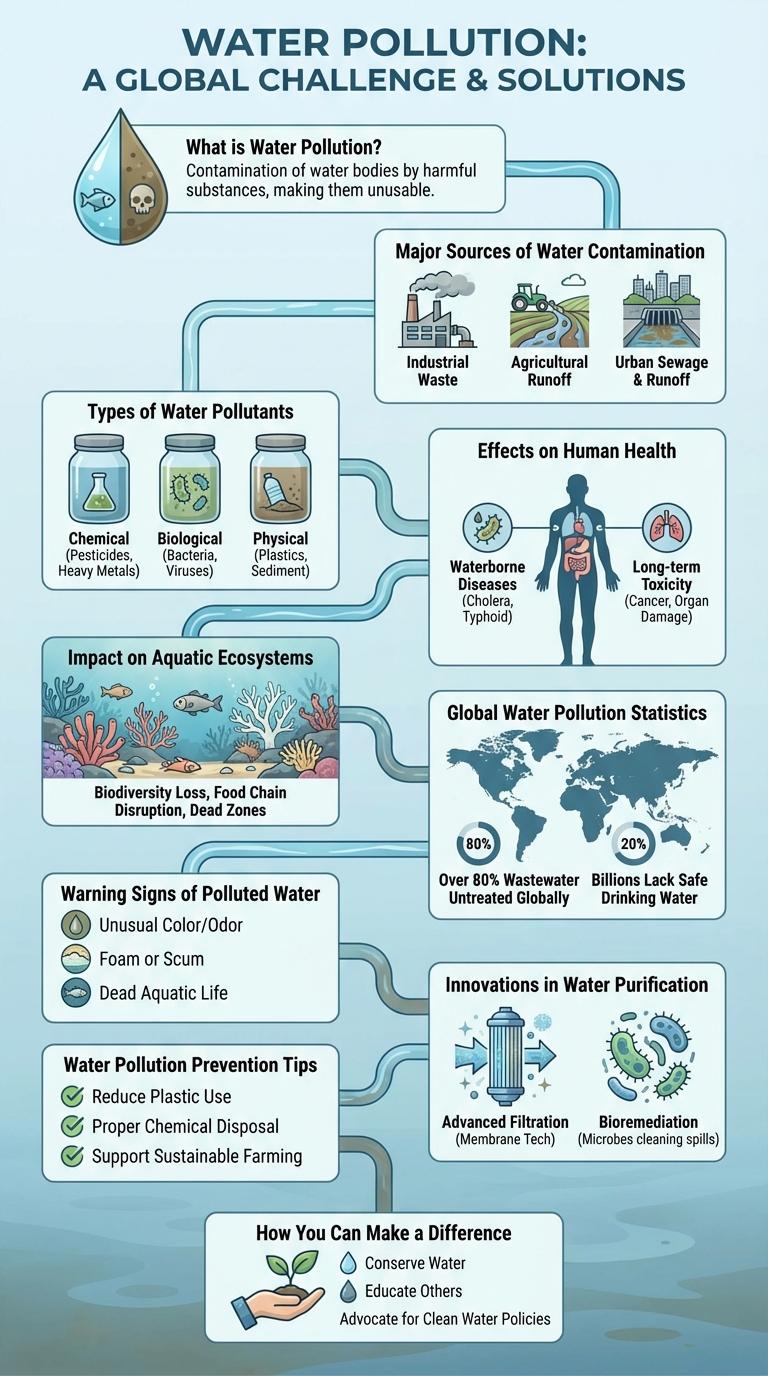
Water pollution poses a critical threat to ecosystems, human health, and biodiversity worldwide. Contaminants from industrial waste, agricultural runoff, and plastic debris degrade water quality and disrupt aquatic habitats. Understanding the sources and impacts of water pollution is essential for developing effective solutions to protect our planet's most vital resource.
What is Water Pollution?
Water pollution occurs when harmful substances contaminate bodies of water, affecting ecosystems and human health. It results from various pollutants entering rivers, lakes, oceans, and groundwater.
- Definition - Water pollution involves the introduction of chemicals, waste, or microorganisms into water bodies, making the water harmful for living organisms.
- Sources - Common sources include industrial discharge, agricultural runoff, sewage, and plastic waste pollution.
- Impact - Polluted water damages aquatic life, disrupts ecosystems, and poses health risks to humans through contaminated drinking water.
Major Sources of Water Contamination
What are the major sources of water contamination? Water pollution originates from various human activities that introduce harmful substances into water bodies. Identifying these sources is essential to developing effective prevention strategies.
| Source | Description |
|---|---|
| Industrial Discharges | Factories release chemicals, heavy metals, and toxins directly into rivers and lakes. |
| Agricultural Runoff | Fertilizers, pesticides, and animal waste wash into water bodies, causing nutrient pollution. |
| Sewage and Wastewater | Untreated or inadequately treated sewage introduces pathogens and organic pollutants. |
| Urban Runoff | Oils, heavy metals, and debris from roads and buildings contaminate stormwater draining into water systems. |
| Marine Dumping | Disposal of plastics, chemicals, and other waste products harms aquatic ecosystems directly. |
Types of Water Pollutants
| Type of Pollutant | Description |
|---|---|
| Chemical Pollutants | Includes pesticides, heavy metals like mercury and lead, industrial solvents, and detergents contaminating water bodies. |
| Biological Pollutants | Consists of bacteria, viruses, protozoa, and other pathogens introduced by sewage, animal waste, and wastewater. |
| Physical Pollutants | Suspended solids such as sediments, microplastics, and debris that affect water clarity and quality. |
| Nutrient Pollutants | Excess nitrogen and phosphorus from fertilizers and sewage causing eutrophication and harmful algal blooms. |
| Thermal Pollution | Discharge of heated water from industrial processes and power plants that raises water temperature, impacting aquatic life. |
Effects on Human Health
Water pollution introduces harmful contaminants like heavy metals, pathogens, and chemicals into drinking supplies, causing diseases such as cholera, dysentery, and lead poisoning. Long-term exposure to polluted water can lead to chronic health issues including cancer, neurological disorders, and developmental problems in children. Ensuring access to clean water reduces the risk of waterborne illnesses and promotes overall community health and well-being.
Impact on Aquatic Ecosystems
Water pollution significantly disrupts aquatic ecosystems, harming the organisms that depend on clean water for survival. Contaminants like chemicals, plastics, and sewage degrade water quality and biodiversity.
Pollutants reduce oxygen levels, leading to dead zones where aquatic life cannot survive. Toxic substances accumulate in the food chain, affecting fish, amphibians, and marine mammals. Habitat destruction caused by pollution further threatens the balance and health of aquatic environments.
Global Water Pollution Statistics
Water pollution remains a critical global issue, severely impacting ecosystems, human health, and economies. Contaminants from industrial, agricultural, and urban sources contribute to the degradation of freshwater and marine environments worldwide.
- 80% of wastewater is discharged untreated - Over three-quarters of global wastewater flows back into ecosystems without adequate treatment, spreading harmful pollutants.
- Over 2 billion people lack access to safe drinking water - Unsafe water sources lead to widespread health problems and increased mortality rates.
- Ocean plastic pollution reaches 8 million tons annually - Marine ecosystems are heavily affected by plastic debris, threatening biodiversity and fisheries.
Warning Signs of Polluted Water
Polluted water often exhibits unusual colors, such as murky brown or green, indicating the presence of harmful substances. Foul odors emanating from water sources signal contamination by chemicals or organic waste. Visible debris and dead aquatic life are clear warning signs of water pollution requiring immediate attention.
Water Pollution Prevention Tips
Water pollution poses significant threats to aquatic ecosystems and human health worldwide. Contaminants such as chemicals, plastics, and untreated waste degrade water quality and disrupt natural habitats.
Preventing water pollution requires simple, effective daily actions. Reducing plastic use, properly disposing of hazardous substances, and conserving water help protect freshwater resources.
Innovations in Water Purification
Water pollution poses a significant threat to ecosystems and human health worldwide. Innovations in water purification technology offer promising solutions to mitigate these effects efficiently.
- Nanotechnology Filters - Advanced nanomaterials remove contaminants at the molecular level, enhancing purification efficiency.
- Solar-Powered Purifiers - Utilizes solar energy to drive filtration processes, providing sustainable and off-grid water treatment.
- Membrane Bioreactors - Combines biological treatment with membrane filtration for superior removal of pollutants and pathogens.
These innovative purification methods improve water quality, making safe water accessible while reducing environmental impact.