
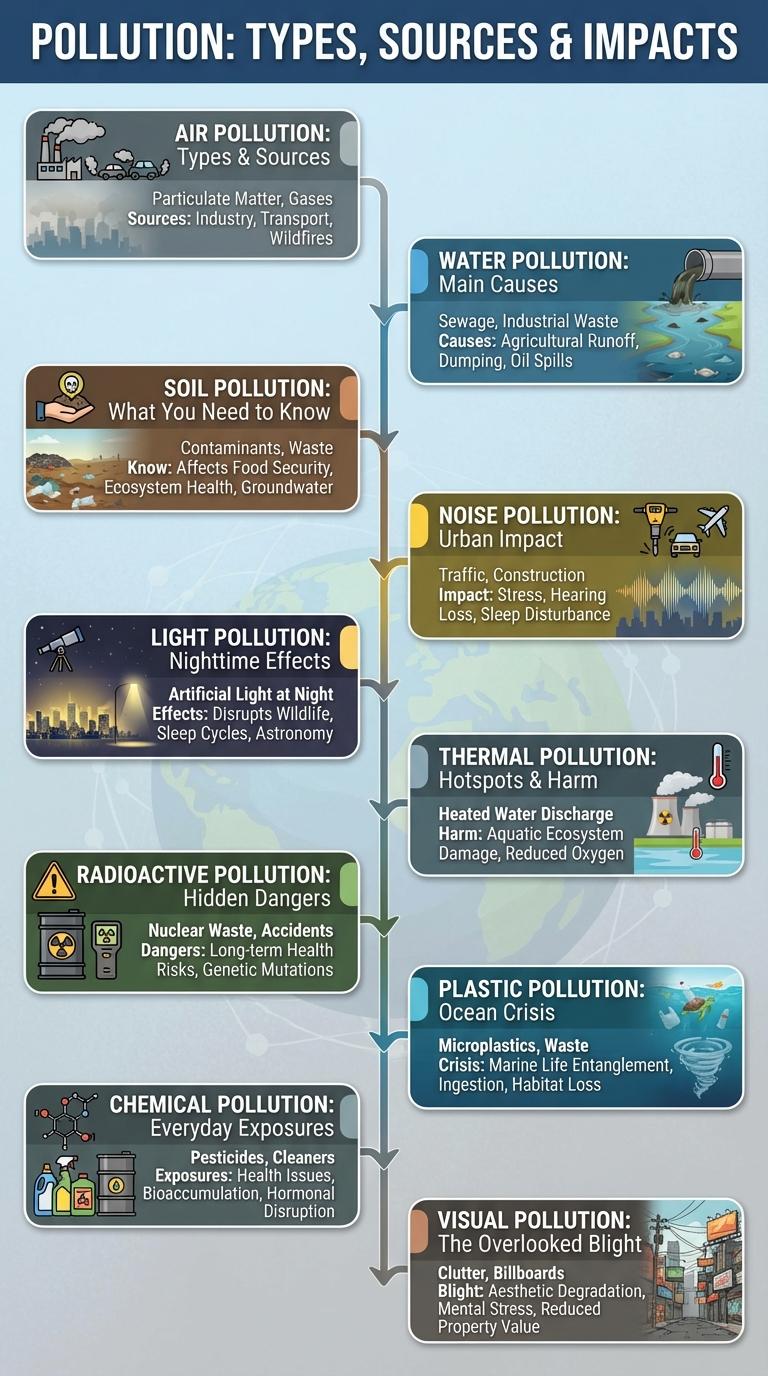
Pollution manifests in various forms, affecting air, water, soil, noise, and light environments. Each type contributes uniquely to environmental degradation and poses distinct health risks to humans and wildlife. Understanding these kinds of pollution helps in developing targeted strategies for prevention and control.
Air Pollution: Types & Sources
Air pollution consists of various contaminants released into the atmosphere, impacting human health and the environment. Understanding the types and sources of air pollution helps in devising effective control strategies.
- Particulate Matter (PM) - Tiny particles or droplets suspended in the air, originating from construction sites, unpaved roads, and combustion processes.
- Carbon Monoxide (CO) - A colorless, odorless gas produced by incomplete combustion of fossil fuels in vehicles and industrial activities.
- Volatile Organic Compounds (VOCs) - Chemicals emitted from paints, solvents, and gasoline that contribute to smog formation and respiratory problems.
- Nitrogen Oxides (NOx) - Gases generated by vehicle engines and power plants that lead to acid rain and ground-level ozone.
- Sulfur Dioxide (SO2) - A gas produced by burning sulfur-containing fossil fuels, mainly from coal-powered plants and industrial processes.
Identifying the types and sources of air pollution is essential for creating healthier urban environments and reducing environmental damage.
Water Pollution: Main Causes
Water pollution severely impacts aquatic ecosystems and human health worldwide. Understanding the main causes helps target effective prevention and cleanup efforts.
- Industrial Discharge - Factories release toxic chemicals and heavy metals directly into water bodies, contaminating freshwater sources.
- Agricultural Runoff - Pesticides, fertilizers, and animal waste wash into rivers and lakes, causing nutrient overload and harmful algal blooms.
- Sewage and Wastewater - Untreated or poorly treated sewage introduces pathogens and organic waste that deplete oxygen and harm aquatic life.
Soil Pollution: What You Need to Know
Soil pollution occurs when harmful substances such as chemicals, heavy metals, and waste materials contaminate the soil, affecting its fertility and health. Common sources include industrial waste, pesticides, and improper disposal of hazardous materials.
Contaminated soil can lead to reduced agricultural productivity and pose serious health risks to humans and wildlife through the food chain. Preventing soil pollution requires sustainable farming practices, proper waste management, and stricter regulations on industrial emissions.
Noise Pollution: Urban Impact
| Kind of Pollution | Description & Urban Impact |
|---|---|
| Noise Pollution | Excessive sound produced by urban activities including traffic, construction, and industrial operations. Leads to health issues like stress, hearing loss, and sleep disturbances in city populations. |
| Air Pollution | Emissions from vehicles, factories, and burning of fossil fuels. Causes respiratory diseases, reduces air quality, and contributes to climate change in urban areas. |
| Water Pollution | Contamination of water bodies from industrial waste, sewage, and runoff. Harms aquatic life and affects drinking water quality for urban residents. |
| Soil Pollution | Deposition of harmful chemicals, waste, and heavy metals into soil. Impacts urban gardening, reduces soil fertility, and can enter the food chain. |
| Light Pollution | Excessive artificial light in cities disrupting ecosystems and human circadian rhythms. Contributes to energy waste and decreases visibility of stars. |
Light Pollution: Nighttime Effects
Light pollution disrupts natural night environments by excessive or misdirected artificial light. It affects human sleep patterns, wildlife behavior, and obscures the visibility of stars in the night sky. Reducing light pollution promotes ecological balance and improves overall night-time health and safety.
Thermal Pollution: Hotspots & Harm
Thermal pollution occurs when water bodies experience a rise in temperature due to human activities, disrupting aquatic ecosystems. This form of pollution is prevalent near industrial sites and power plants where heated water is discharged into natural water sources.
Hotspots of thermal pollution are commonly found around thermal power stations and factories using water as a coolant, primarily located near rivers and lakes. The elevated temperatures can drastically reduce dissolved oxygen levels, harming marine life and biodiversity.
- Industrial Discharge - Factories and power plants release heated water into rivers, causing localized temperature spikes.
- Aquatic Life Impact - Higher water temperatures lead to oxygen depletion, stressing or killing fish and other aquatic organisms.
- Ecosystem Imbalance - Thermal pollution creates hostile environments that favor certain species over others, disrupting natural ecosystems.
Radioactive Pollution: Hidden Dangers
Radioactive pollution occurs when harmful radioactive substances contaminate the environment, posing serious health risks to living beings. Sources include nuclear power plants, improper disposal of radioactive waste, and accidents involving radioactive materials.
The hidden dangers of radioactive pollution include long-term genetic mutations and cancers that may not appear immediately. Contamination of soil, water, and air leads to persistent environmental damage and bioaccumulation in the food chain.
Plastic Pollution: Ocean Crisis
Plastic pollution poses a severe threat to ocean ecosystems, with millions of tons of plastic waste entering the seas each year. This pollution disrupts marine life, harming species from tiny plankton to large whales.
Ocean plastic pollution includes microplastics, discarded fishing gear, and single-use plastics like bottles and bags. Marine animals ingest or become entangled in plastic debris, leading to injury, starvation, or death. Coastal communities also face economic challenges due to declining fish stocks and polluted beaches.
Chemical Pollution: Everyday Exposures
Chemical pollution arises from the release of harmful substances such as pesticides, heavy metals, and industrial chemicals into air, water, and soil. Everyday exposures occur through contaminated drinking water, household cleaning products, and air pollution from vehicle emissions. Long-term contact with these chemicals can lead to serious health issues including respiratory problems, hormonal imbalances, and neurological disorders.