
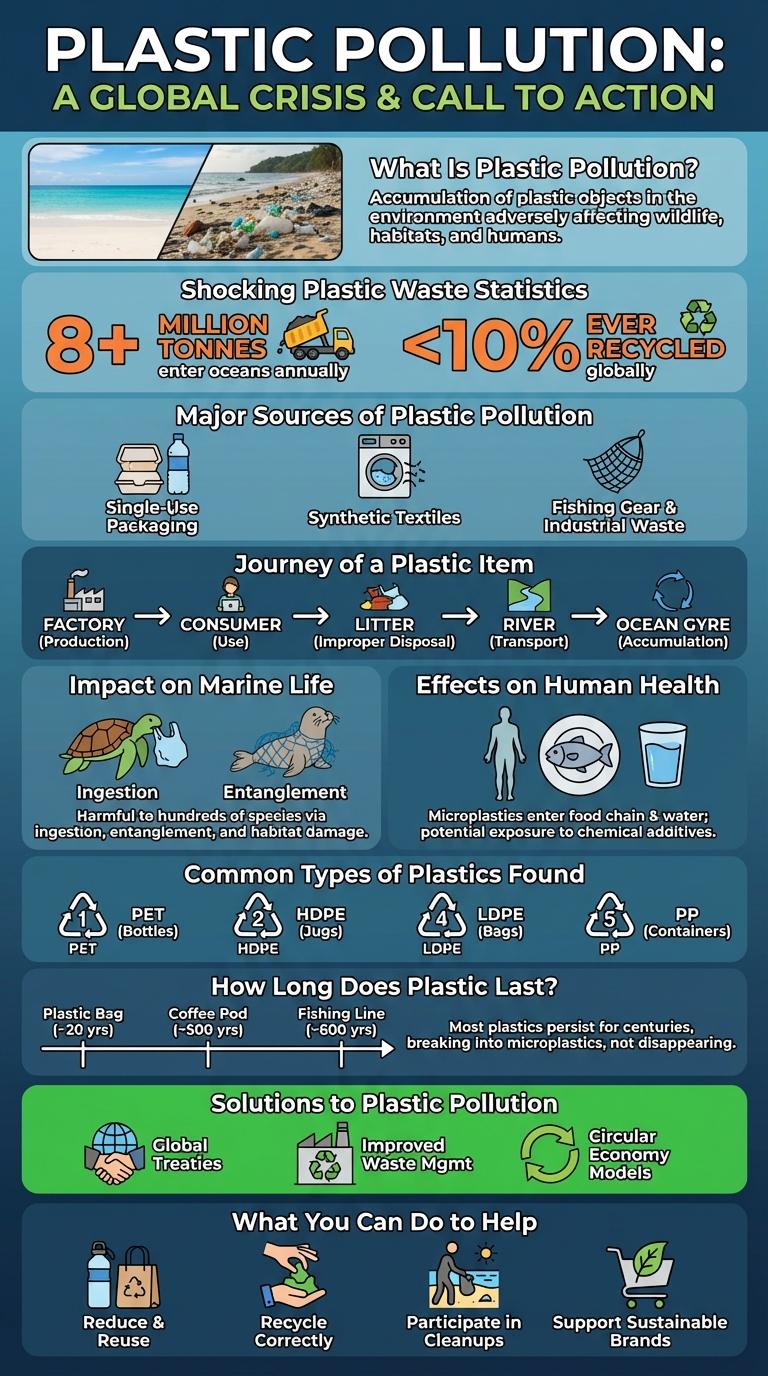
Plastic pollution severely impacts marine ecosystems, wildlife, and human health by introducing toxic substances into the environment. Visualizing key data through an infographic highlights the scale, sources, and consequences of plastic waste. Understanding these facts is essential to driving effective solutions and promoting sustainable practices worldwide.
What Is Plastic Pollution?
Plastic pollution refers to the accumulation of plastic objects and particles in the Earth's environment, affecting wildlife, habitats, and human health. It originates from discarded plastic waste that does not decompose naturally and persists for hundreds of years.
- Non-biodegradable - Plastics do not break down easily, causing long-term pollution in oceans, rivers, and land.
- Sources - Common sources include single-use plastics, packaging, and microplastics from consumer products.
- Environmental impact - Plastic pollution harms marine life, disrupts ecosystems, and enters the food chain, impacting biodiversity.
Shocking Plastic Waste Statistics
Plastic pollution continues to escalate, with over 300 million tons of plastic produced globally each year. Approximately 8 million tons of plastic waste enter the oceans annually, threatening marine life and ecosystems. Only 9% of all plastic waste is recycled worldwide, leaving the majority to accumulate in landfills and natural environments.
Major Sources of Plastic Pollution
Plastic pollution severely impacts marine life and ecosystems worldwide. Understanding its major sources is key to addressing the global crisis.
- Single-Use Plastics - Items like bags, bottles, and straws contribute significantly to environmental plastic waste.
- Industrial Plastic Waste - Manufacturing processes release large amounts of plastic debris into waterways and oceans.
- Fishing Gear - Lost or discarded nets and lines pose a persistent threat to marine animals and habitats.
Reducing these sources can lead to cleaner oceans and healthier ecosystems.
Journey of a Plastic Item
Plastic pollution poses a growing threat to marine and terrestrial ecosystems worldwide. Understanding the journey of a plastic item helps reveal its environmental impact from production to disposal.
Most plastic items start as petroleum-based raw materials and undergo manufacturing to become everyday products. After use, a significant portion ends up as waste in landfills, oceans, or littered environments. Over time, plastics break down into microplastics, contaminating soil, water, and wildlife.
Impact on Marine Life
Plastic pollution severely threatens marine ecosystems worldwide. Its persistent presence endangers countless marine species and disrupts oceanic food chains.
- Entanglement - Marine animals such as turtles, seals, and whales often become trapped in plastic debris, leading to injury or death.
- Ingestion - Many sea creatures mistake plastic fragments for food, causing internal injuries, starvation, and poisoning.
- Habitat Damage - Accumulation of plastics damages coral reefs and seafloor habitats essential for marine biodiversity.
Effects on Human Health
Plastic pollution releases hazardous chemicals that can enter the human body through food and water consumption. These toxins are linked to hormonal disruptions and increased risks of chronic diseases.
Microplastics have been found in human organs, raising concerns about long-term health effects. Exposure to plastic pollutants also contributes to respiratory problems and immune system impairments.
Common Types of Plastics Found
Plastic pollution is a critical environmental issue, with several types of plastics commonly found in oceans and landfills. These plastics vary in composition, use, and environmental impact.
Polyethylene Terephthalate (PET) is widely used in beverage bottles and food containers due to its strength and recyclability. High-Density Polyethylene (HDPE) appears in milk jugs and detergent bottles, known for its durability and resistance to chemicals.
How Long Does Plastic Last?
How long does plastic last in the environment? Plastic materials can persist for hundreds to thousands of years before breaking down. Their durability causes significant long-term pollution in oceans, soils, and ecosystems.
| Plastic Type | Approximate Decomposition Time |
|---|---|
| Plastic Bag | 10-20 years |
| Plastic Bottle | 450 years |
| Fishing Line | 600 years |
| Styrofoam Cup | 500 years |
| Plastic Straw | 200 years |
Microplastics from degraded items continue to pollute and harm wildlife long after the original plastic disappears. Reducing plastic usage and improving recycling can mitigate persistent environmental damage.
Solutions to Plastic Pollution
Plastic pollution threatens marine life, ecosystems, and human health worldwide. Solutions include reducing single-use plastics, enhancing recycling technologies, and promoting biodegradable alternatives. Public awareness campaigns and policy regulations play crucial roles in driving sustainable behavior and corporate responsibility.